


Colosseum
Ideal: Ideal for history, ancient sites, Roman culture, and first-time Italy visitors.
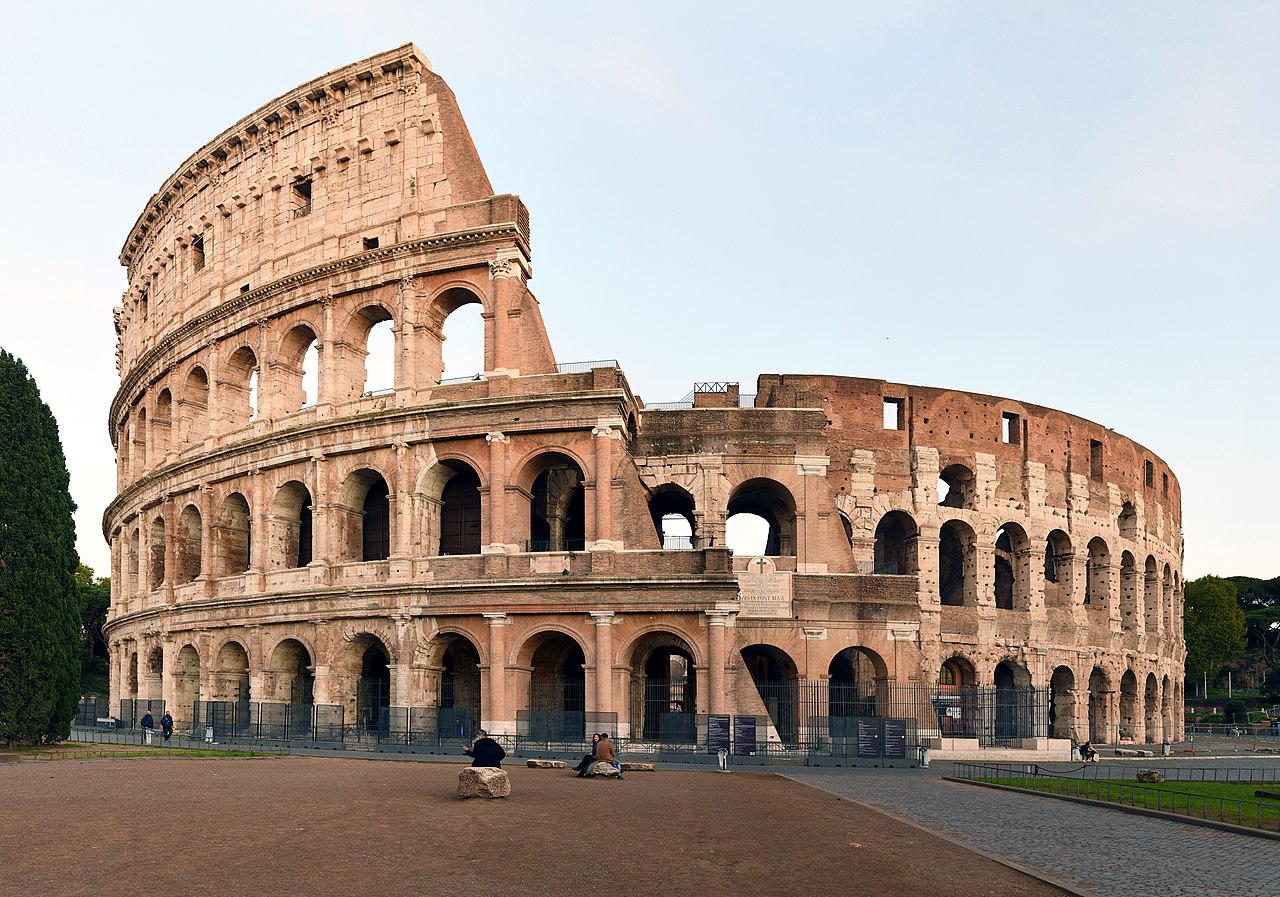
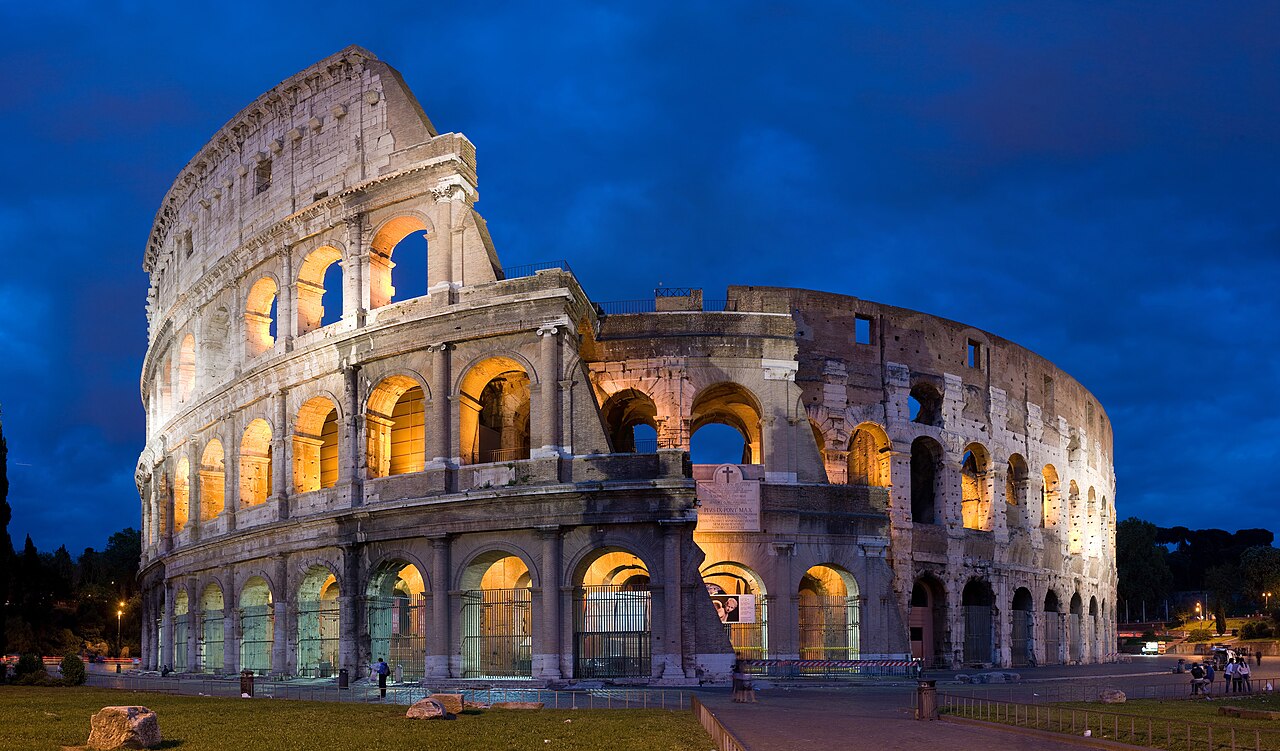
Built between AD 72 and 80 under Vespasian and Titus; it held more than 50,000 spectators and could be fully emptied in about fifteen minutes thanks to 80 arched entrances. Opening games lasted 100 days. The two-storey hypogeum beneath the arena housed animal cages and lift mechanisms to the floor. The holes in the façade are not decoration: hundreds of tonnes of iron clamps that locked the stones together were removed and melted down in the Middle Ages.
Quick facts
- Built
- 82
- Opened
- 81
- Architectural style
- ancient Roman architecture
- Height
- 48 m
- Length
- 187 m
- Area
- 5,000 m²
Facts from Wikidata, photos from Wikimedia Commons.
Did you know?
Where did half of the Colosseum's outer wall go?
It was quarried in the medieval and Renaissance periods. Its travertine was stripped and reused in buildings such as Palazzo Venezia and St Peter's Basilica; the pockmarks in the walls are where iron clamps holding the blocks together were prised out.
Could the arena be covered?
Yes. A vast fabric awning called the velarium was drawn out on ropes fixed to masts around the rim. It was operated by sailors brought in from the navy, because the job was much like handling ship's sails.
Why is the arena floor missing?
What you see is the hypogeum, the underground level: cells for animals and fighters, corridors, and machinery rooms with lifts that raised them into the arena. The wooden floor and its sand covering vanished long ago.
Why go?
- To see ancient Rome's most iconic structure up close
- To feel gladiators, imperial history, and arena atmosphere
- To combine with the Roman Forum and Palatine Hill for a strong history walk
Travel tip
Ticket queues can be long; buying the Colosseum + Roman Forum combined ticket in advance is better.