

Florence Cathedral (Duomo)
Ideal: Ideal for Renaissance art, architecture, city views, and Florence itineraries.
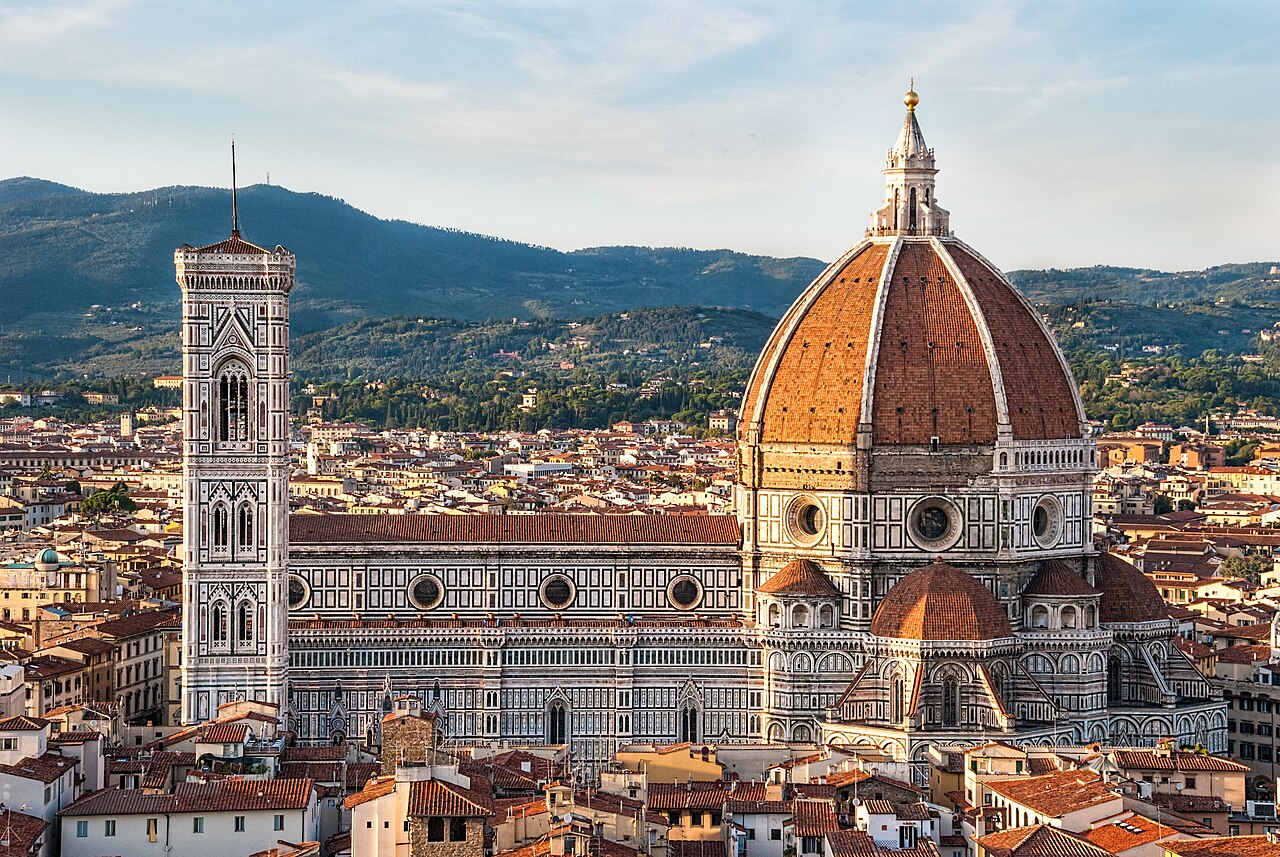
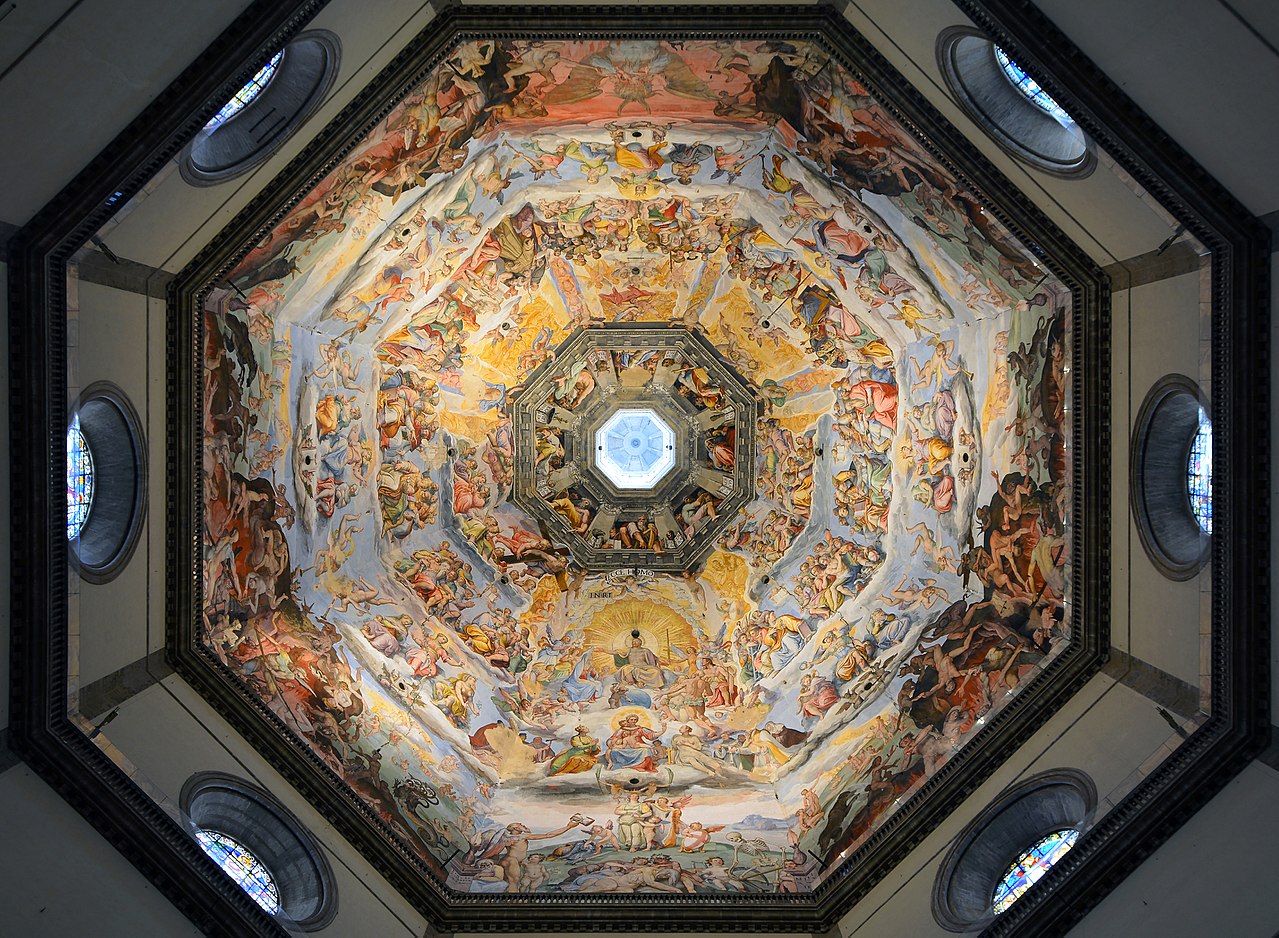
Brunelleschi built the dome from 1420 to 1436 without ever erecting the usual wooden scaffolding; roughly four million herringbone-laid bricks support themselves and the structure remains the world's largest masonry dome. 463 steps lead to the lantern at the top, passing between the dome's two shells. The adjacent bell tower design belongs to Giotto from 1334. The marble façade is not as old as it looks: the original front was left unfinished, and today's neo-Gothic face was completed in 1887.
Quick facts
- Built
- 8 September 1296
- Architect
- Arnolfo di Cambio
- Architectural style
- Renaissance architecture
- Height
- 115 m
- Length
- 153 m
- Area
- 8,600 m²
Facts from Wikidata, photos from Wikimedia Commons.
Did you know?
How was the dome built?
Brunelleschi raised it as two nested shells with a herringbone brick pattern and no wooden centring. He left no detailed plans, to keep the method from rivals — and it has still not been fully explained.
Is the dome still the largest in the world?
Among masonry domes, yes — it remains the largest ever built. When completed in 1436 it was the widest dome since antiquity, and it contains no steel reinforcement.
Is the façade really Renaissance work?
No. The polychrome marble façade was finished in 1887; for centuries the front stood in bare brick. The dome is 15th century, the bell tower 14th, and the façade 19th.
Why go?
- To see Brunelleschi's dome and Florence's most iconic building
- To experience one of the most important examples of Renaissance architecture
- To view the city from the tower or dome
Travel tip
The dome climb is popular and tiring; book ahead and plan your time slot.