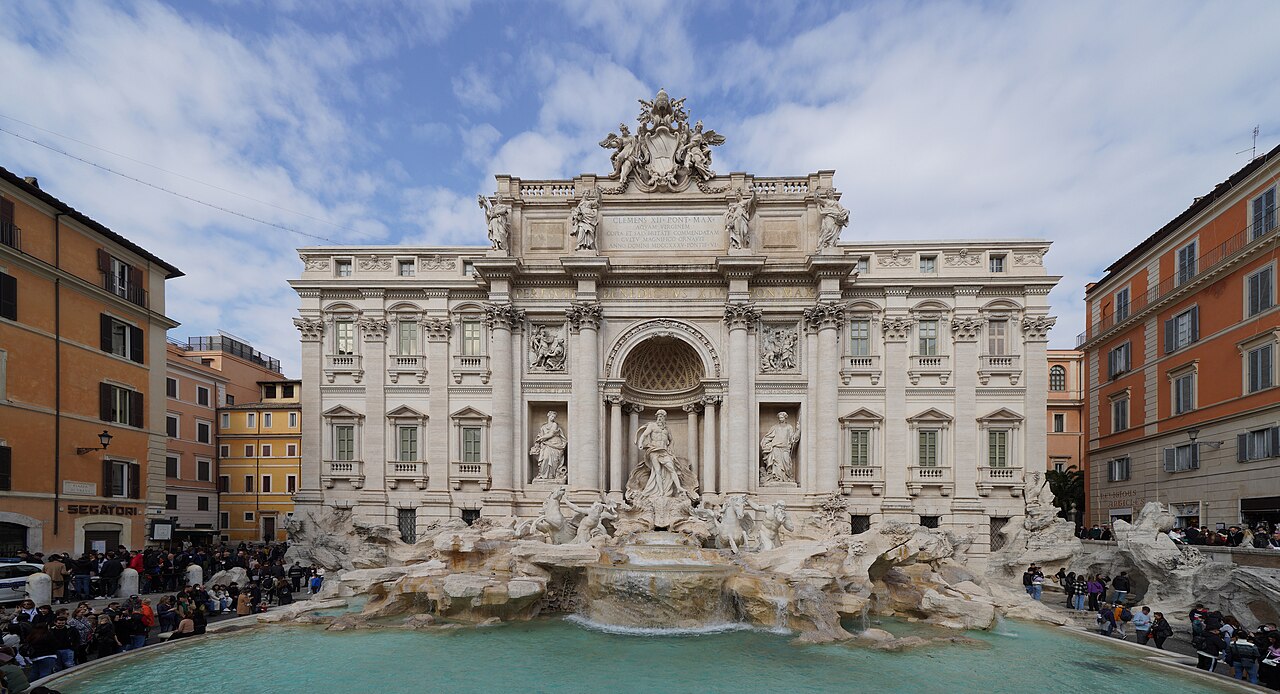


Trevi Fountain
Ideal: Ideal for photography, classic Rome routes, short city breaks, and first-time visitors.
The 26-metre structure is based on Nicola Salvi's 1732 design and was only completed in 1762. Its water comes from the Aqua Virgo aqueduct, operating since 19 BC — so the water flowing from the fountain is at the end of a two-thousand-year-old line. An average of €3,000 in coins is thrown into the basin daily and regularly collected for Caritas charity work. Anita Ekberg's night scene in La Dolce Vita put the fountain into cinema history.
Quick facts
- Built
- 1732
- Opened
- 1762
- Architect
- Nicola Salvi
- Architectural style
- Italian Baroque architecture
- Height
- 26.3 m
- Material
- Roman travertine
Facts from Wikidata, photos from Wikimedia Commons.
Did you know?
What happens to the coins thrown into the fountain?
About €1.5 million is collected each year and donated to Caritas for social programmes in Rome. Taking coins from the basin is illegal and people who try are regularly fined.
Where does the fountain's water come from?
From the Aqua Virgo aqueduct, built in 19 BC and still functioning after 2,000 years. The legend of the young girl who showed Roman soldiers the spring is carved on the fountain's right-hand relief and gives the water its name.
Why is there an odd stone vase at the fountain's edge?
The large stone urn on the right, nicknamed the "asso di coppe", was reputedly placed there by the architect Salvi to block the view from the shop of a barber who kept complaining about the building works.
Why go?
- To see Rome's most iconic fountain
- To experience baroque art and piazza atmosphere
- To add a short but unforgettable stop to a classic Rome walk
Travel tip
Much quieter very early in the morning; it can get very crowded during the day.