Flight tips
Carry-on rules and baggage fees: what are you actually paying for?
The real price of a cheap fare usually shows up at the baggage step. Knowing the difference between a personal item, a carry-on and a checked bag is worth 30-60 € per ticket.
FlyVentis editör ekibi tarafından hazırlanmış, seyahat ve etkinlik bilgileri düzenli olarak gözden geçirilen rehber.
Most people make the same mistake when comparing fares: they assume two tickets are the same thing and look only at the number. But an airline ticket today is not a single product — it is a core that everything else is sold on top of. The most expensive and most misunderstood of those add-ons is baggage.
There are three kinds of baggage — don't mix them up
| Type | Where it goes | Typical size | Fee |
|---|---|---|---|
| Personal item / small bag | Under the seat in front | 40 x 30 x 20 cm | Usually free |
| Carry-on (cabin trolley) | Overhead locker | 55 x 40 x 23 cm, 8-10 kg | Paid on basic fares |
| Checked bag (suitcase) | Cargo hold | 20-23 kg weight limit | Almost always paid |
The critical distinction is between the first two. On low-cost airlines the cheapest fare usually includes only a small bag that fits under the seat. The standard cabin trolley that goes in the overhead locker costs extra. Whenever you see "cabin bag included", check which of the two it means before you book.
The liquids rule: what 100 ml really means
Liquids in hand luggage must be in containers of no more than 100 ml each, add up to no more than one litre in total, and travel in a transparent resealable bag. The most common mistake is looking at how much is left inside: a half-empty 200 ml bottle breaks the rule, because the limit applies to the container's capacity.
- Counted as liquids: creams, toothpaste, spray deodorant, perfume, gels, yoghurt, honey, jam and anything else of a paste-like consistency.
- Exempt: prescription medicines, baby food and baby milk — you may need to declare them at security.
- Some airports have new scanners and won't ask you to take liquids out, but this isn't universal. Pack according to the standard rule.
- Duty free liquids are exempt as long as they stay in the sealed bag with the receipt visible — though a second security check on a connection can still cause problems.
Items that can't fly in the cabin — or in the hold
| Item | Cabin | Checked bag |
|---|---|---|
| Power bank / spare lithium battery | Yes (required) | No (prohibited) |
| Laptop, tablet, camera | Yes (recommended) | Risky |
| Pocket knife, long scissors, razor blades | No | Yes |
| Umbrella, tripod, walking stick | Depends on the airline | Yes |
| E-cigarette | Yes (use prohibited) | No |
| Jewellery, medication, keys | Yes | Definitely not |
The power bank rule matters most: spare lithium batteries are banned from the hold, and if one turns up in your checked bag it can be opened and delayed. Never put medication in the hold either — if the bag is delayed, so is your medicine.
How to pay less for baggage
- Add baggage when you book. Adding it later always costs more.
- Travelling as a pair? Share one 23 kg suitcase — it usually beats paying for two 20 kg bags.
- Buy baggage for the return leg only. Flying out light and adding a bag on the way back can cost less overall.
- Measure your cabin bag at home; wheels and handle count towards the dimensions.
- Wear your heaviest shoes and coat. It sounds trivial, but 2-3 kg is often exactly what saves a bag at the weight limit.
What to do if your bag doesn't arrive
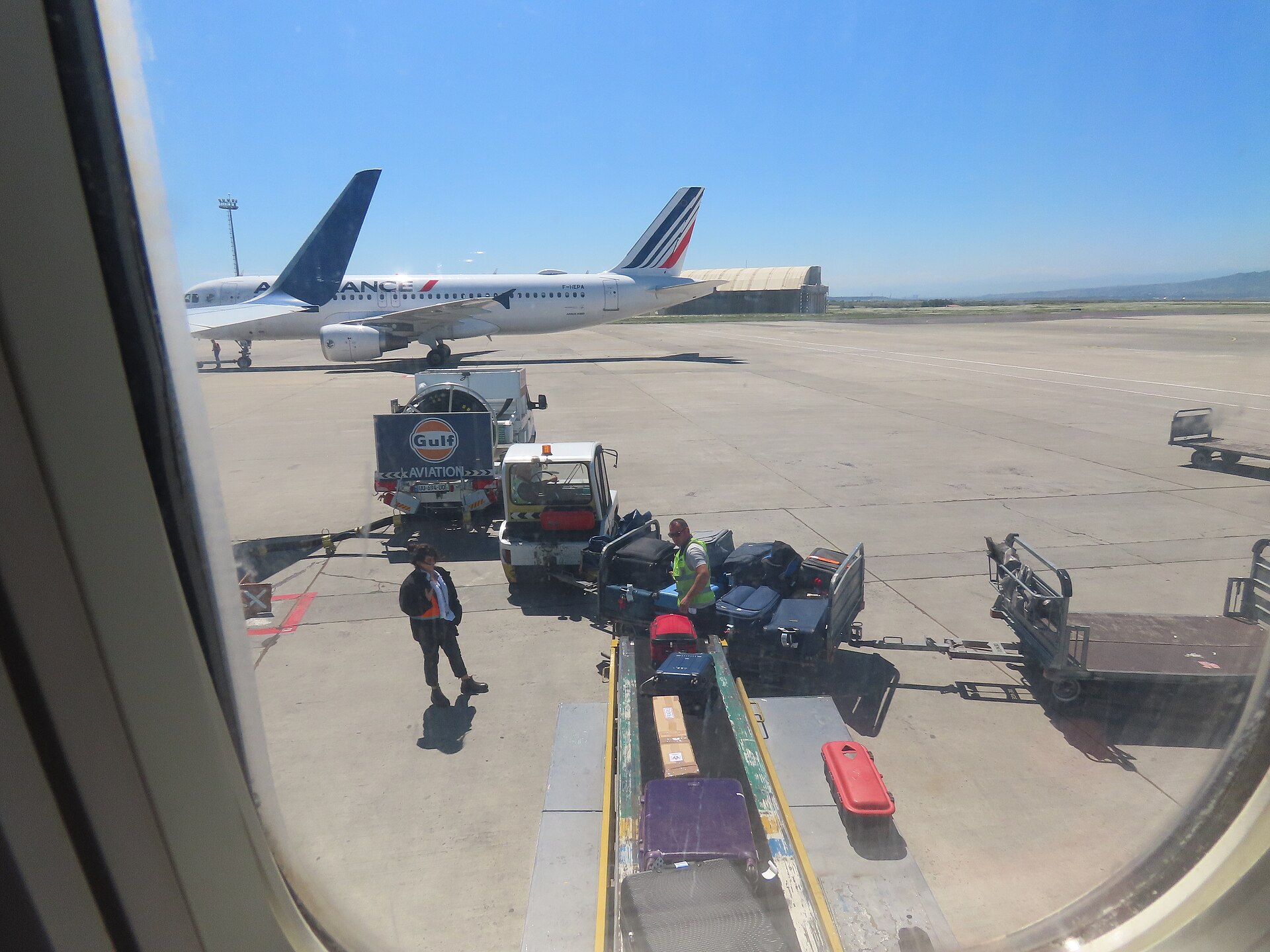
If your bag doesn't come out, go to the lost baggage desk before leaving the airport and file the report known as a PIR. Without that document most later claims are void. The reference number lets you track the bag online; the vast majority are found within a few days and delivered to your address.
- You can claim back reasonable spending on essentials (underwear, basic toiletries) from the airline with receipts.
- On international flights the airline's liability for lost or delayed baggage is set by the Montreal Convention, which caps compensation.
- If the bag isn't found within 21 days it counts as lost and the compensation process begins.
- If you packed valuables in your checked bag, know from the outset that compensation won't cover them.
Keep reading
Frequently asked questions
What size is a carry-on bag?
Most airlines allow 55 x 40 x 23 cm and 8-10 kg for a cabin trolley, and roughly 40 x 30 x 20 cm for the personal item that goes under the seat. Dimensions vary by a few centimetres between airlines, so check your ticket.
How much liquid can I take in hand luggage?
Containers of up to 100 ml each, one litre in total, in a transparent resealable bag. The limit is the container's capacity, so a half-empty 200 ml bottle is not accepted.
Can I put a power bank in my checked bag?
No. Spare lithium batteries and power banks may only travel in the cabin; they are prohibited in the hold.
What is the cheapest way to pay for baggage?
Adding it while booking. Adding it online afterwards costs more, and paying at the boarding gate is usually two to three times as expensive.