


British Museum
Ideal: Ideal for history, archaeology, art, and free museum routes.
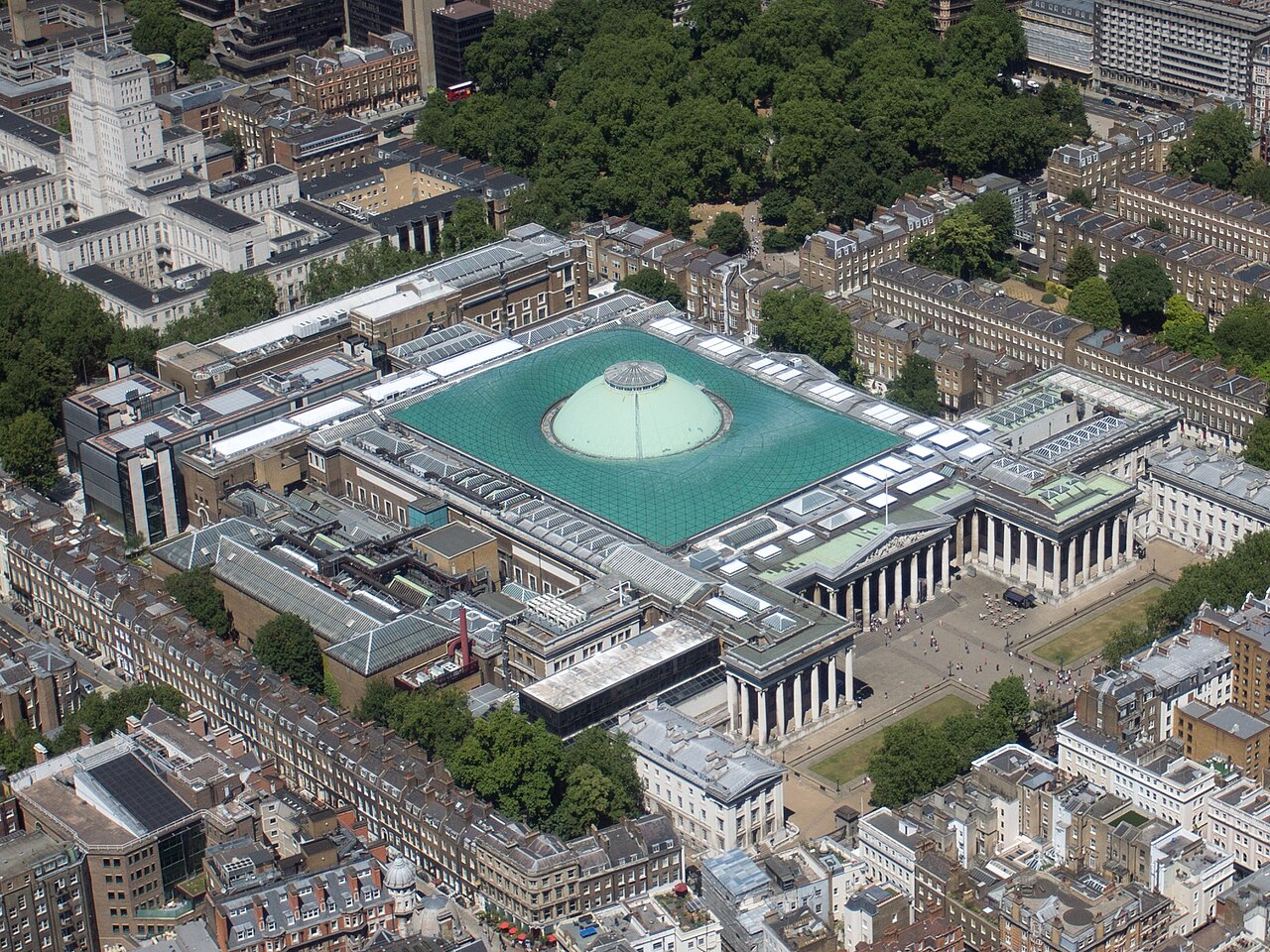
Founded in 1753, the British Museum is one of London's strongest cultural stops, bringing together civilizations from across human history under one roof. The Great Court's glass roof transforms the museum's former reading room into a contemporary architectural centerpiece. The Rosetta Stone, Egyptian galleries, and Greek-Roman collections stand out especially on a first visit.
Quick facts
- Built
- 1753
- Opened
- 1759
- Architect
- Robert Smirke
- Annual visitors
- 5.8 million
- Heritage status
- Grade I listed building
Facts from Wikidata, photos from Wikimedia Commons.
Did you know?
Why is entry to the British Museum free?
When it was founded in 1753 the terms required it to be open to "all studious and curious persons". That principle still holds: the permanent collection is free and only special exhibitions are ticketed.
Why is the Rosetta Stone so important?
Because the same text appears in three scripts — hieroglyphic, demotic and Greek — it allowed hieroglyphs to be deciphered. The content itself is mundane: a tax decree issued in the name of the 13-year-old Ptolemy V.
What makes the Great Court roof special?
Opened in 2000, its glass roof covers Europe's largest covered square, and no two of its 3,312 glass panels are identical. The round Reading Room at its centre is where Karl Marx once worked.
Why go?
- To see the Rosetta Stone and Egyptian galleries
- To experience the Great Court's impressive architecture
- To build a comprehensive culture route with free admission
Travel tip
The museum is vast; pick a few galleries you want to see in advance and go near opening time for a more relaxed visit.