



Prague Castle
Ideal: Ideal for history, architecture, views, and first-time visitors to Prague.
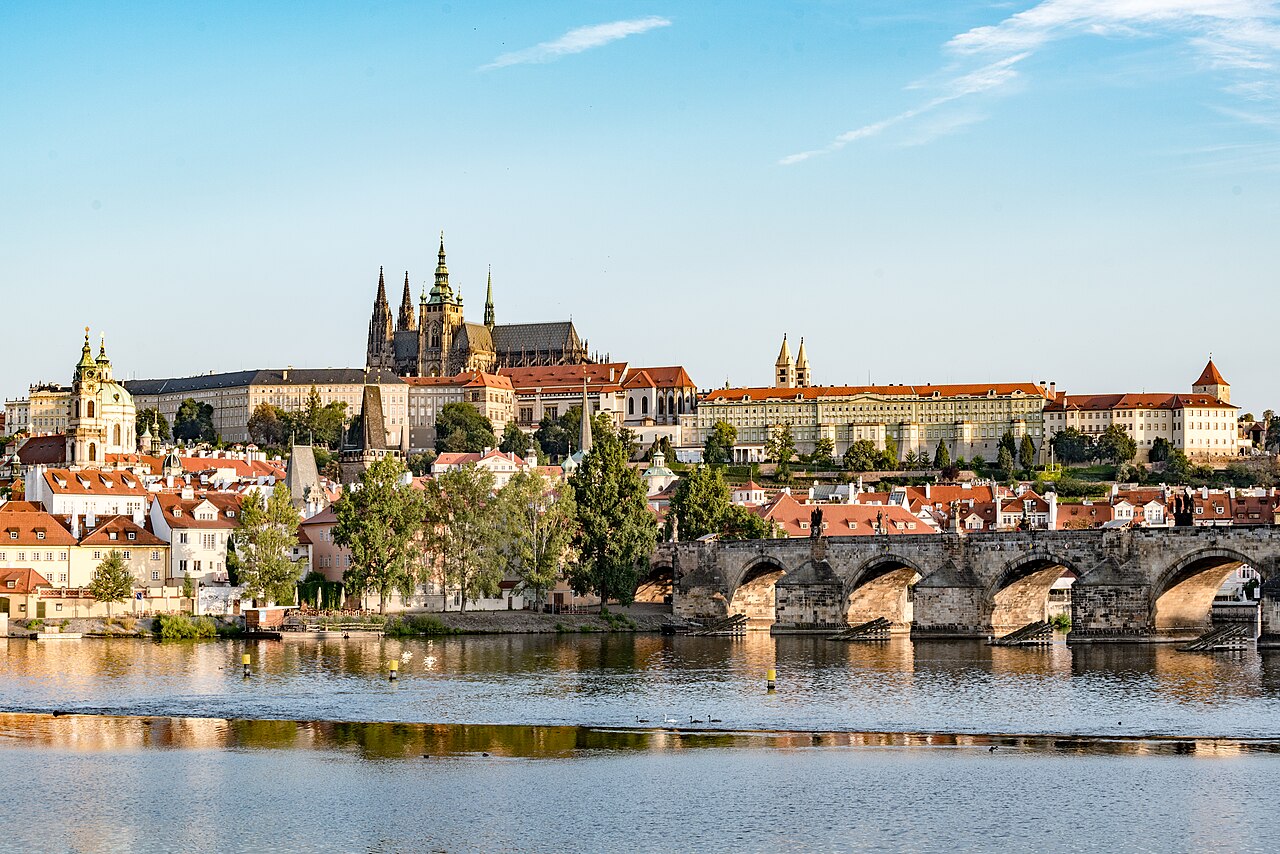
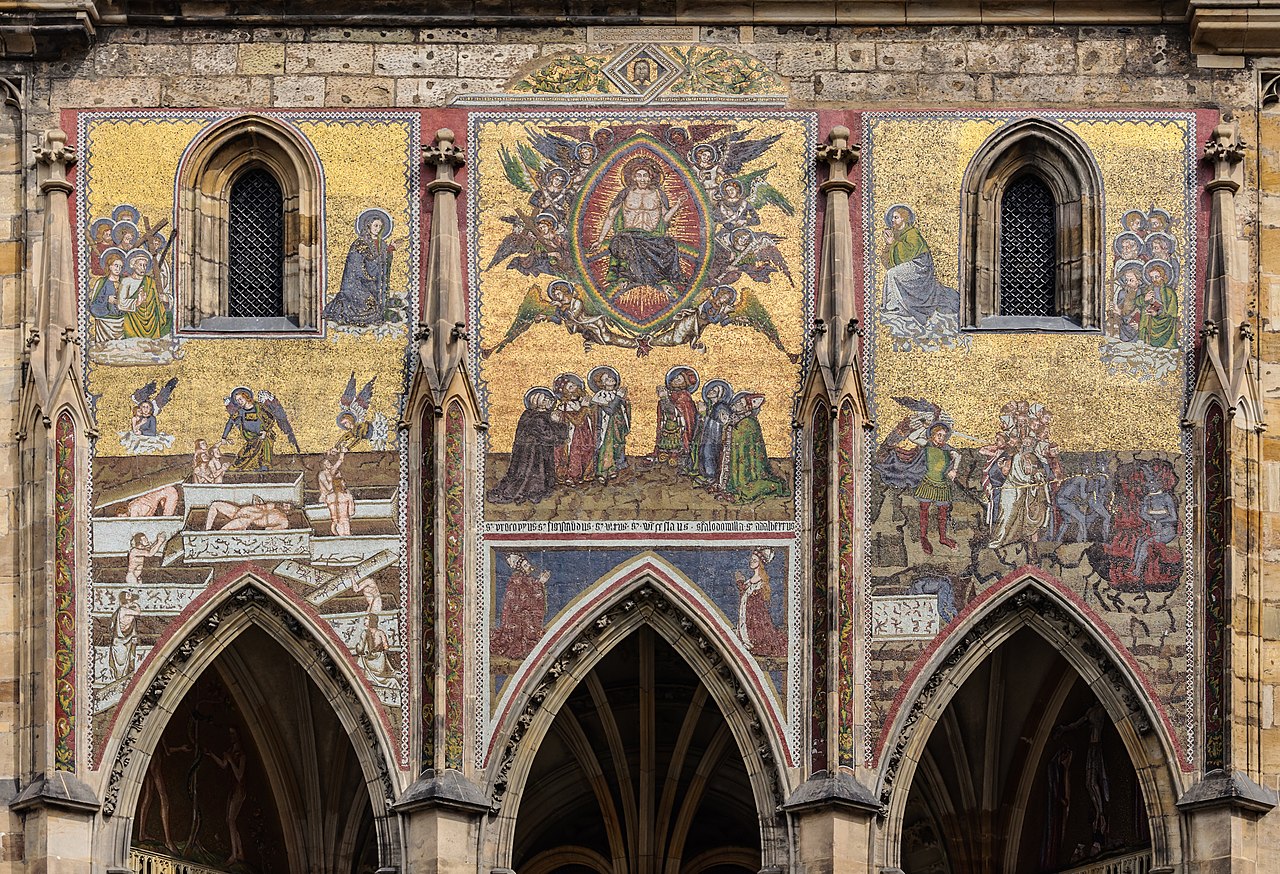
At 70,000 square metres, Guinness lists it as the world's largest ancient castle complex; since the 9th century it has been the seat of Bohemian kings and later presidents. St. Vitus Cathedral at its heart began in 1344 and was not finished until 1929 — 585 years. Alfons Mucha's stained-glass window added in 1931 is a rare art nouveau touch inside a Gothic cathedral. In 1618, two royal governors were thrown from a window here, starting the Thirty Years' War; both survived because they landed on a dung heap.
Quick facts
- Built
- 9th century
- Architect
- Matthias of Arras
- Architectural style
- Romanesque architecture
- Length
- 570 m
- Elevation
- 250 m
- Annual visitors
- 2.6 million
Facts from Wikidata, photos from Wikimedia Commons.
Did you know?
What makes Prague Castle special?
At roughly 70,000 m² it is listed by Guinness as the largest ancient castle complex in the world. It is not one building but a small town of palaces, a cathedral, a monastery and streets.
Did the famous defenestration happen here?
In 1618 two imperial officials and their secretary were thrown from a castle window. All three survived — Catholics called it a miracle, Protestants credited the dung heap below. The incident triggered the Thirty Years' War.
Who lived on Golden Lane?
The tiny coloured houses were first for castle guards and craftsmen. Franz Kafka wrote at number 22 in 1916–17; the story that alchemists sought gold here is a later invention.
Why go?
- To see Prague's most iconic historic district
- To explore St. Vitus Cathedral and the castle courtyards
- Because it offers a strong viewpoint over the city from above
Travel tip
The castle area is large; don't just look from outside — allow time for St. Vitus Cathedral and the Golden Lane area.