

Old Town Square
Ideal: Ideal for first-time Prague visitors, city squares, history, and photography.
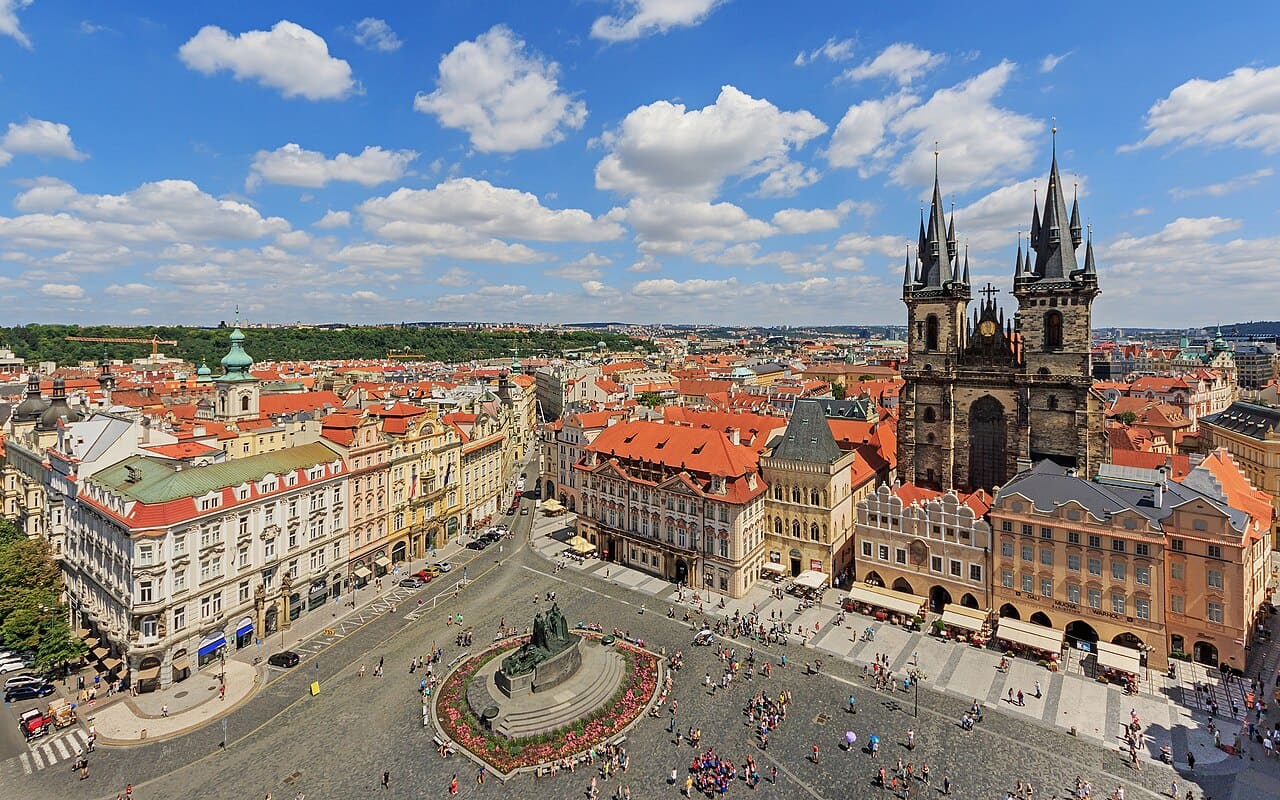
The Astronomical Clock on the town hall wall was installed in 1410 and remains the oldest still working; legend says its maker Hanuš was blinded so he could not build a similar clock elsewhere. The Apostles procession was added only in 1865–66, meaning the show's most famous part is the newest. Twenty-seven crosses set into the square's stones mark the 1621 execution here of Protestant leaders who rebelled against the Habsburgs. The Jan Hus monument in the center was erected in 1915, the 500th anniversary of the reformer's burning.
Did you know?
What does the astronomical clock actually show?
It is less a clock than a model of the sky: the position of the sun and moon in the zodiac, the lunar phases and three different time systems at once. Working since 1410, it is the oldest astronomical clock still in operation.
Was the clockmaker really blinded?
No. The tale that he was blinded to stop him building another elsewhere is a popular legend; records show the clock was made by Mikuláš of Kadaň and no such thing happened.
What are the markings in the square's paving?
The 27 crosses on one side commemorate Protestant nobles executed here in 1621. The paving also traces the outline of the Old Town Hall's north wing, destroyed in 1945.
Why go?
- To see Prague's liveliest historic square
- To experience icons like the Astronomical Clock and Týn Church in one area
- To start an Old Town walk from a strong central point
Travel tip
The square fills up before the Astronomical Clock show; arrive a little early for a good view.