

Sagrada Família
Ideal: Ideal for architecture, art, photography, and first-time Barcelona visitors.
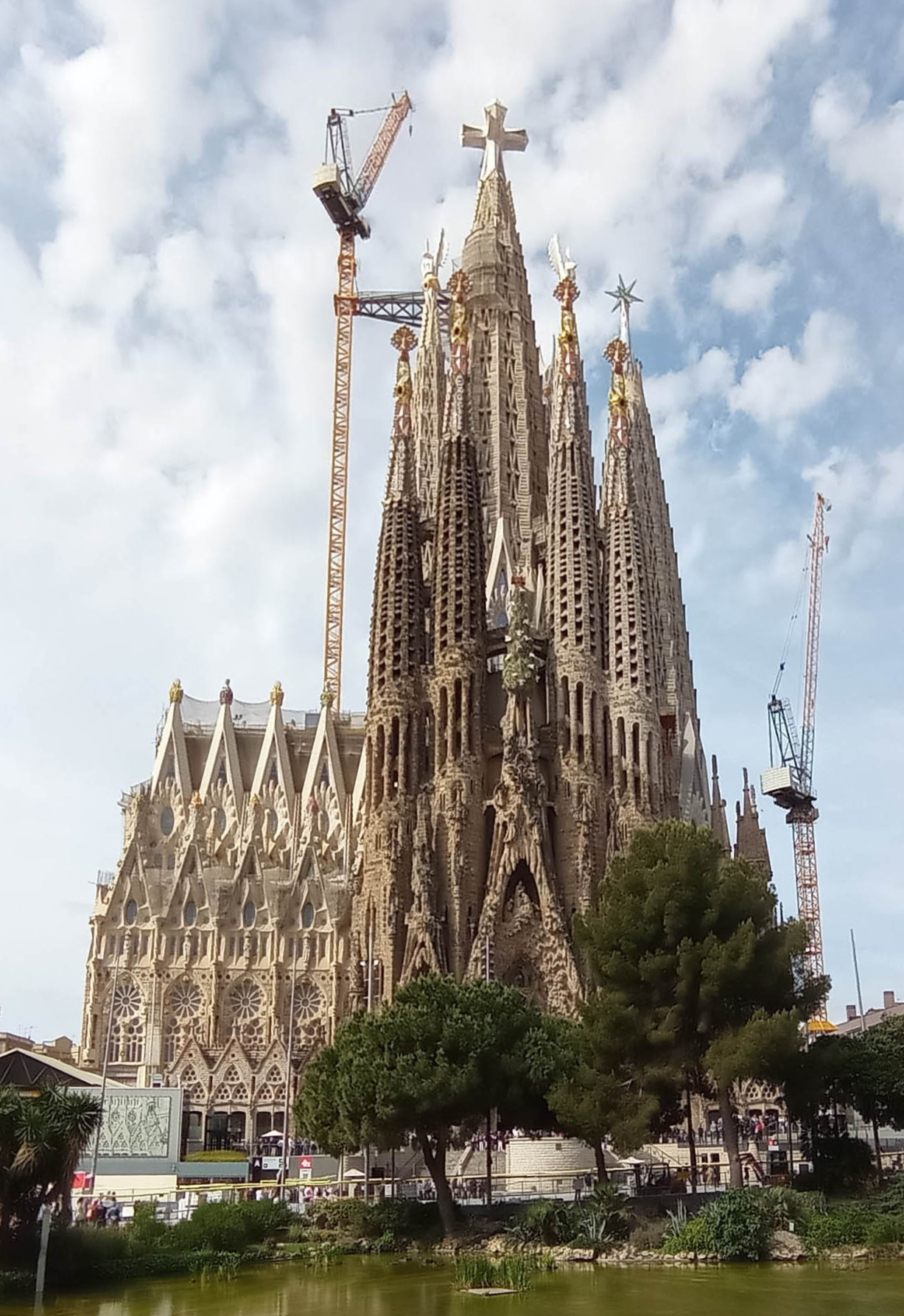
Gaudí took over the project in 1883 and devoted 43 years to it, the last twelve exclusively to this building; when he died under a tram in 1926 only a quarter of the construction was finished. Work still continues funded by donations and ticket revenue. The tallest of the planned 18 towers will stand at 172.5 metres — Gaudí deliberately kept it one metre below Montjuïc hill because he believed human work should not surpass nature. The city only issued a building permit in 2019: 137 years late.
Quick facts
- Built
- 19 March 1882
- Architect
- Antoni Gaudí
- Architectural style
- Catalan modernism
- Height
- 173 m
- Length
- 90 m
Facts from Wikidata, photos from Wikimedia Commons.
Did you know?
Why is the Sagrada Família still unfinished?
Construction started in 1882 and runs entirely on donations, with no state or church funding. During the Civil War Gaudí's workshop and models were burned, so today's work proceeds from reconstructions pieced together from the surviving fragments.
How did Gaudí work out his plans?
Not on paper but upside down. He hung strings weighted with sandbags from a ceiling and viewed the resulting catenary curves in a mirror, deriving arch shapes that carry only compression — the most efficient form possible.
Why do the columns inside look like trees?
Gaudí designed the interior as a stone forest: the columns branch as they rise and carry the vault. The glass is deliberate too — the east side casts cool morning tones, the west warm evening reds.
Why go?
- To see Gaudí's most iconic work up close
- To experience light, colour, and architectural detail inside
- Because it is the strongest cultural stop on a Barcelona route
Travel tip
Booking ahead is essential; morning or afternoon light inside can be especially striking.