



Park Güell
Ideal: Ideal for photography, architecture, city views, and relaxed walks.
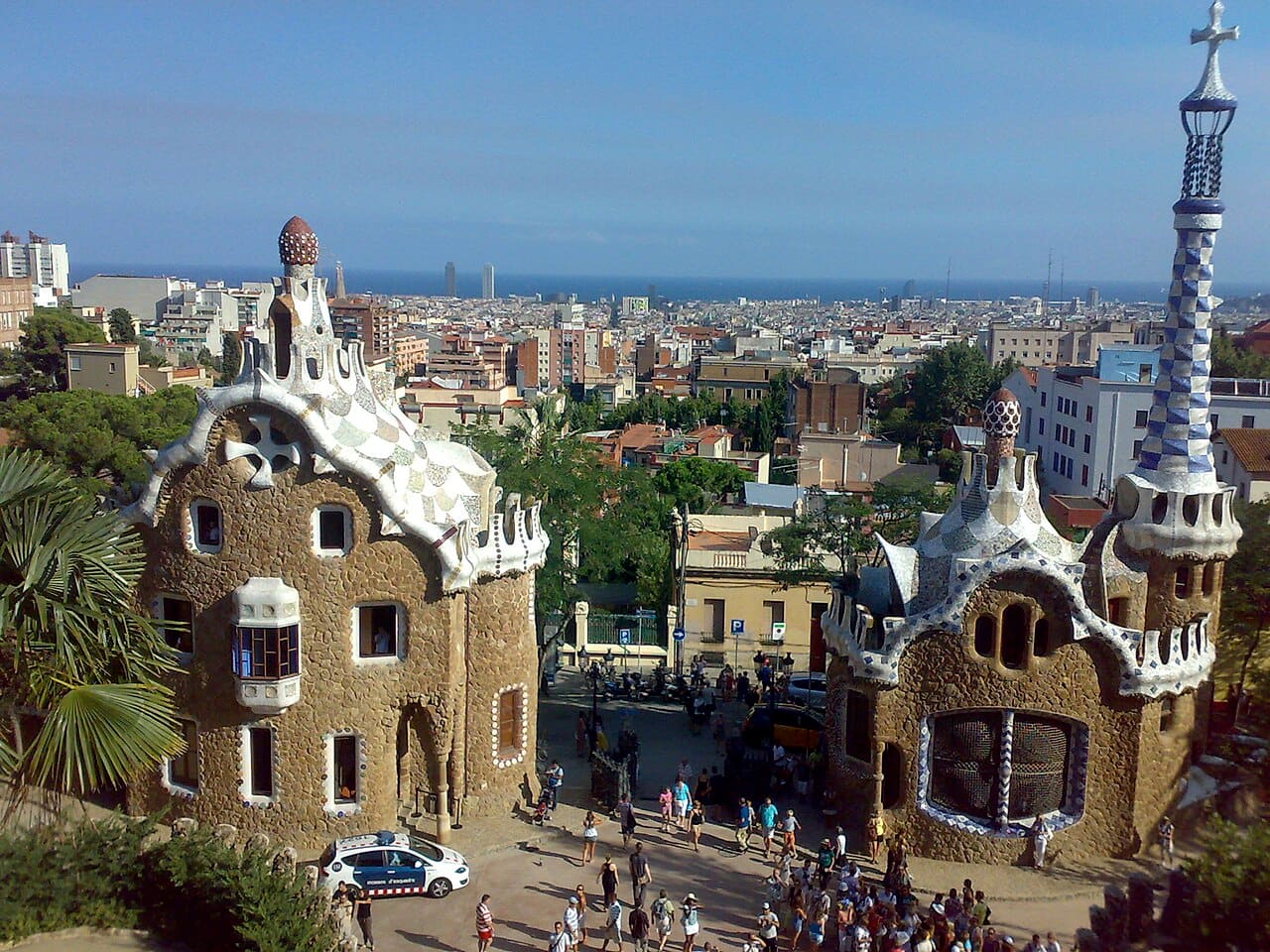
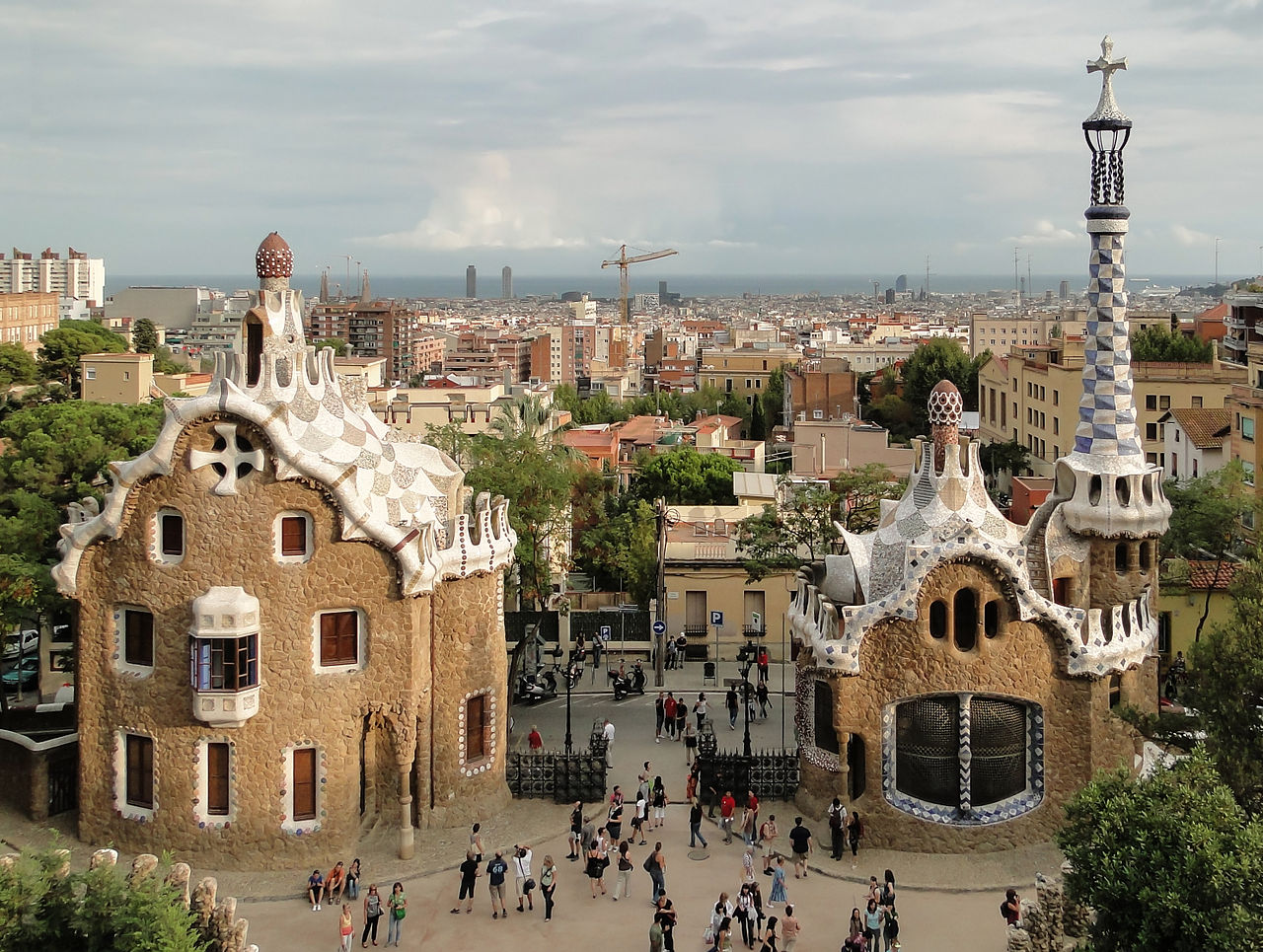
It was designed not as a park but as a luxury housing estate of 60 villas; between 1900 and 1914 only two houses sold and the project failed commercially. When the Güell family transferred the land to the city it opened to the public in 1926. The long serpentine bench is covered in trencadís, mosaics made from broken ceramics. Gaudí lived in one of the unsold model houses from 1906 to 1925; the house is now a museum.
Quick facts
- Opened
- 1926
- Architect
- Antoni Gaudí
- Architectural style
- Catalan modernism
- Area
- 20.2 hectares
- Heritage status
- bien de interés cultural
- Material
- trencadís
Facts from Wikidata, photos from Wikimedia Commons.
Did you know?
What was Park Güell originally meant to be?
A gated luxury estate of 60 plots for wealthy buyers. Only two houses ever sold, the project was abandoned in 1914, and the site opened as a public park in 1926.
Why are the mosaics made of broken pieces?
The technique, called trencadís, uses shards of ceramic and glass — much of it factory waste. It was cheap, and it is the only practical way to tile curved surfaces with flat tiles.
Why is the long wavy bench so comfortable?
The profile is said to have been taken from a workman sitting in wet mortar. Its curves also form part of a system that collects rainwater and channels it to a cistern beneath the hall of columns.
Why go?
- To see Gaudí's mosaic and organic architectural style
- Because it offers a colourful viewpoint over Barcelona
- For a strong route combining photography and a pleasant walk
Travel tip
The monumental zone may require tickets; plan timed entry in peak season.