

Vatican Museums
Ideal: Ideal for art, museums, religious history, and intensive culture routes.
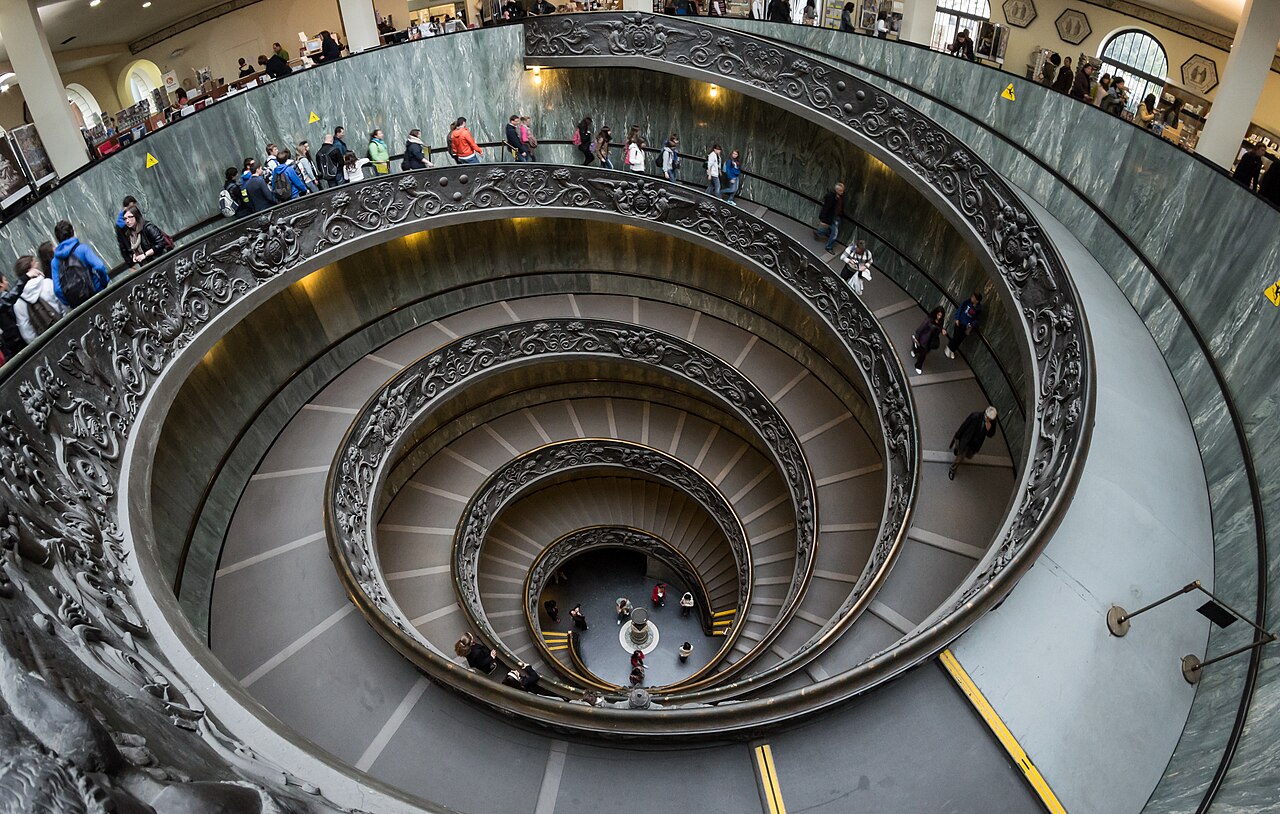
The collection began in 1506 when Julius II bought the Laocoön group; today nearly 20,000 works are displayed along 54 galleries and a route of roughly 7 kilometres. Michelangelo painted the Sistine Chapel ceiling from 1508 to 1512 not lying on his back as commonly believed but standing with his head tilted back; he added the Last Judgement wall twenty-five years later. The double-helix Bramante staircase at the exit dates from 1932 and was designed so descending and ascending crowds never meet.
Quick facts
- Built
- 1506
- Opened
- 1771
- Annual visitors
- 1.6 million
Facts from Wikidata, photos from Wikimedia Commons.
Did you know?
Did Michelangelo paint the ceiling lying on his back?
No — that is a persistent myth. He worked standing on scaffolding of his own design, head and torso arched backwards. The posture strained his neck and eyes so badly that for a time he had to hold letters above his head to read them.
Why are photos banned in the Sistine Chapel?
The ban goes back to the 1980s restoration, funded by a Japanese TV company that received exclusive image rights. Those rights have expired, but the rule stayed to keep crowds moving and to protect the frescoes from flash.
When was the museums' most photographed staircase built?
The original attributed to Bramante dates from 1505, but the double-spiral staircase everyone photographs was designed by Giuseppe Momo in 1932. People going up and down travel on separate spirals and never meet.
Why go?
- To see the Sistine Chapel and Michelangelo's ceiling frescoes
- To experience Vatican art, history, and religious heritage in one route
- To explore one of Rome's most important culture stops
Travel tip
It gets very crowded; early entry or timed tickets greatly improve the experience.