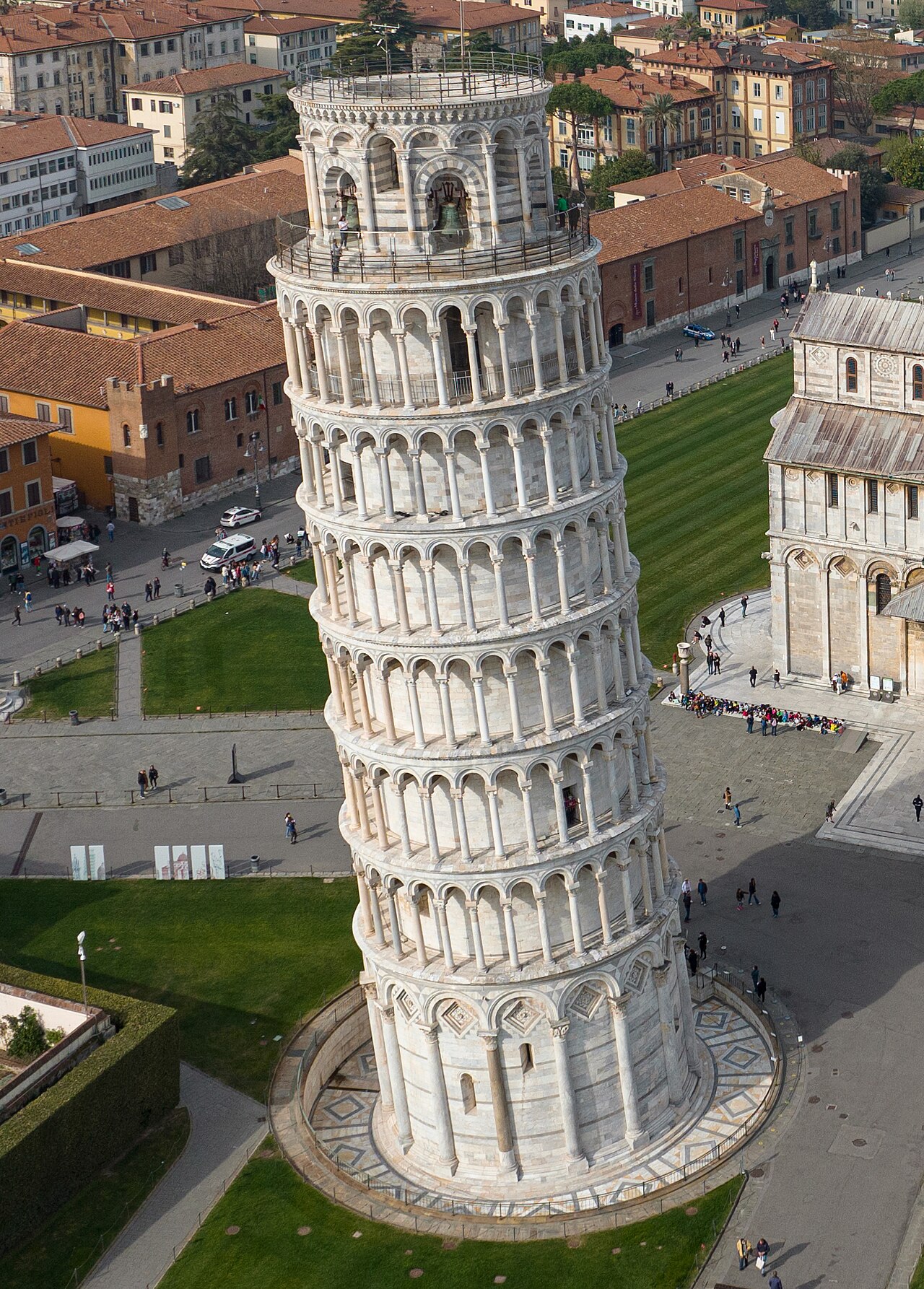


Leaning Tower of Pisa
Ideal: Ideal for classic Italy landmarks, photography, short city stops, and Tuscany routes.
Construction began in 1173 and before the third floor was reached the building started to lean on soft ground three metres below. Two long pauses due to wars saved the tower: the soil settled during those breaks. Upper floors were built with a slight curve to counter the tilt, so the tower is gently banana-shaped. Pouring concrete into the foundations in 1934 made things worse; from 1990 to 2001 soil was removed from the high side, reducing the lean from 5.5 to about 4 degrees. 296 steps lead to the top.
Quick facts
- Built
- 1173
- Opened
- 1373
- Architect
- Bonanno Pisano
- Architectural style
- Romanesque architecture
- Height
- 58.4 m
- Area
- 500 m²
Facts from Wikidata, photos from Wikimedia Commons.
Did you know?
When did the tower start to lean?
Building began in 1173 and it started tilting on the soft ground before the third floor was finished. Construction stretched over roughly 200 years, and masons curved the upper storeys to compensate — so the tower is in fact slightly banana-shaped.
Has the lean been corrected?
An engineering programme from 1990 to 2001 removed soil from the north side and straightened the tower by about 45 cm. The aim was not to make it upright but to stop the collapse; it is now calculated to be safe for at least another 200 years.
Why was the tower built at all?
It is not a standalone monument but the cathedral's bell tower. The four buildings on the square — cathedral, baptistery, campanile and cemetery — together form the Campo dei Miracoli, all sitting on the same soft alluvial ground.
Why go?
- To see the world-famous leaning tower
- To visit cathedral, baptistery, and tower together in Piazza dei Miracoli
- To add an easy short stop to a Florence or Tuscany route
Travel tip
The area can be very touristy; going early is better for photos and crowds.