


City of Arts and Sciences
Ideal: Ideal for modern architecture, photography, family trips, and Valencia itineraries.
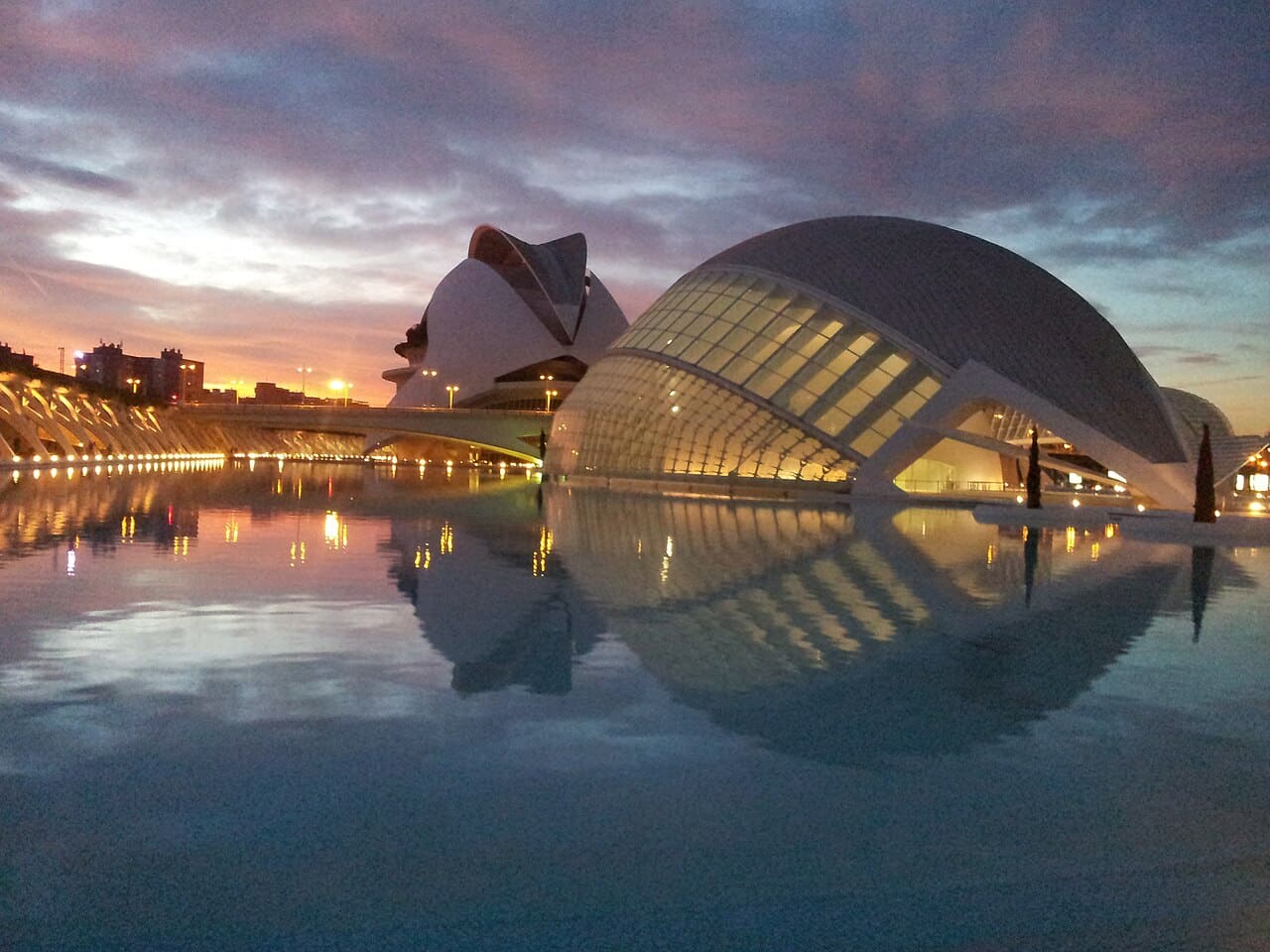
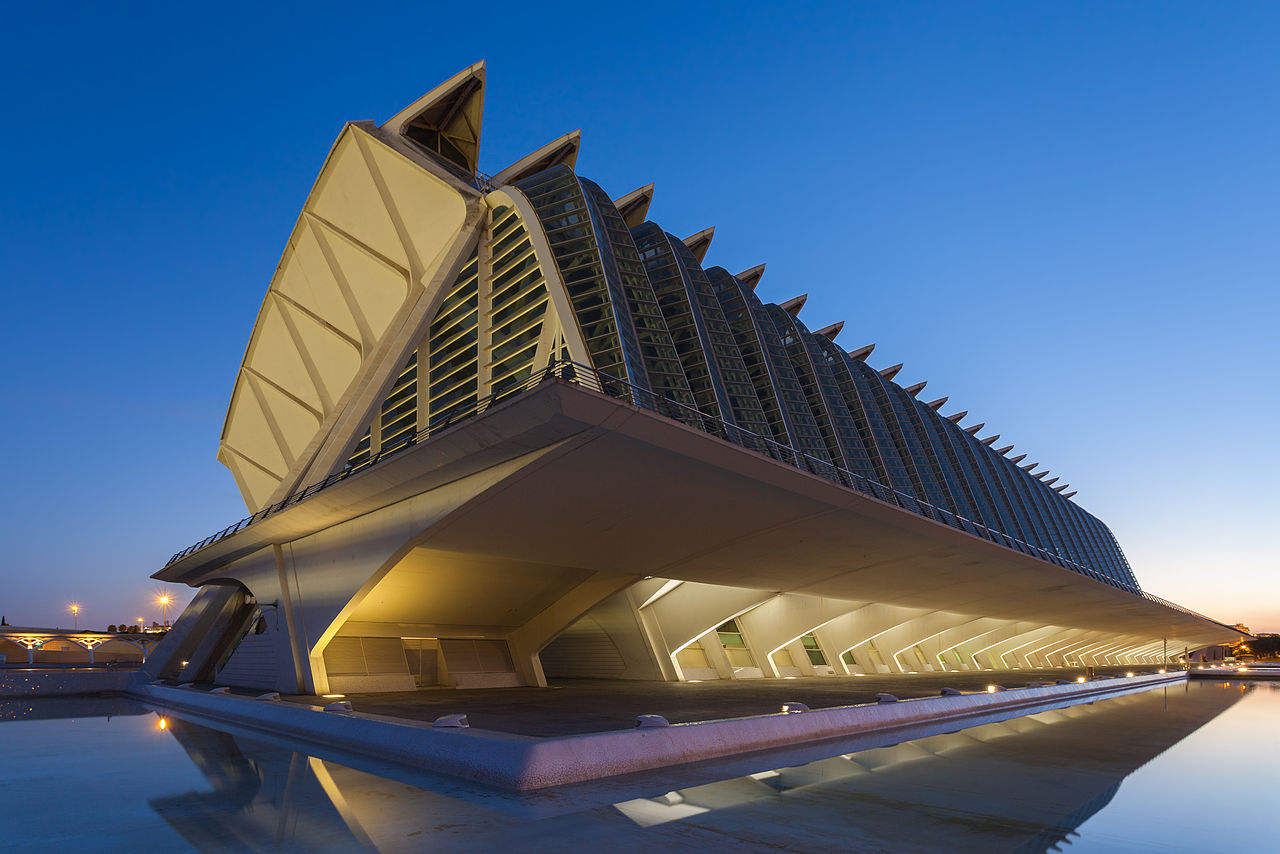
The complex was built in the dried bed of the Turia River, diverted outside the city after the great flood of 1957; that same bed is now a 9-kilometre park cutting through the city. Structures designed by Santiago Calatrava and Félix Candela rose between 1998 and 2005. L'Hemisfèric is eye-shaped and its lid really opens and closes; L'Oceanogràfic is Europe's largest aquarium. Costs running several times the original budget became a long-running political debate in Valencia.
Quick facts
- Built
- 1998
- Opened
- 1998
- Architect
- Santiago Calatrava
- Architectural style
- high-tech architecture
Facts from Wikidata, photos from Wikimedia Commons.
Did you know?
Why is the complex in a dry riverbed?
The River Turia was diverted around the city after a devastating flood in 1957. Instead of concrete, the empty bed became a park roughly 9 km long — and the Ciudad de las Artes sits at its southern end.
What are the buildings' shapes based on?
The architect Santiago Calatrava drew on skeletons and marine life. The opera house suggests a helmet, the planetarium a half-open human eye, and the long gallery a spine.
How big is the aquarium here?
The Oceanogràfic is Europe's largest aquarium, home to more than 45,000 marine animals, with separate zones recreating ecosystems from the Arctic to tropical mangroves.
Why go?
- To see Valencia's most iconic modern architectural area
- To walk among futuristic buildings and broad reflecting pools
- To experience science, art, and architecture in one district
Travel tip
Daytime blue sky and evening lighting both photograph well; seeing it at two different times is worthwhile.