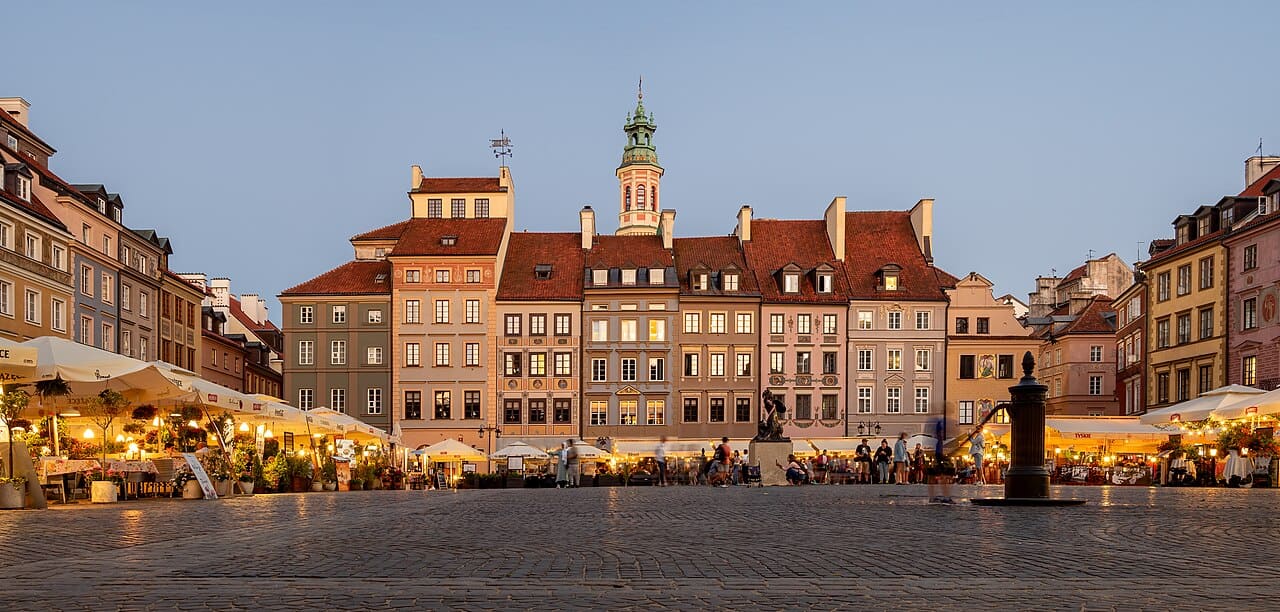
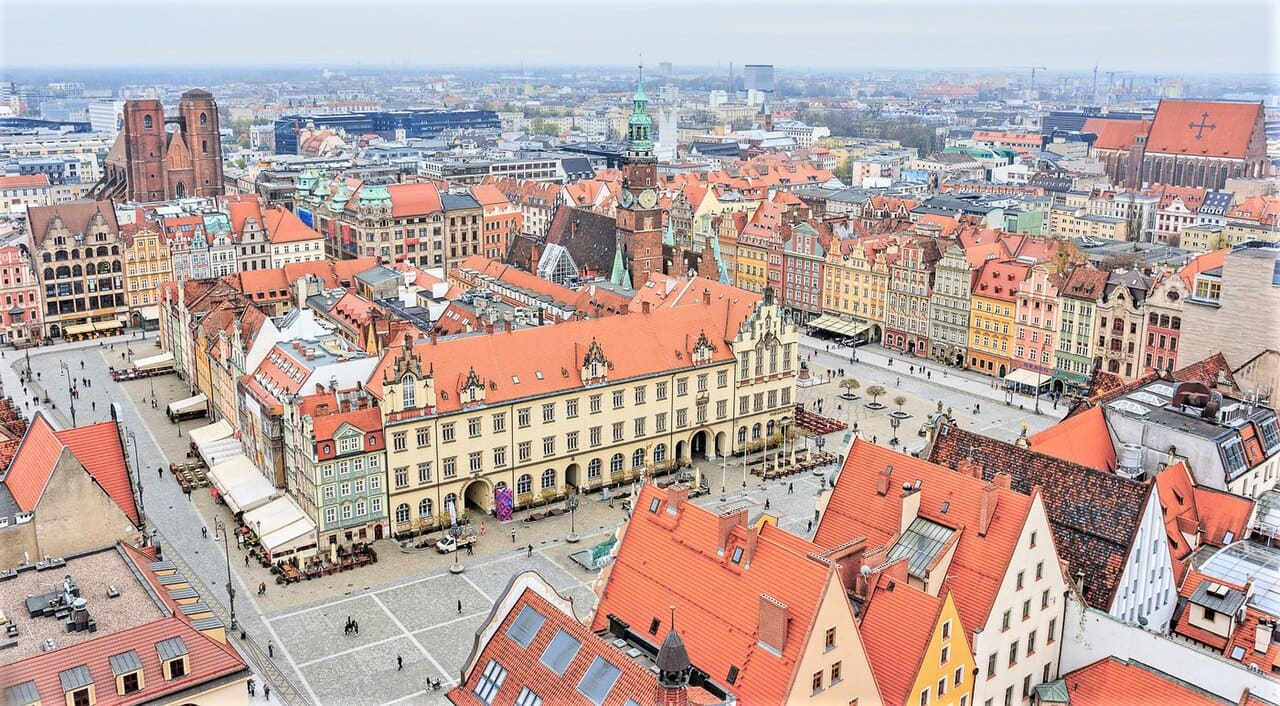


Wrocław Market Square
Ideal: Ideal for city walks, colorful architecture, photography, and playful routes.
More than six hundred bronze dwarf statues are scattered across the city and their number is still growing; they are not decoration but a political memorial. In the 1980s the Orange Alternative movement developed an absurdist protest language by drawing dwarfs over opposition graffiti erased by police, and the statues commemorate that action. The square is Poland's largest after Kraków's. The city sits on islands divided by branches of the Oder and has more than a hundred bridges, so you often hear it called the Venice of the North.
Did you know?
What do the city's dwarf statues mean?
The dwarves were the emblem of Orange Alternative, a peaceful 1980s protest movement that mocked communist rule through absurdity. More than 800 small bronze dwarves are now scattered across the city.
How many islands and bridges does Wrocław have?
The Oder splits into many channels inside the city, giving it over 100 bridges and dozens of islands — which is why it is often called the Venice of Poland.
Where is the oldest part of the city?
Ostrów Tumski, Cathedral Island, is where the city began. Its street lamps are still lit by hand each evening by a lamplighter.
Why go?
- To see Wrocław's most colorful and lively city center
- To experience the historic square, cafés, and town hall atmosphere
- For a fun city walk hunting dwarf statues
Travel tip
Starting from the square and following dwarf statues through nearby side streets makes for a playful scavenger hunt.