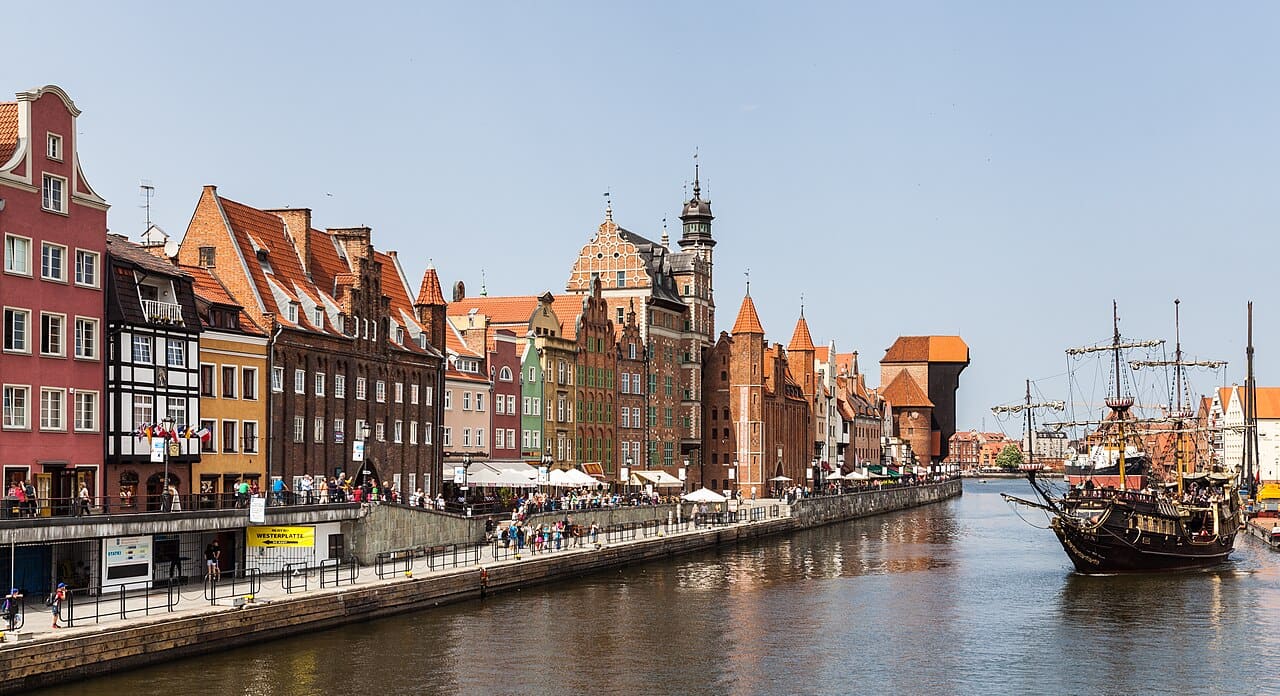


Gdańsk Harbor
Ideal: Ideal for seaside atmosphere, historic port cities, and photography.
The first shots of World War II were fired on the morning of 1 September 1939 at Westerplatte peninsula here; the path toward the war's end also began in this city — the August 1980 strike at the Lenin Shipyard gave birth to Lech Wałęsa's Solidarity movement. The Żuraw on the Motława waterfront was a medieval port crane that could lift up to four tons using human-powered wheels. The city was a center of amber trade; the stalls lining Mariacka Street continue that tradition.
Quick facts
- Built
- 997
- Area
- 683 km²
- Elevation
- 11 m
Facts from Wikidata, photos from Wikimedia Commons.
Did you know?
What is the big wooden structure at the port?
The Żuraw is a 15th-century medieval harbour crane, the largest surviving in Europe. Its giant treadwheels were turned by people and could lift up to 4 tonnes.
Where did the Second World War begin?
The first shots were fired at the Westerplatte peninsula in Gdańsk on 1 September 1939. The site is preserved as a memorial and can be reached by boat from the centre.
Why is amber so associated with this city?
The Baltic coast holds the world's richest amber deposits and Gdańsk has been the centre of the craft for centuries. The city has an amber museum and even a church altar made of it.
Why go?
- To experience Poland's Baltic coast and harbor atmosphere
- To feel Gdańsk's historic trade and maritime identity
- For a riverside walk and photo route
Travel tip
It works best to explore the harbor area together with the Old Town and Długi Targ walk.