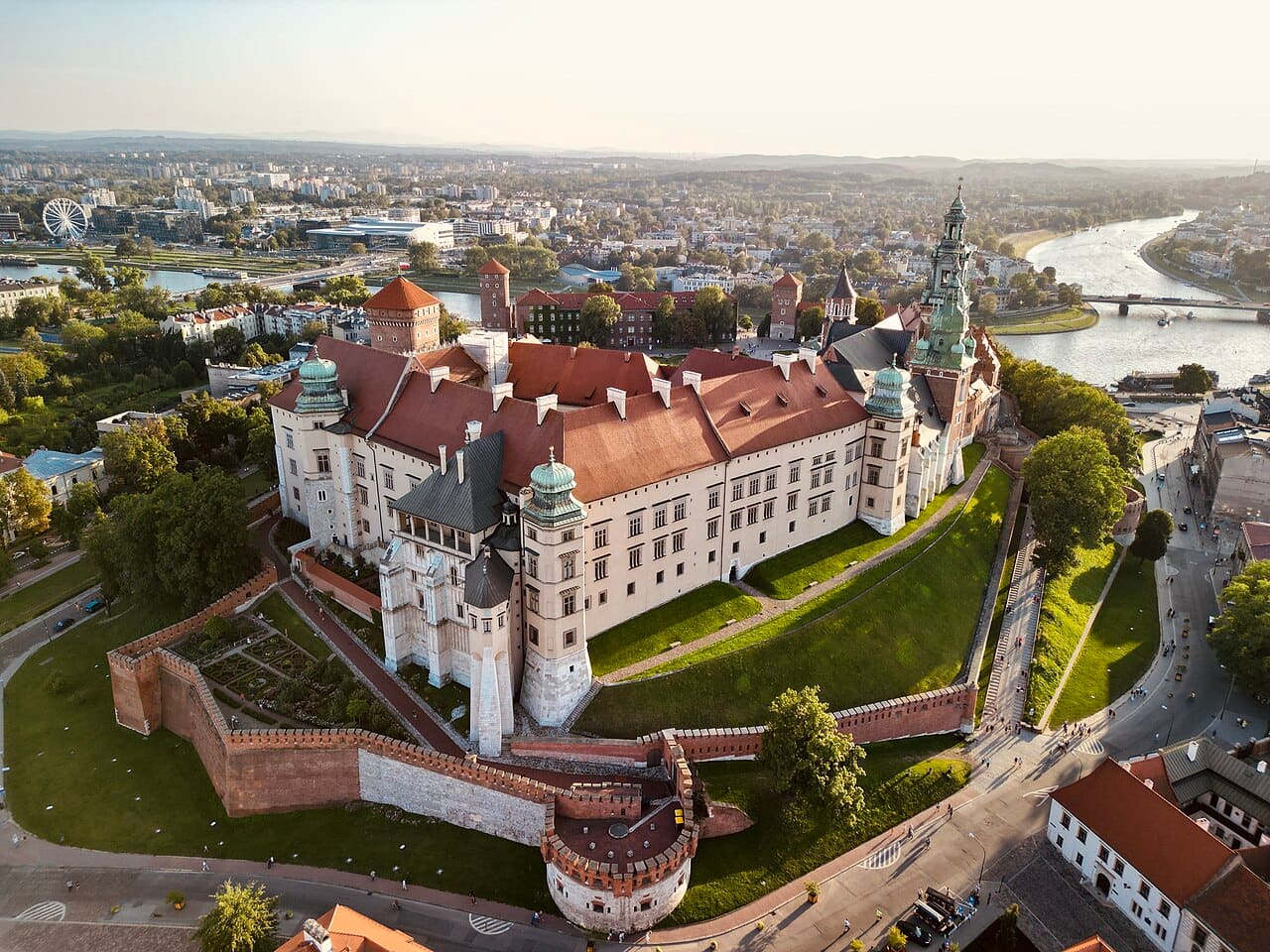


Wawel Castle
Ideal: Ideal for history, palace and castle architecture, and first-time visitors to Kraków.
Until the capital moved to Warsaw in 1596, Polish kings were crowned and buried here; the crypts beneath the cathedral hold rulers alongside national figures such as Kościuszko and Piłsudski. The Zygmunt bell in the tower dates from 1520, weighs more than 12 tons, and is rung only on major occasions by twelve people swinging it together. The cave beneath the hill is the setting of the legend in which a shepherd killed the dragon that ravaged the city with a sheep carcass stuffed with sulfur; a fire-breathing statue stands at the entrance.
Quick facts
- Built
- 11th century
- Architect
- Francesco Fiorentino
- Commissioned by
- Casimir III the Great
- Architectural style
- Gothic architecture
- Area
- 7,040 m²
- Heritage status
- Historical monument of Poland
Facts from Wikidata, photos from Wikimedia Commons.
Did you know?
Where does the Wawel dragon legend come from?
The dragon said to have lived in the cave beneath Wawel hill is central to Kraków's founding legend. The cave is open to visitors and a bronze dragon at the exit breathes real fire.
Why is the cathedral bell so significant?
The Sigismund Bell, cast in 1520, weighs around 12 tonnes and needs eight people to ring it. It sounds only on the most important national and religious occasions, and Poles read it as a historical signal.
How were the castle's tapestries saved in the war?
The 16th-century Flemish tapestries were smuggled out of Poland in 1939 via Romania, France and Britain to Canada. The collection only returned in 1961.
Why go?
- To see one of the most important buildings in Polish royal history
- To take in Kraków and the Vistula River from above
- To explore castle, cathedral, and palace atmosphere in one district
Travel tip
The Wawel complex is large — don't just look from outside; leave time for the courtyards and the cathedral area.