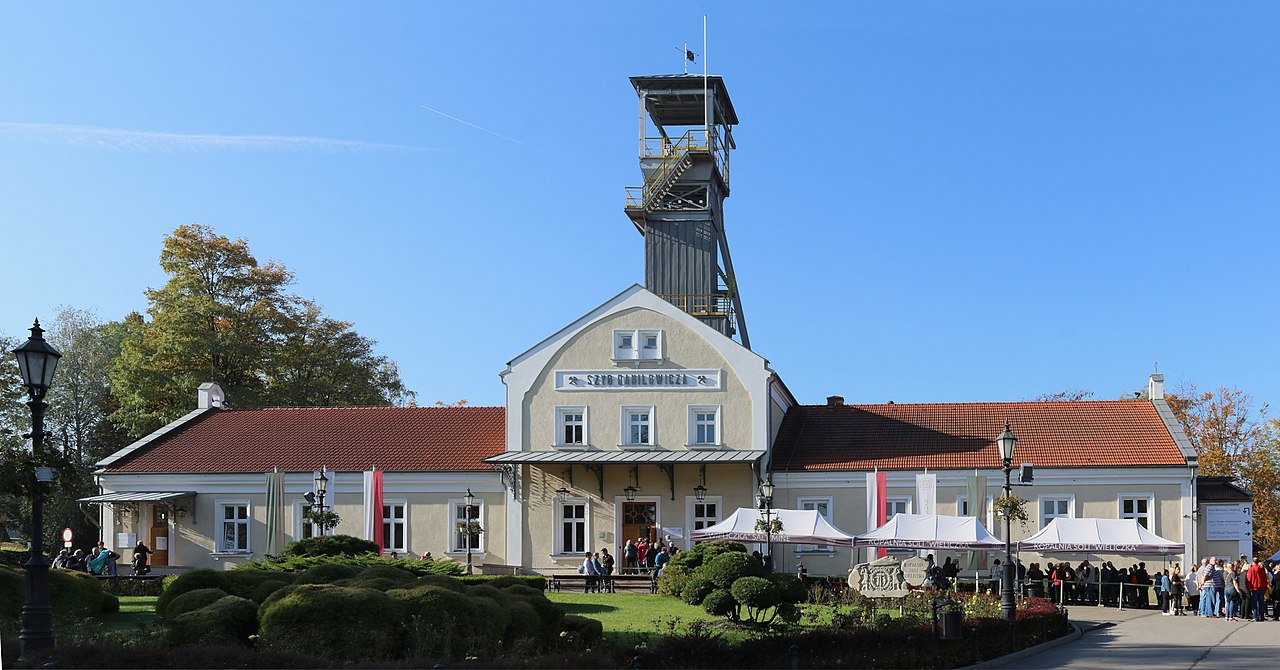


Wieliczka Salt Mine
Ideal: Ideal for history, underground routes, unusual museum experiences, and day trips around Kraków.
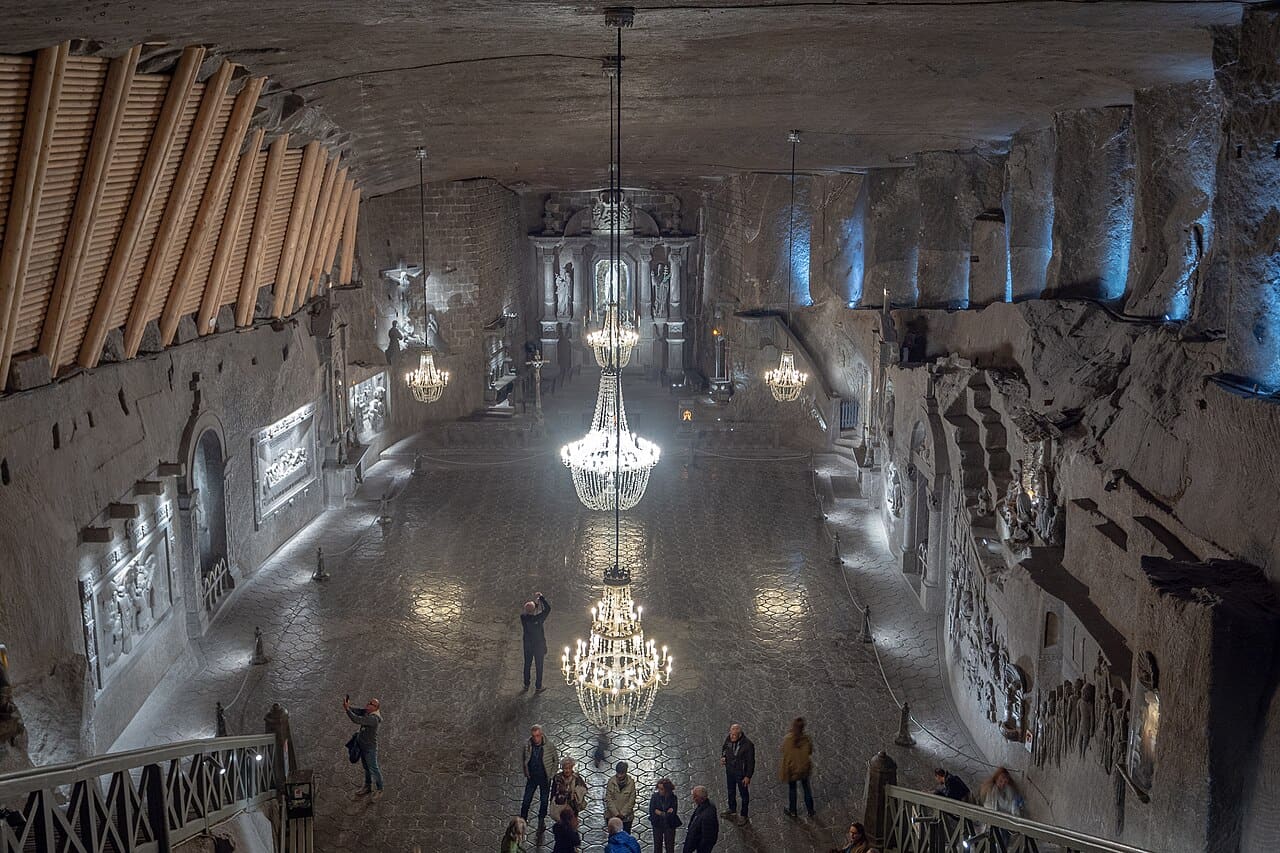
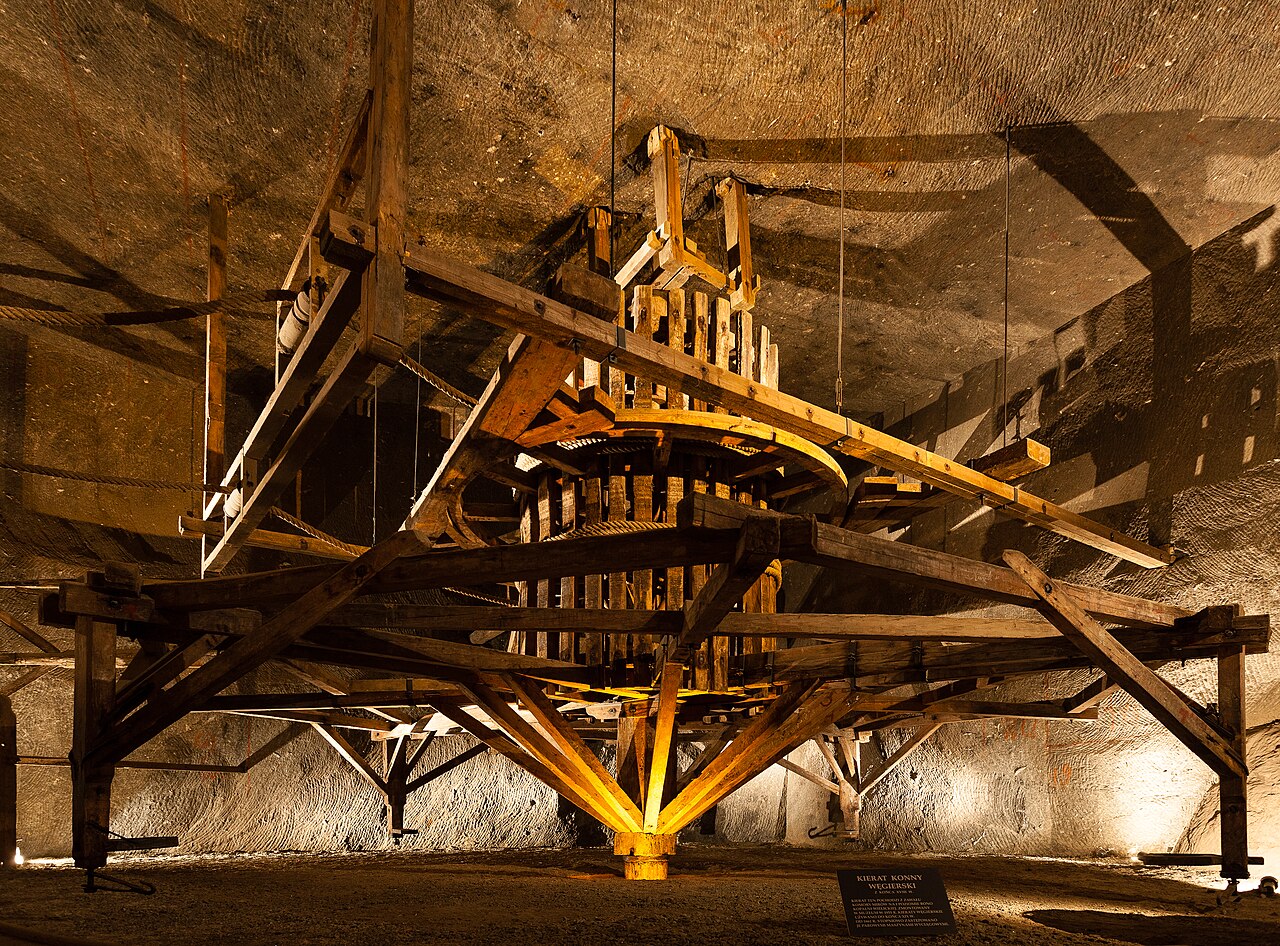
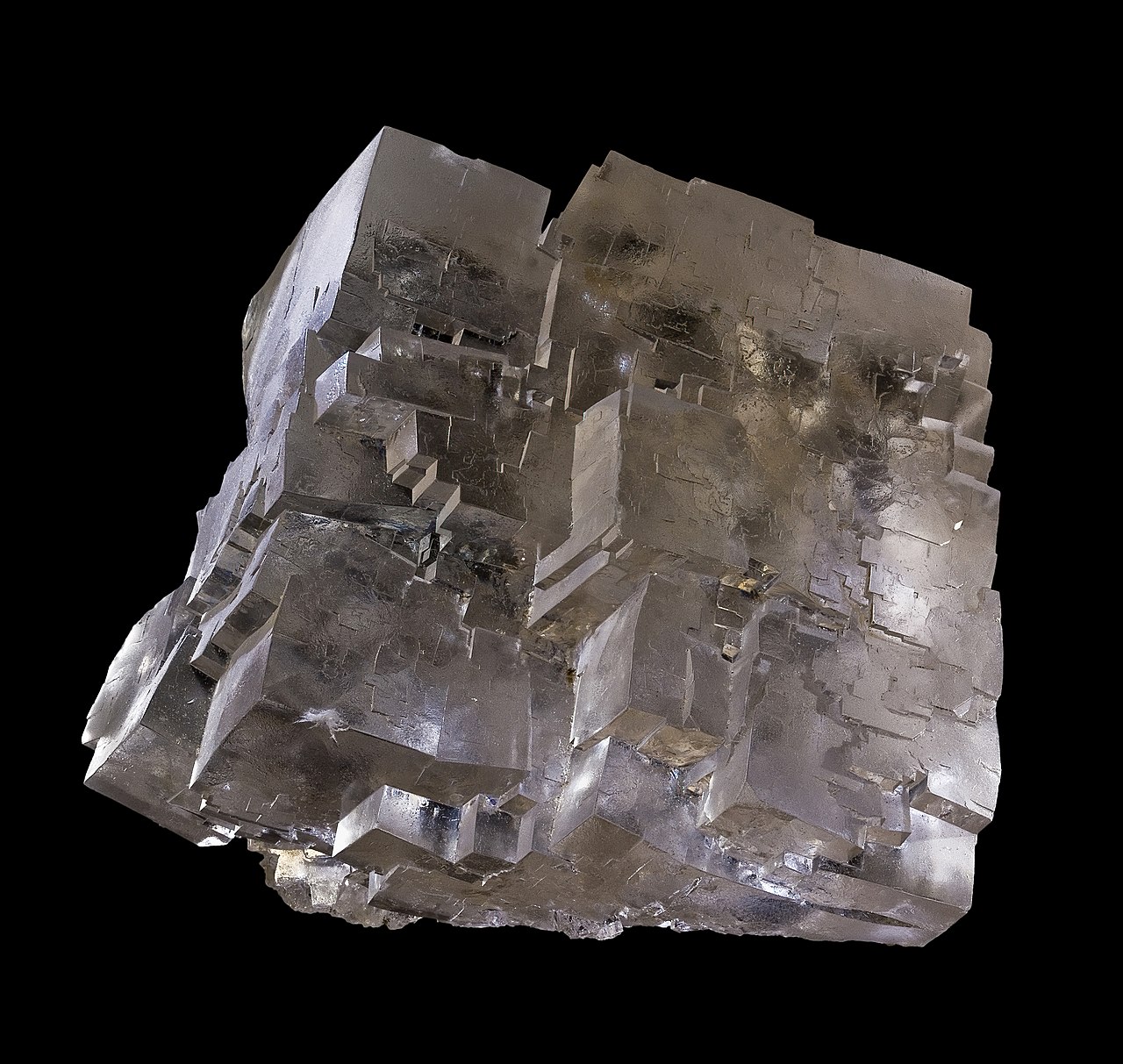
Salt was mined continuously in Wieliczka from the 13th century until 1996; galleries stretching across nine levels total 300 kilometers, and the visitor route covers only about two percent of that. Everything below — walls, stairs, sculptures, even chandelier crystals — is carved from rock salt. Three miners carved the 54-meter St. Kinga's Chapel over more than sixty years in their off-hours. The site was one of twelve places on UNESCO's first World Heritage list in 1978.
Quick facts
- Built
- 13th century
- Area
- 969 hectares
- Heritage status
- Historical monument of Poland
Facts from Wikidata, photos from Wikimedia Commons.
Did you know?
Is there really a chapel inside the mine?
Yes. St Kinga's Chapel, 101 m down, is carved entirely from salt: the chandeliers are salt crystal and the wall reliefs and statues were made by miners from blocks of rock salt.
How big is the mine?
Its tunnels total more than 245 km across nine levels. The tourist route covers only about one percent of that.
How long did the mine operate?
Salt was produced continuously from the 13th century until 2007 — roughly 700 years. Salt was so valuable that at one point it provided a third of the Polish crown's income.
Why go?
- To see the UNESCO-listed historic salt mine
- To explore underground chapels, galleries, and salt sculptures
- For a distinctive and memorable half-day trip from Kraków
Travel tip
It can be cool underground; bring a light layer even in summer.