
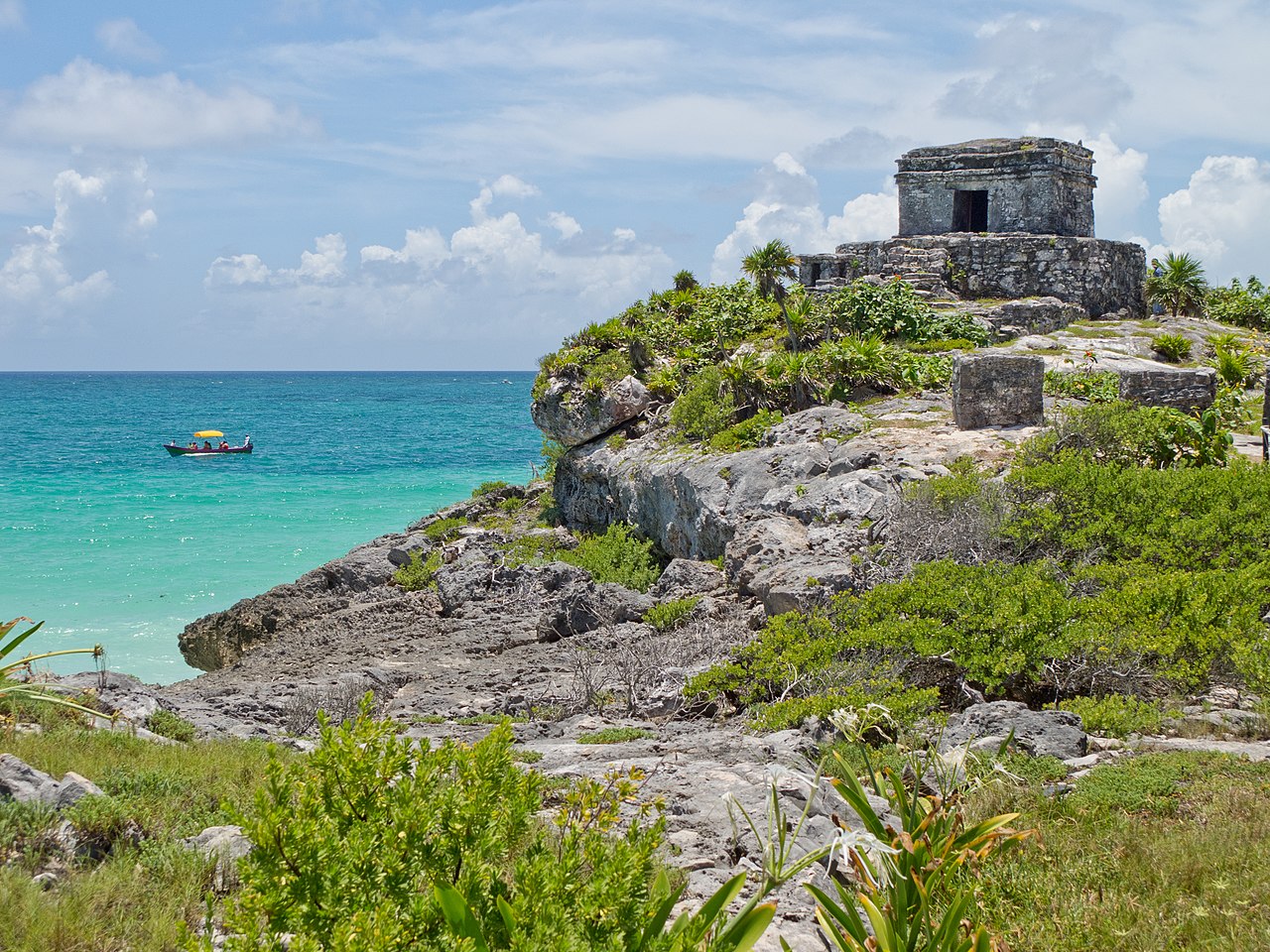


Tulum, Mexico2-3 hoursMorning
Tulum Ruins
Ideal: Ideal for archaeology, beaches, photography, and a Riviera Maya itinerary.
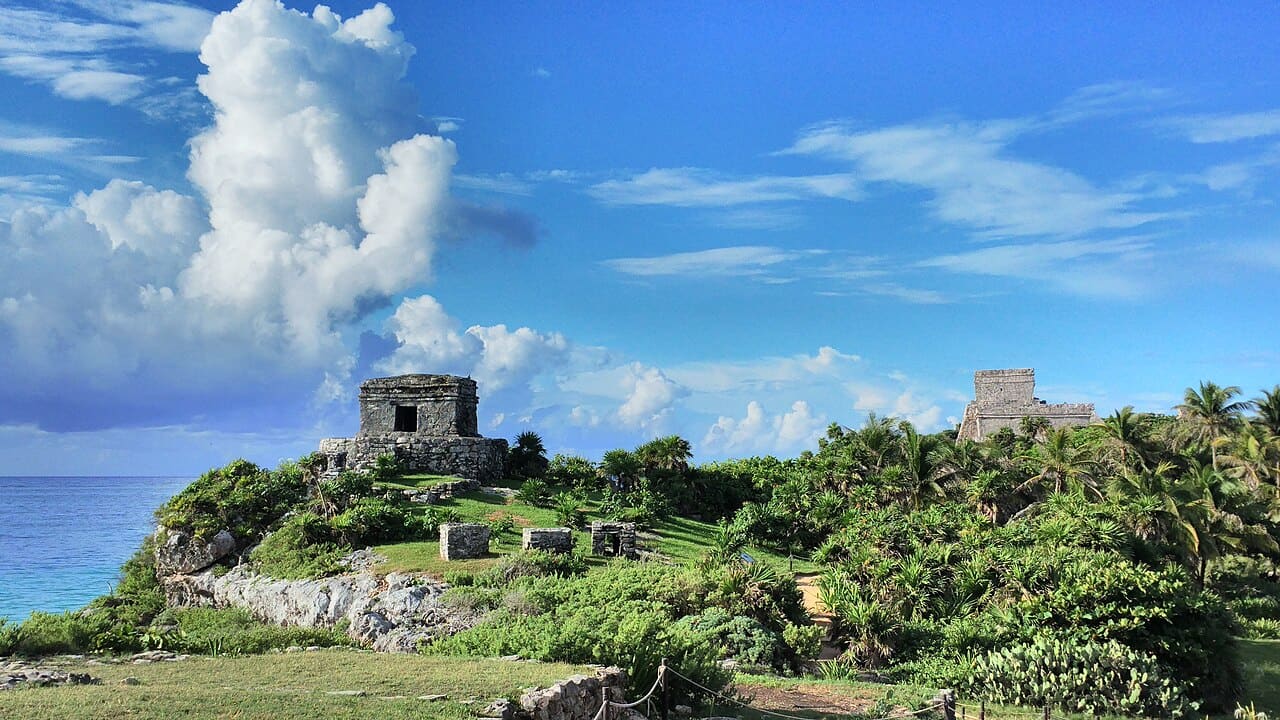
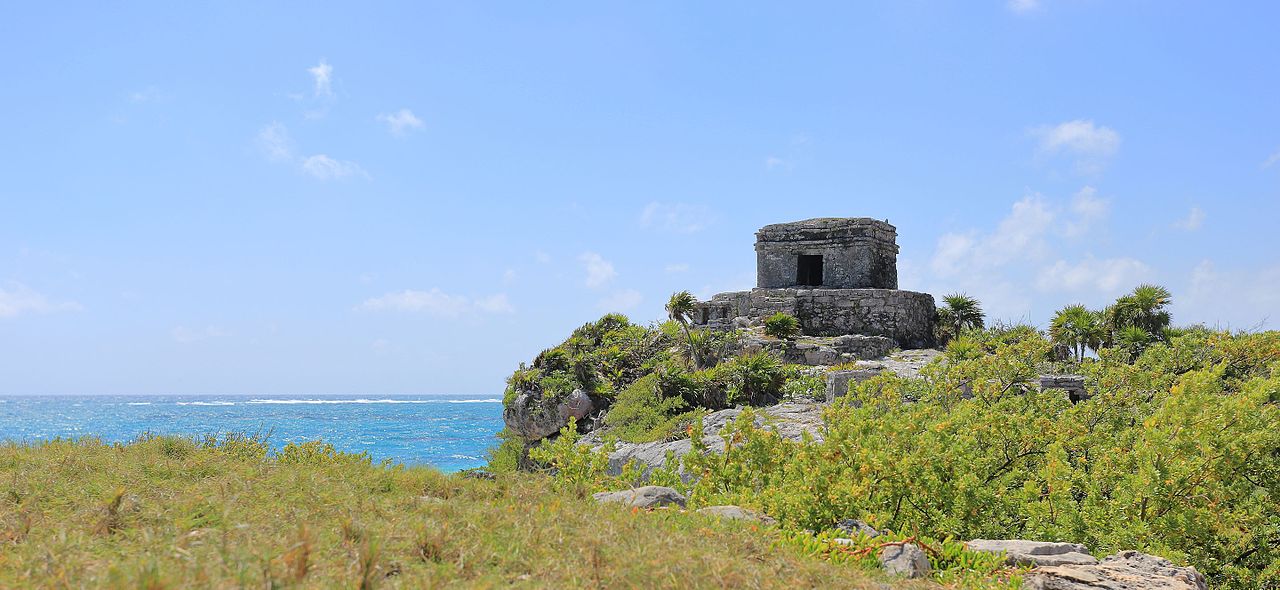
This settlement on a cliff above the sea is the Maya's only major coastal city — and among the latest: it was still inhabited when the Spanish arrived. Today's name means 'wall' in Yucatec Maya, from the enclosure on three sides; its original name was Zamá, 'dawn', because it faces east toward the rising sun over the ocean. It functioned as a port trading jade and obsidian, and a small temple with two windows served as a kind of lighthouse.
Why go?
- To see Maya ruins with ocean views up close
- To swim at the beach right below the archaeological zone
- For the Riviera Maya's iconic history-and-beach combination
Travel tip
Go early — afternoons are crowded and hot. Beach access is directly beneath the ruins.