


Széchenyi Baths
Ideal: Ideal for spa, relaxation, thermal bathing, and distinctive city activities.
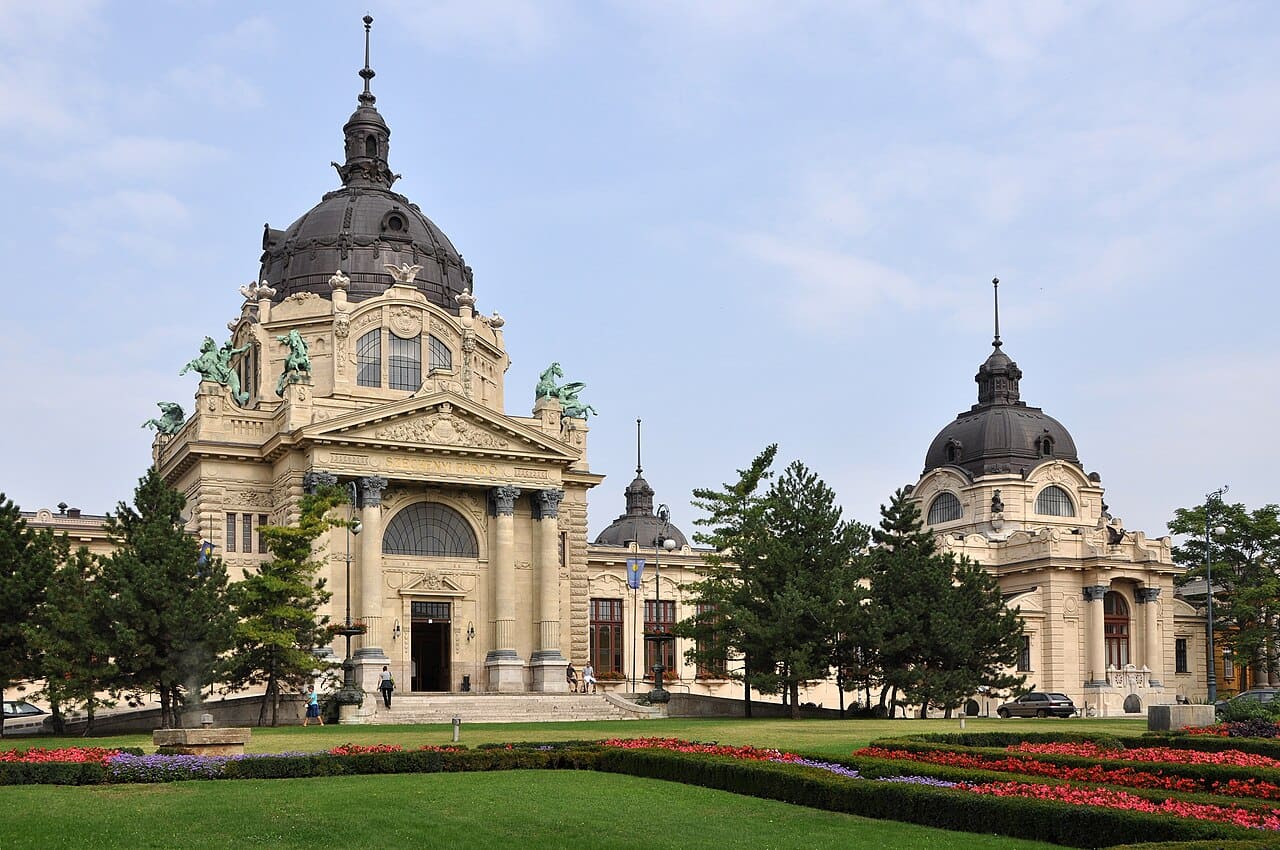
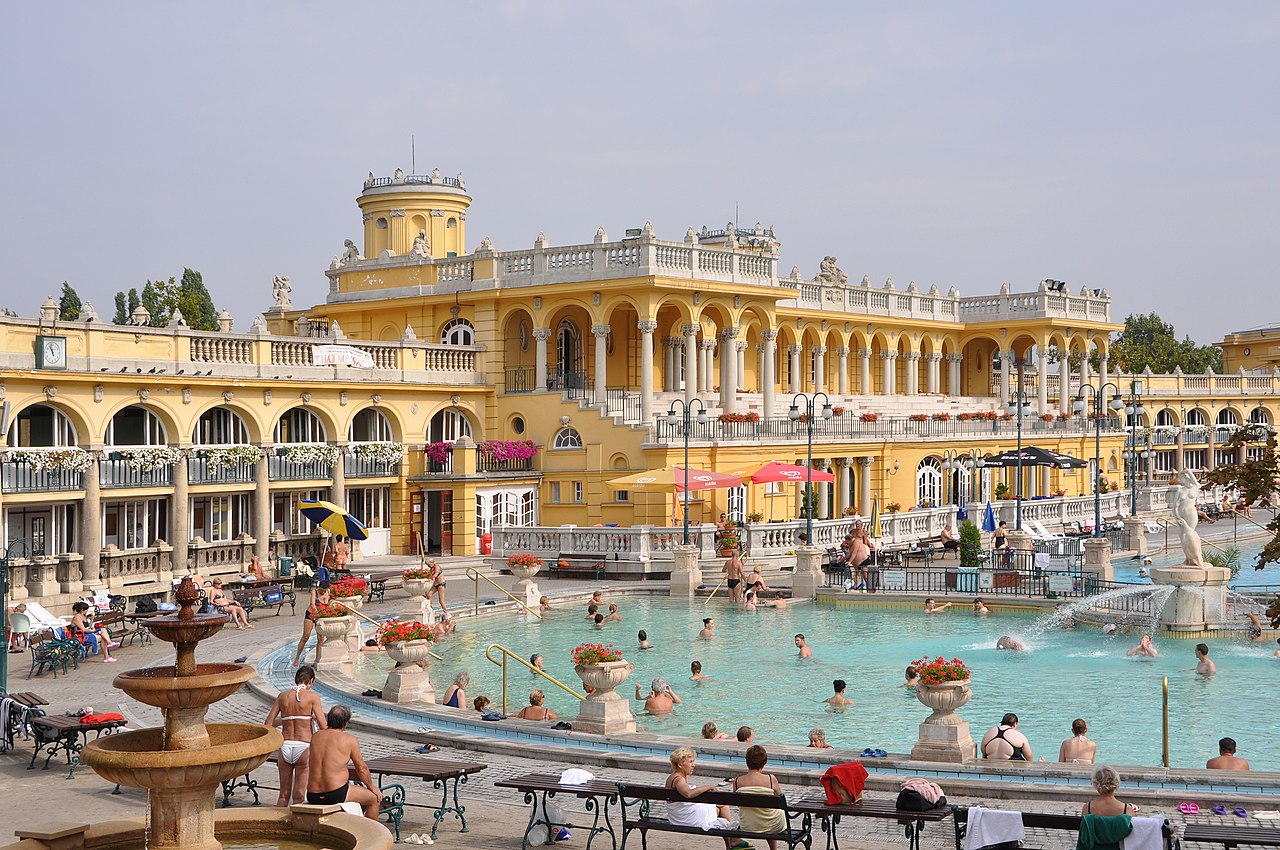
Opened in 1913 and counted among Europe's largest thermal bath complexes: 18 pools, 10 saunas, and steam rooms. Water rises from a 1,246-meter-deep well at 74–77°C and is cooled before reaching the pools. Its most famous image appears in winter — elderly Budapesters have kept the same ritual for years, sitting at marble chess boards in the steam-filled outdoor pool while temperatures outside drop below zero.
Quick facts
- Built
- 1913
- Opened
- 1913
- Architect
- Győző Czigler
- Architectural style
- baroque revival
- Heritage status
- historic monument of Hungary
Facts from Wikidata, photos from Wikimedia Commons.
Did you know?
Where does the water come from?
From two thermal wells reaching 1,200 m down, emerging at up to 74 °C. Budapest as a whole yields more than 70 million litres of thermal water a day.
Why do people play chess in the pool?
The floating chessboards in the outdoor pool are the baths' best-known image. The tradition goes back decades, and the regulars keep playing through the steam in winter.
Where does Budapest's bathing tradition come from?
The springs were used from Roman times, but today's bathing culture was shaped largely by the Ottoman period in the 16th and 17th centuries. Baths such as Rudas and Király still keep their original Ottoman domes.
Why go?
- To experience Budapest's famous thermal bath culture
- For an outdoor hot-pool experience in a historic setting
- To add a relaxing break to an intensive city trip
Travel tip
Weekends can be very crowded; choose morning hours for a calmer experience.