

St. Stephen's Basilica
Ideal: Good for architecture, religious heritage, and downtown walking routes.
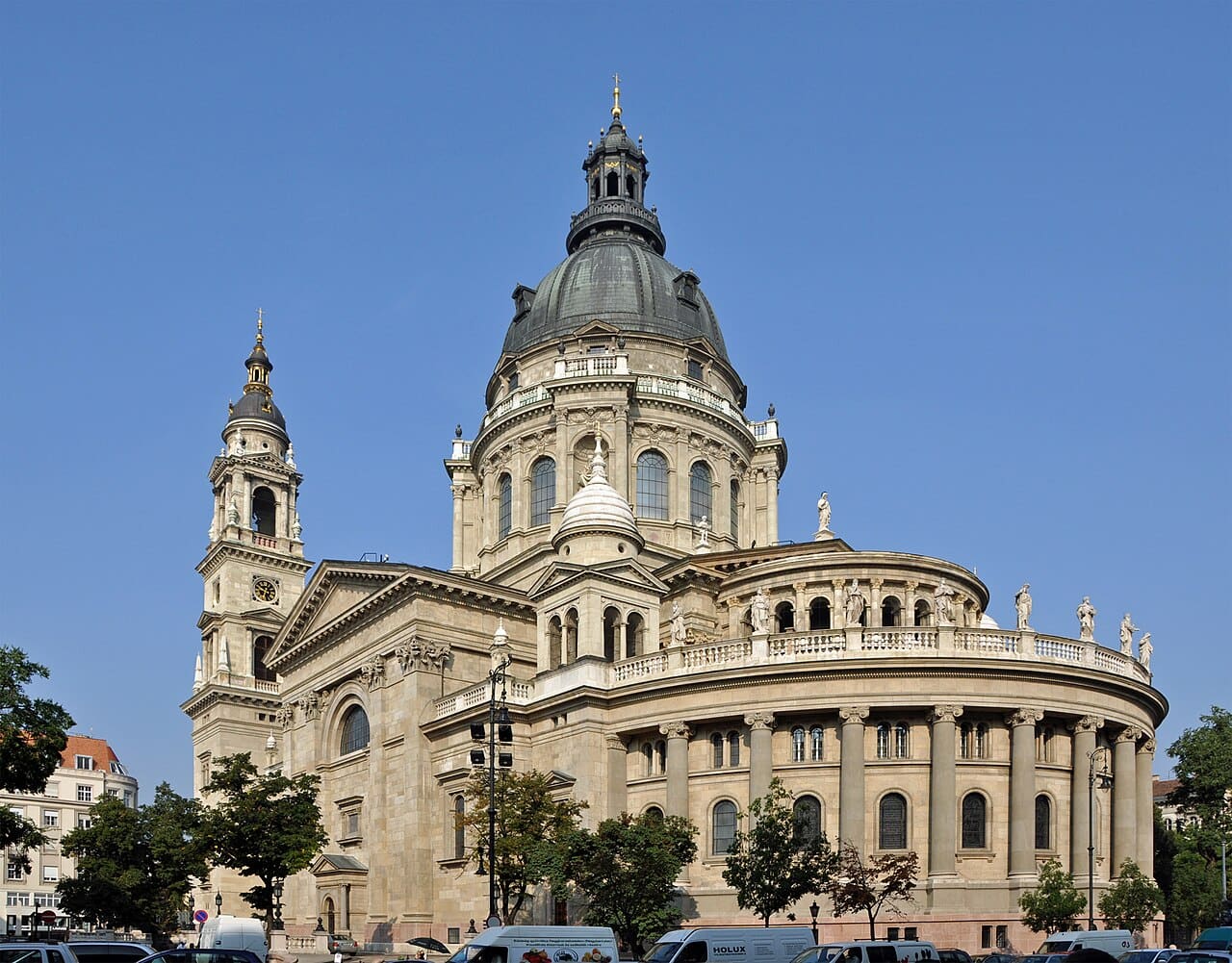
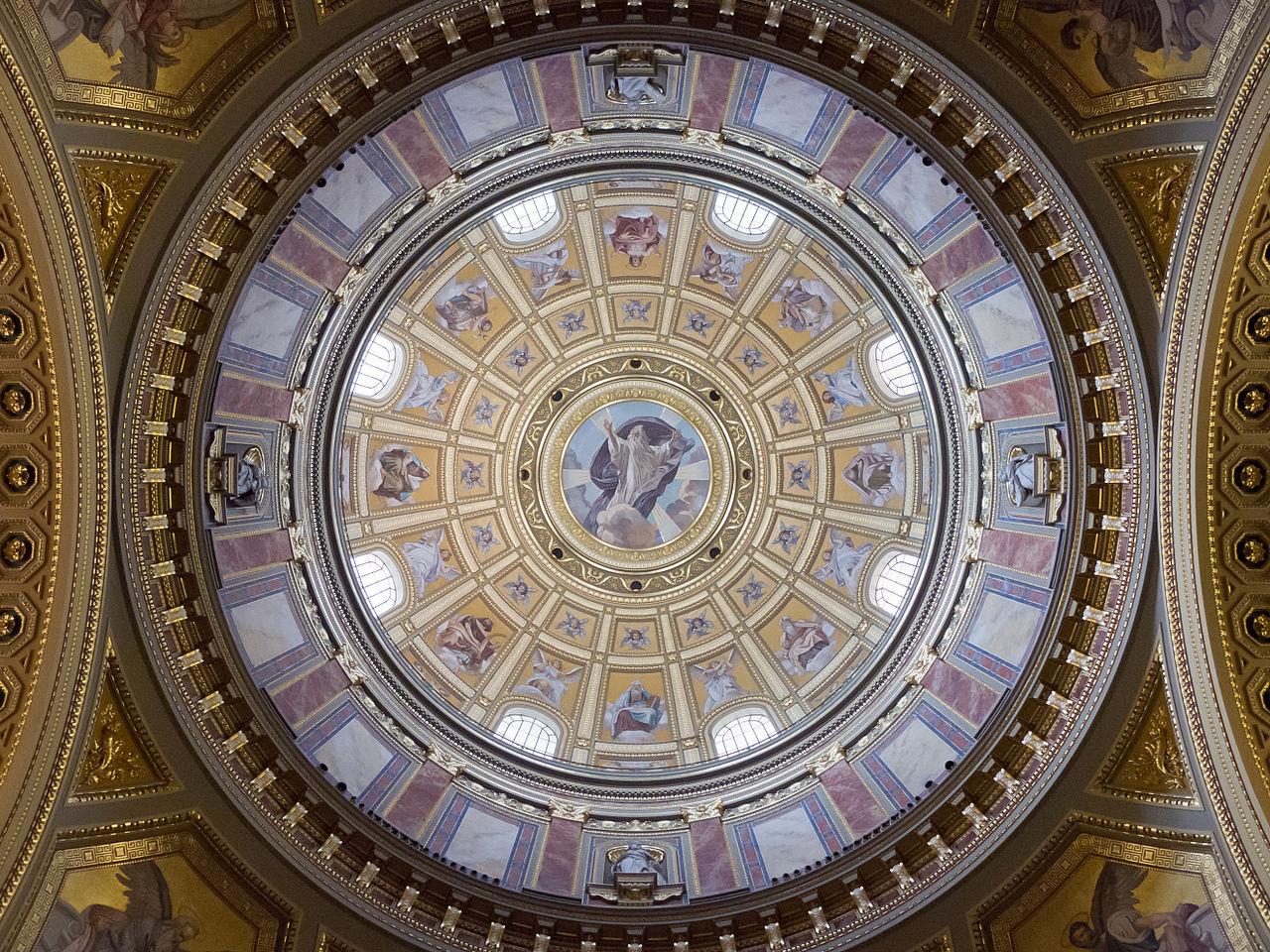
Construction took 54 years: work began in 1851, the dome collapsed in a storm in 1868 and everything had to be rebuilt, and it only opened in 1905. At 96 meters it matches Parliament in height — both sit on the symbolic elevation limit that defines the city skyline. The most visited object inside is not a work of art but the mummified right hand of King Stephen I, founder of the nation, kept in a glass reliquary. Every 20 August the hand is carried in procession through the city's streets.
Quick facts
- Built
- 1905
- Architect
- József Hild
- Architectural style
- Neoclassical architecture
- Height
- 96 m
Facts from Wikidata, photos from Wikimedia Commons.
Did you know?
Is the hand displayed in the basilica real?
Yes. The mummified right hand of Hungary's first king, Stephen I, is displayed as the "Holy Right" in a special reliquary and carried through the city in procession every 20 August.
Why did construction take so long?
It took 54 years. The dome collapsed in 1868 and the design had to be reworked from scratch; the basilica was only completed in 1905.
Why is the building exactly 96 metres tall?
It matches the parliament building at 96 m, symbolising the equality of secular and religious power — and for a long time no building in Budapest was allowed to exceed that height.
Why go?
- To see one of Budapest's most important basilicas
- For city views from the dome or terrace
- Because it slots easily into a central walking route
Travel tip
Consider climbing to the dome view — the city center looks beautiful from above in the open air.