

Lake Balaton
Ideal: Ideal for summer holidays, lake views, gentle walks, and routes outside the city.
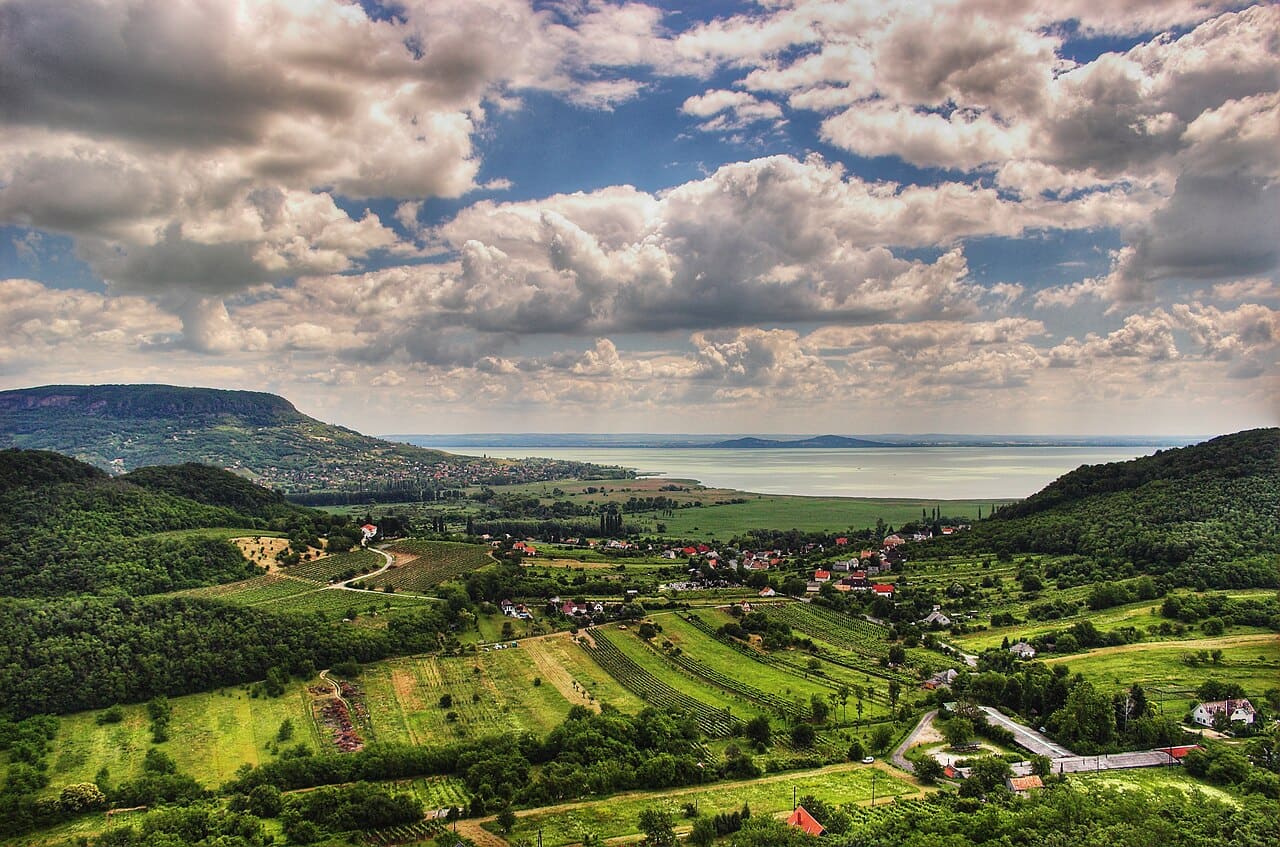
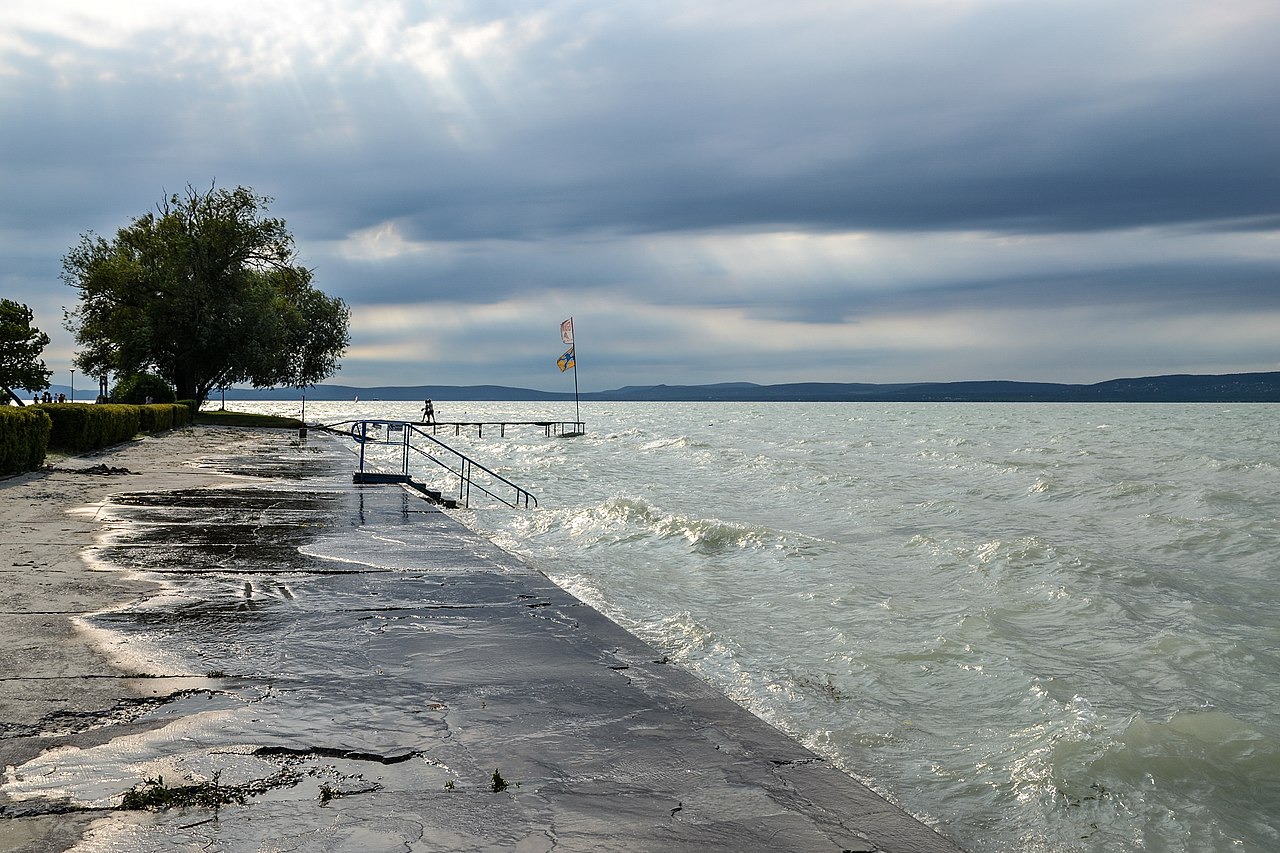
Central Europe's largest lake: 77 kilometers long but only 3.3 meters deep on average. That shallowness lets the water warm quickly in summer, so from late June the lake can feel warmer than the sea. The north shore is covered in volcanic hills and vineyards; the south shore stays shallow for hundreds of meters and is the center of family holidays. The 1055 foundation charter of the monastery on the Tihany peninsula is the oldest surviving written text containing Hungarian words.
Quick facts
- Length
- 78 km
- Area
- 592 km²
- Elevation
- 104 m
- Heritage status
- Ramsar site
Facts from Wikidata, photos from Wikimedia Commons.
Did you know?
Why is Balaton so shallow?
Its average depth is only around 3 m and even the deepest point is under 12 m. As a result the water warms quickly in summer and you can stand up across large parts of it.
Does the lake freeze in winter?
Yes — being shallow it usually freezes over completely. Walking and skating on the ice is a regional winter tradition, and in some years the ice grows thick enough to carry vehicles.
What makes the peninsula on the north shore different?
The Tihany Peninsula is volcanic in origin and juts into the lake. It has an inner lake of geothermal origin, lavender fields and an abbey founded in 1055 whose charter contains the oldest known Hungarian text.
Why go?
- To see Hungary's best-known summer and lake holiday region
- For a relaxed route in lakeside towns such as Balatonfüred
- To add nature and summer atmosphere to a city trip
Travel tip
It is livelier in summer season; choose weekdays or off-season for a calmer experience.