

Nice & Côte d'Azur
Ideal: Ideal for Mediterranean coast, city walks, summer holidays, and a relaxed pace.
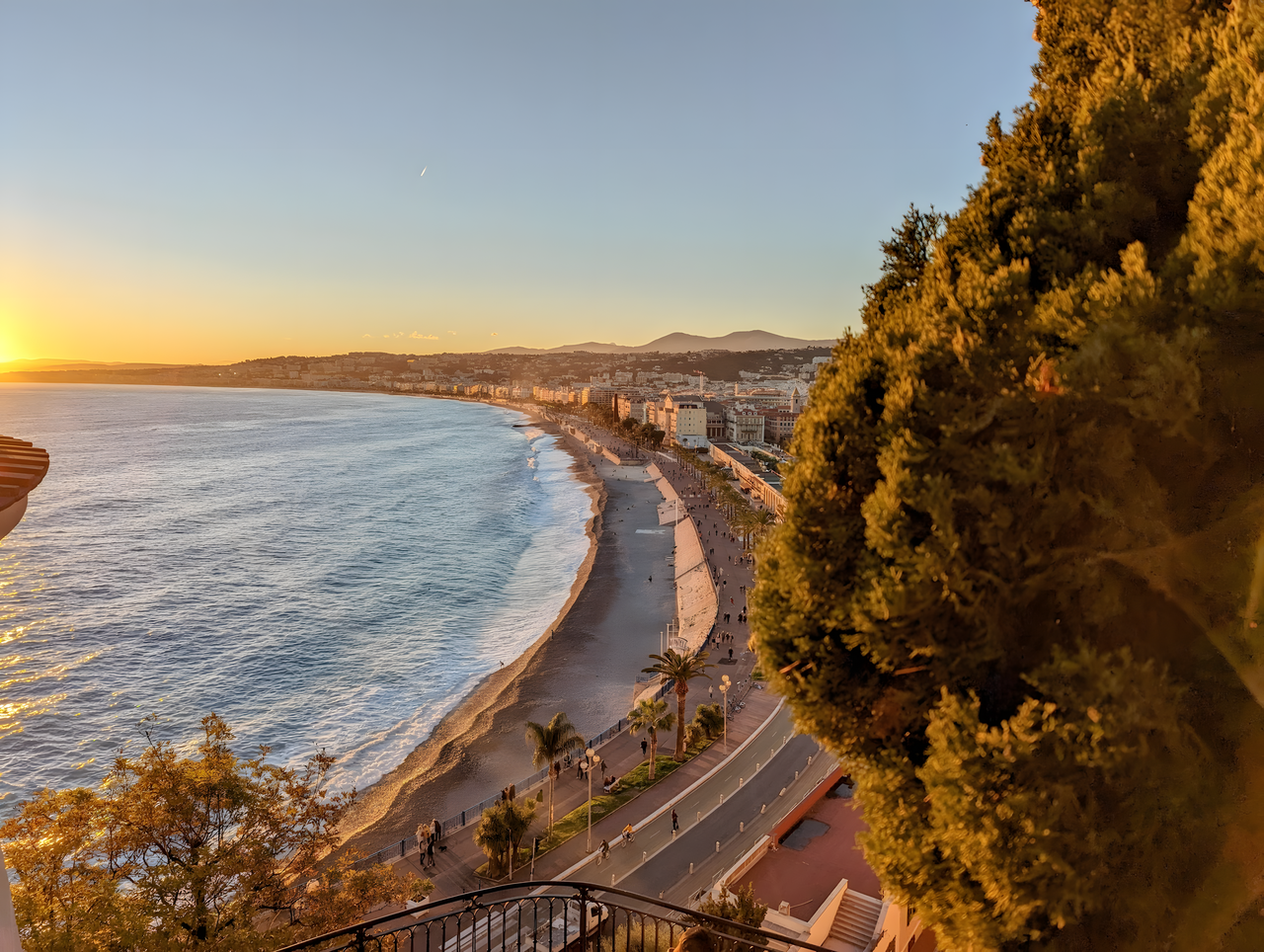
Nice belonged to Savoy, not France, until 1860; the old town's narrow streets, yellow-orange façades, and cuisine therefore lean Italian. The Promenade des Anglais takes its name from English winter visitors who financed the road in the 1820s. Beaches are coarse pebble, not sand, so water shoes help. Mornings bring the flower and vegetable market on Cours Saleya; on the hill in Cimiez you'll find the Matisse and Chagall museums.
Quick facts
- Built
- 1820
- Length
- 7 km
Facts from Wikidata, photos from Wikimedia Commons.
Did you know?
Why did Nice join France so late?
The city belonged for centuries to Savoy and then the Kingdom of Sardinia, only becoming French in 1860 after a plebiscite. The Italian influence is still obvious in the food and in the street names of the old town.
Where does the Promenade des Anglais get its name?
Wealthy English visitors wintering here in the early 19th century raised the money to build a seafront walkway. The name stuck — and Nice's career as a winter resort began with that English colony.
Why isn't the beach sandy?
Nice's shore is made of pebbles deposited over millennia by the River Var. Experienced visitors bring beach shoes and a thick towel.
Why go?
- To live the Mediterranean seaside atmosphere of the French Riviera
- For Nice old town, seaside walks, and sea views
- Because it connects easily to Cannes, Monaco, and surrounding routes
Travel tip
Don't think of Nice as beach only; old town and hill views add a lot to the route.