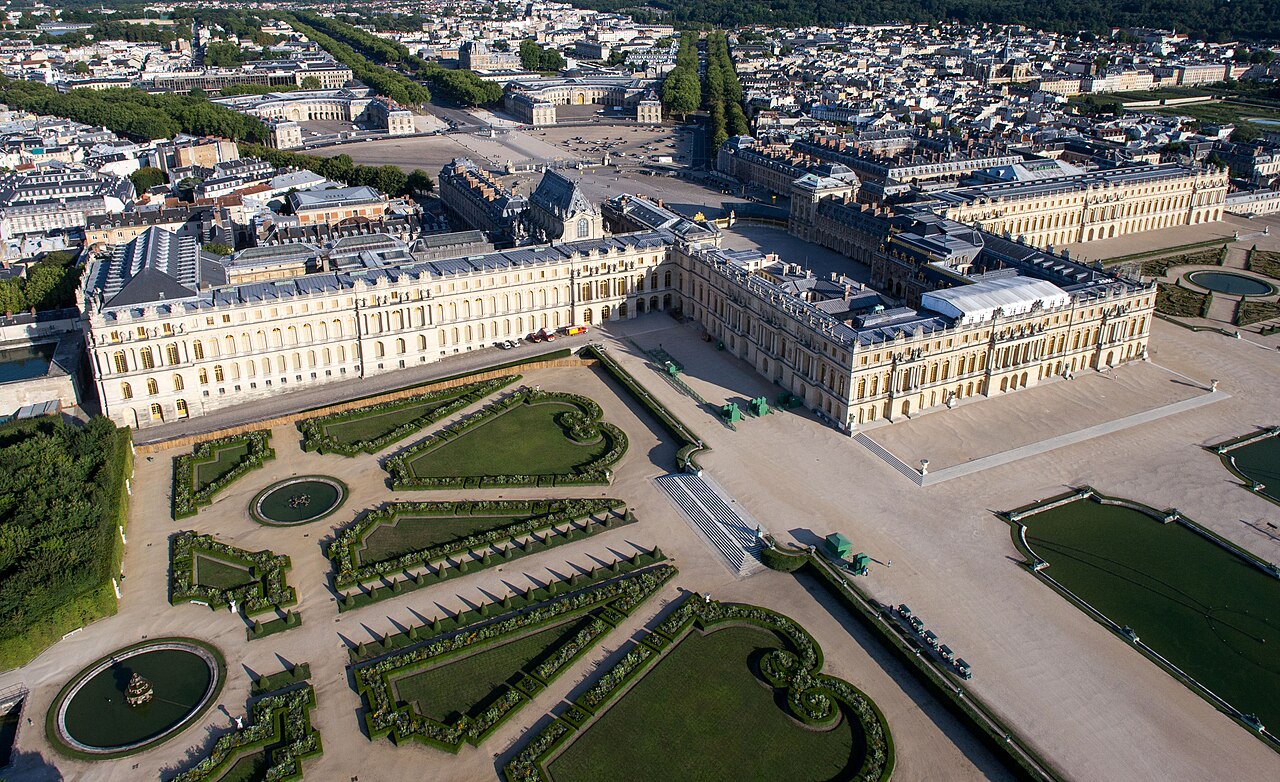


Palace of Versailles
Ideal: Ideal for palace visits, history, architecture, and day-trip culture routes.
The hunting lodge Louis XIII built in 1623 became a 2,300-room seat of government under Louis XIV; the king moved the entire court and government here in 1682. The 357 mirrors in the 73-metre Hall of Mirrors were once there to show France breaking Venice's monopoly on mirror production. The treaty ending World War I was also signed in that same hall in 1919. Garden fountains could not all run at once because the park lacked enough water, so attendants whistled ahead of the king's approach and opened them in sequence.
Quick facts
- Built
- 1661
- Architect
- Louis Le Vau
- Commissioned by
- Louis XIV of France
- Architectural style
- French Baroque architecture
- Area
- 67,000 m²
- Annual visitors
- 4.7 million
Facts from Wikidata, photos from Wikimedia Commons.
Did you know?
Why does the Hall of Mirrors contain so many mirrors?
In the 17th century mirror-making was a Venetian monopoly and mirrors cost as much as gold. Louis XIV had all 357 produced in France, displaying both his wealth and industrial independence — the same hall where the Treaty of Versailles was signed in 1919.
How many toilets did the palace have?
Astonishingly few fixed ones for a palace housing thousands; courtiers used portable close-stools. The famously perfumed planting in the gardens was partly a response to the resulting smell.
Was Marie Antoinette's hamlet a real farm?
The Hameau de la Reine was more than a stage set: it had real cows, goats and a working dairy. The queen retreated there to escape court protocol, and most visitors skip it on the standard palace tour.
Why go?
- To see French royal history and palace grandeur
- To experience the Hall of Mirrors and historic rooms
- To build a full-day route with broad gardens and fountains
Travel tip
The gardens are vast; allow time for them, not just the palace interior.