



Notre-Dame & Île de la Cité
Ideal: Ideal for history, Gothic architecture, Seine walks, and classic Paris atmosphere.
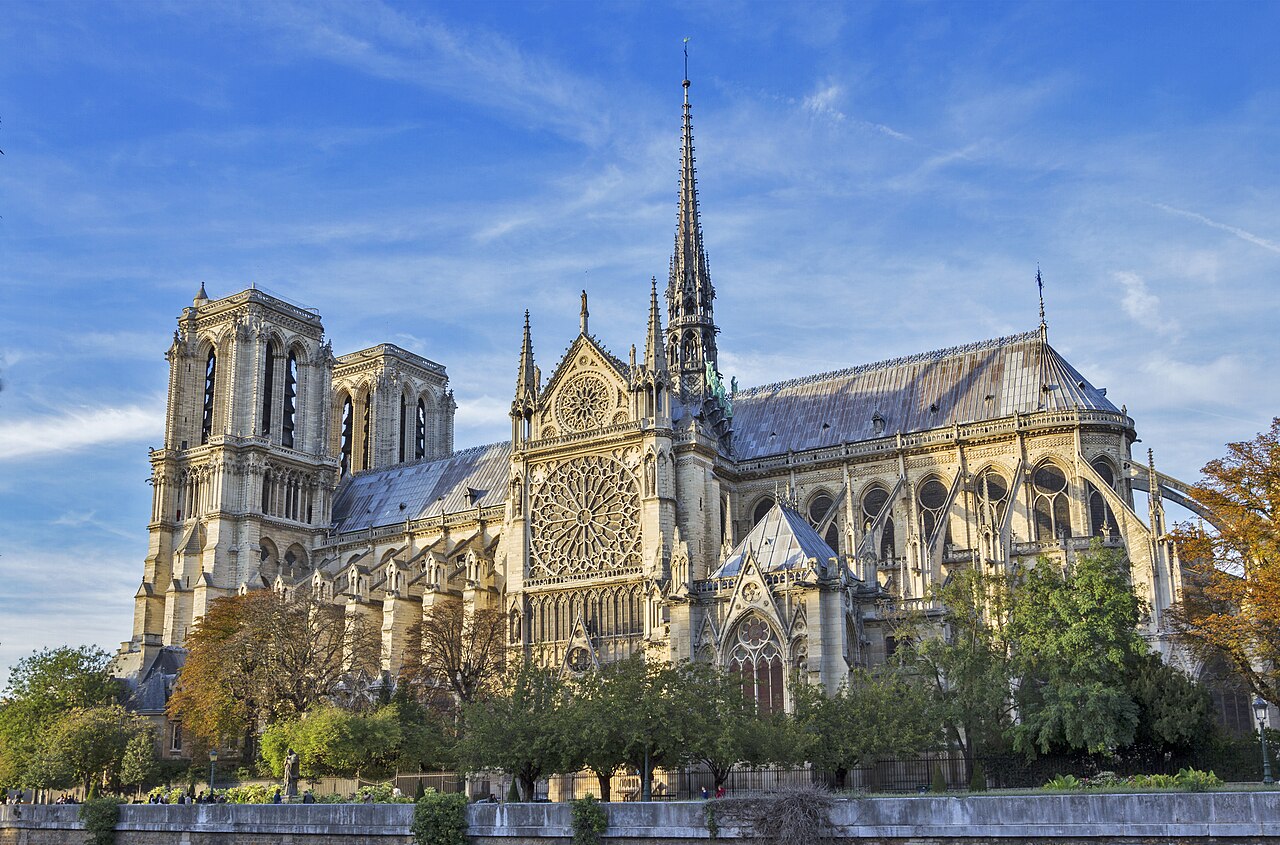
Construction of the cathedral began in 1163 and took roughly two centuries. The fire on 15 April 2019 destroyed the wooden 'forest' of 1,300 oak beams that supported the roof and Viollet-le-Duc's 19th-century spire; the building reopened in December 2024 after five years of restoration. The Point Zéro plaque in the square in front marks the zero point from which all road distances in France are measured. The island is where Lutetia, Paris's pre-Roman core, was founded.
Quick facts
- Built
- 1163
- Opened
- 7 December 2024
- Architect
- Jean de Chelles
- Architectural style
- French Gothic architecture
- Height
- 69 m
- Length
- 127 m
Facts from Wikidata, photos from Wikimedia Commons.
Did you know?
What saved Notre-Dame in the 19th century?
After the Revolution the cathedral was derelict and demolition was being discussed. Victor Hugo's 1831 novel created a wave of public support for saving it, and restoration began soon after under the architect Viollet-le-Duc.
Are the famous gargoyles medieval?
No. The brooding creatures everyone photographs (the chimères) are not medieval but designs added during Viollet-le-Duc's 19th-century restoration. The true gargoyles are functional waterspouts that throw roof water clear of the walls.
Where are road distances in France measured from?
A bronze plaque called Point Zéro sits on the square in front of the cathedral. All road distances in France are officially measured from it, and stepping on it is said to guarantee a return to Paris.
Why go?
- To see Paris's historic centre and Gothic cathedral atmosphere
- For a romantic route along the Seine, bridges, and island walk
- Because it connects easily to Sainte-Chapelle and the Latin Quarter
Travel tip
Don't think of Île de la Cité as only the cathedral; a short walk around makes the experience much richer.