

Loire Valley Châteaux
Ideal: Ideal for château visits, romantic routes, history, and slow-paced culture trips.
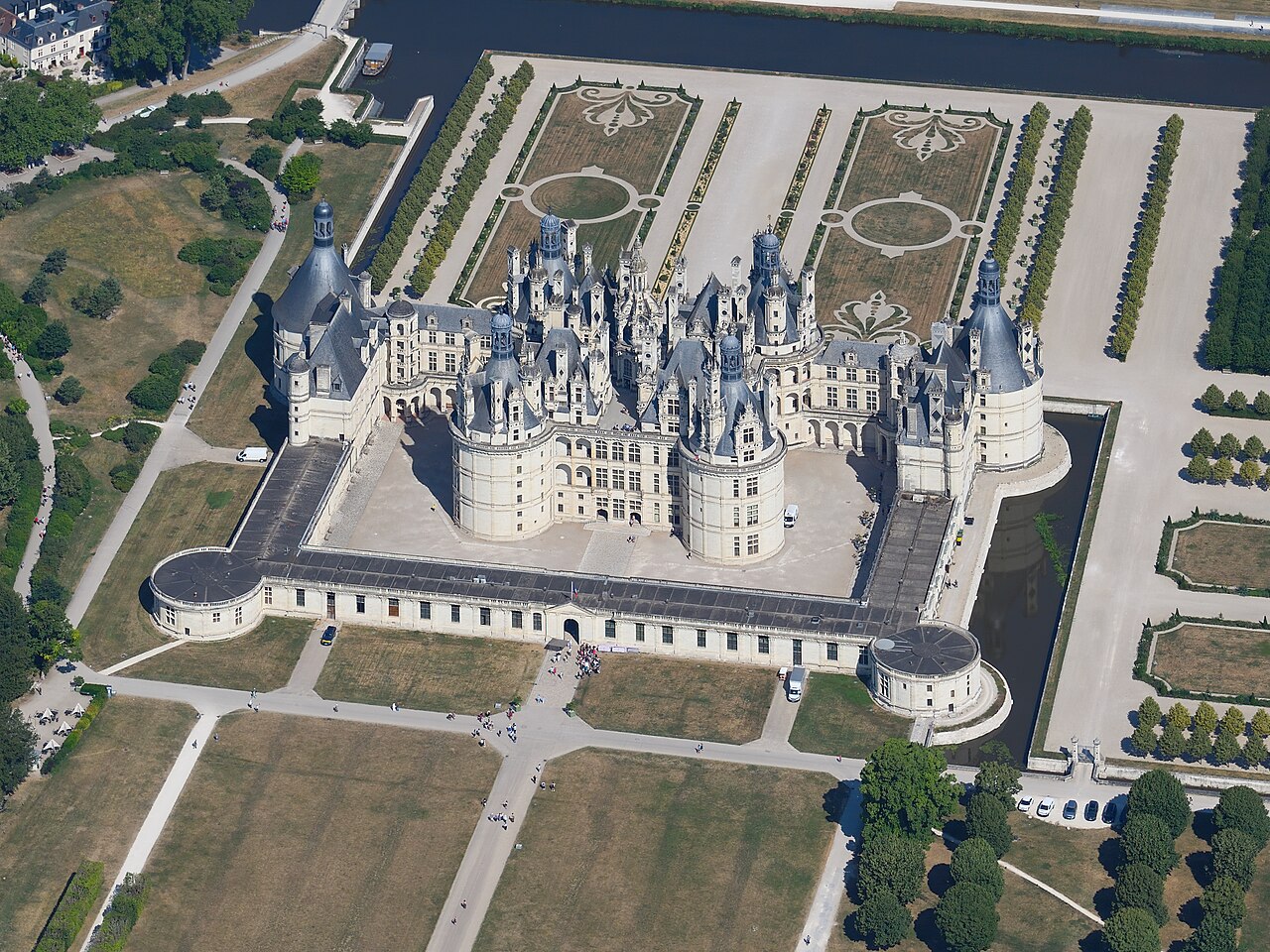
More than three hundred châteaux line the valley, but trying to visit them all makes little sense; two stand out. Chambord, begun in 1519, has 440 rooms and 365 chimneys; on the double-helix staircase those going up and down never meet — the design is thought to have been inspired by Leonardo, then living nearby at Amboise. Chenonceau sits on arches over the River Cher; run by women for centuries, it served as a hospital in World War I, and in World War II one end of its gallery lay in occupied territory and the other in the free zone, so it was used as an escape route.
Quick facts
- Built
- 1519
- Architect
- Pierre Nepveu
- Commissioned by
- Francis I of France
- Architectural style
- Renaissance architecture
- Heritage status
- classified historical monument
Facts from Wikidata, photos from Wikimedia Commons.
Did you know?
Who designed the double-helix staircase at Chambord?
The staircase, where two separate spirals wind around each other without ever meeting, is widely credited to Leonardo da Vinci's ideas. Leonardo spent his final years at nearby Amboise, and people on the two flights can see each other but never meet.
How did Chenonceau serve during the war?
In the Second World War the River Cher was the demarcation line, and the château's gallery spans it from bank to bank. The gallery was used as an escape route from the occupied zone into the free zone.
Were these châteaux built for defence?
Mostly not. Most Loire châteaux are Renaissance pleasure palaces built for hunting and display after the need for fortification faded — wide windows and gardens instead of thick walls and moats.
Why go?
- To see France's finest Renaissance châteaux
- To combine gardens, river valley, and historic architecture on one route
- To add a calmer cultural route outside Paris
Travel tip
Don't try all châteaux in one day; pick a few strong stops such as Chambord and Chenonceau.