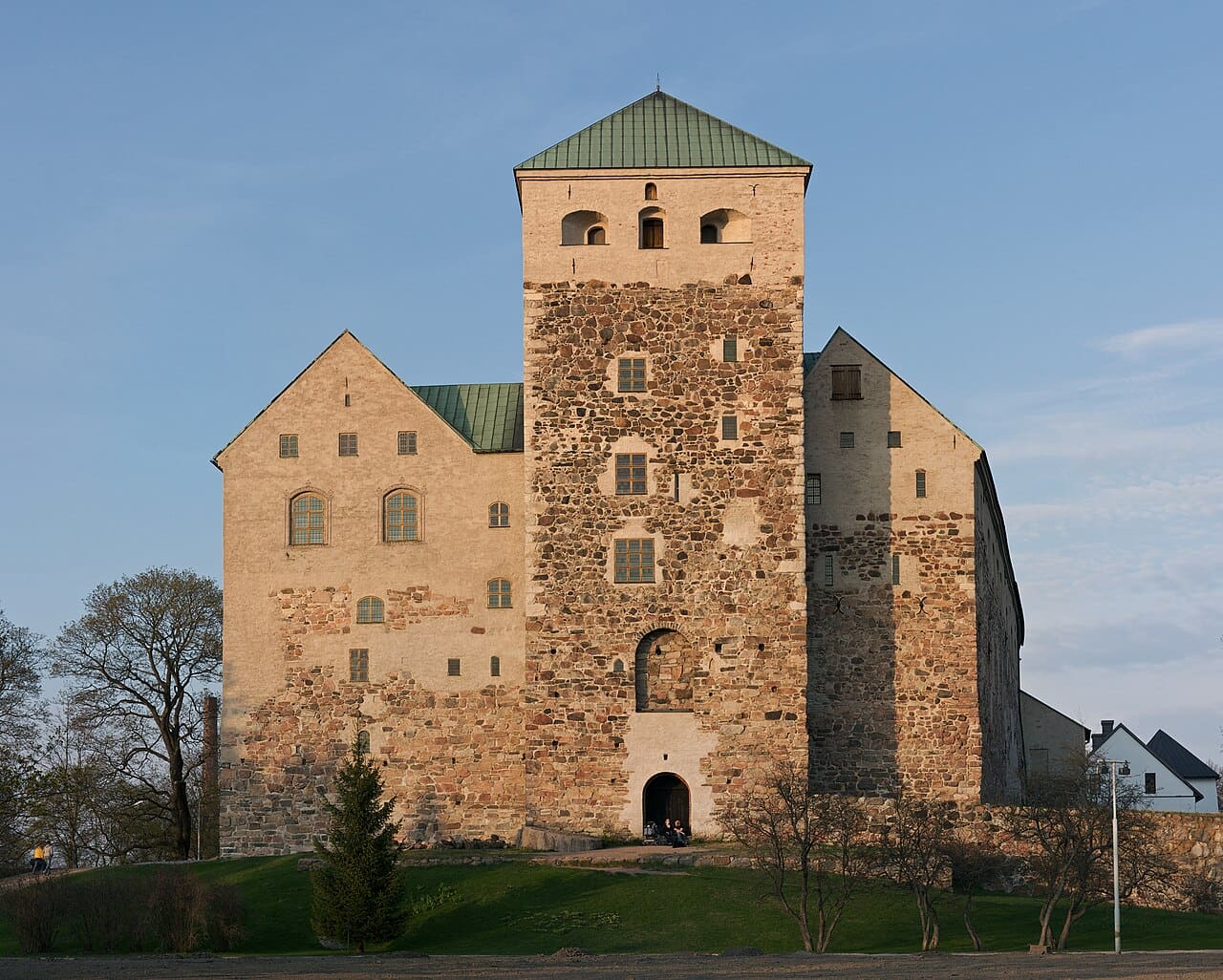


Turku Castle
Ideal: Good for history, fortress architecture, and routes beyond Helsinki.
Construction began around 1280 and it is Finland's largest surviving medieval structure. Turku was the country's capital until 1812; it lost that status with the Great Fire of Turku in 1827 — the blaze that destroyed three-quarters of the city was Finland's greatest urban disaster and the university moved to Helsinki afterwards. The castle was bombed in 1941 and restoration took decades. The museum inside spans sections from medieval halls to the 20th century.
Quick facts
- Built
- 13th century
- Architectural style
- Renaissance architecture
- Elevation
- 12 m
- Heritage status
- Cultural Heritage Site of National Significance
Facts from Wikidata, photos from Wikimedia Commons.
Did you know?
How old is the castle?
Construction began in the 1280s, making it one of the largest surviving medieval buildings in Scandinavia. Over 700 years it served as fortress, palace, prison and warehouse.
Why is Turku no longer the capital?
After Finland passed to Russia in 1809, the capital moved to Helsinki in 1812 because it lay closer to St Petersburg. The great fire of 1827 weakened Turku's position further.
Which historic rooms survive in the castle?
The Renaissance-era Duke's Halls are among the best-preserved Renaissance interiors in Finland. Part of the castle was restored after bombing in 1941.
Why go?
- To see Finland's medieval history
- To discover Turku's cultural and historic character
- For a different city experience outside Helsinki
Travel tip
If doing Turku as a day trip, add the castle to a route around the Aura River.