

Sibelius Monument
Ideal: Suitable for art, music history, and a short city break.
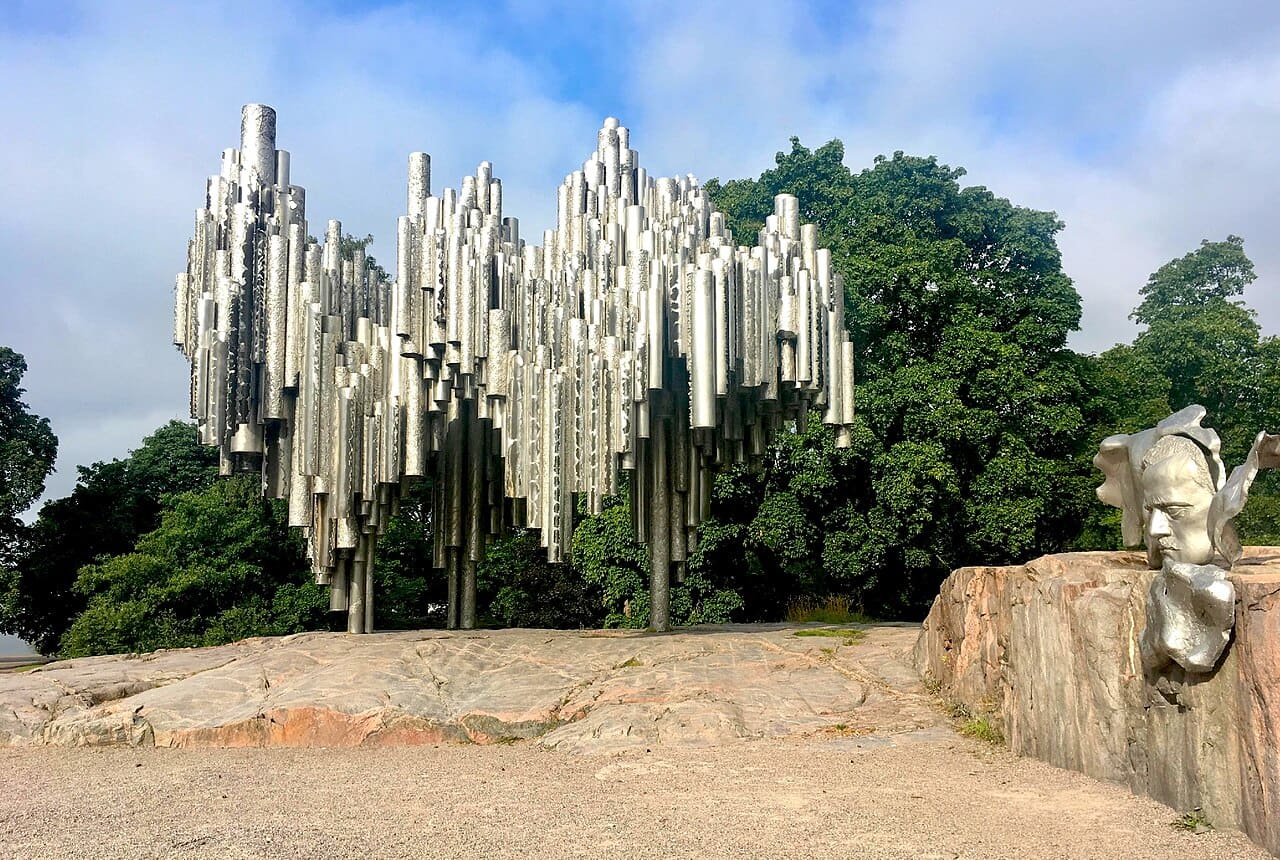
Completed in 1967 by Eila Hiltunen, the monument consists of 600 hollow steel pipes welded together and weighs 24 tonnes. When it opened it drew fierce criticism: critics argued an abstract pile could not represent the composer, and under pressure the artist had to add a separate piece beside it realistically depicting Sibelius's face. The two works stand side by side today, and this compromise is told as a classic example of art debate in Finland.
Quick facts
- Built
- 7 September 1967
- Architect
- Eila Hiltunen
- Material
- stainless steel
Facts from Wikidata, photos from Wikimedia Commons.
Did you know?
Why is the monument made of organ-like pipes?
Eila Hiltunen's 1967 work is built from over 600 steel tubes that resonate faintly in the wind. Sibelius in fact wrote little for organ; the form is an abstract interpretation of his music.
Why was the face sculpture added later?
The abstract design caused a major controversy, and in response to criticism the artist added a separate sculpture of the composer's face. The two now stand side by side.
Why does Sibelius matter so much in Finland?
His Finlandia became a symbol of national resistance under Russian censorship and was performed secretly under other titles. He is regarded as the cultural face of the independence movement.
Why go?
- To see an iconic monument touching Finland's music and art heritage
- To experience a photogenic open-air artwork with a distinctive form
- For a calm park break without leaving the city centre far behind
Travel tip
Don't plan long around the monument alone; combine with a short walk and shoreline route nearby.