

Design District
Ideal: Ideal for design, shopping, café culture, and local city experience.
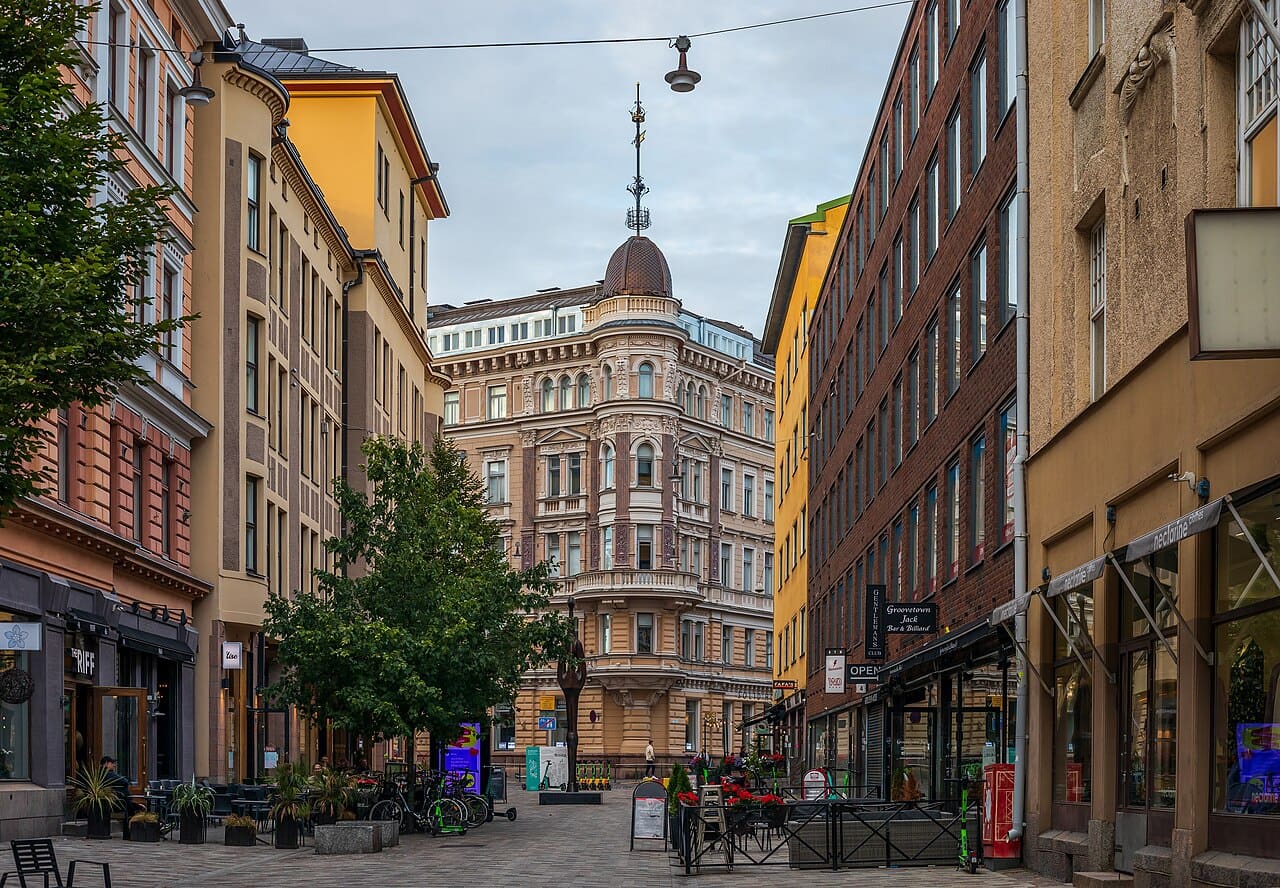
Some 200 shops, galleries, and studios spread across about 25 streets were defined as a shared district in 2005. Names at the core of Finnish design can be seen here: Alvar Aalto's wavy Savoy vase from 1936, Iittala glass, and Marimekko's 1964 Unikko pattern. Unikko's story is interesting — when the company founder banned floral patterns, designer Maija Isola broke the rule, drew poppies, and the pattern became the brand's symbol.
Quick facts
- Built
- 12 June 1550
- Area
- 214 km²
- Elevation
- 17 m
Facts from Wikidata, photos from Wikimedia Commons.
Did you know?
What is the Design District?
A signposted area covering 25 streets in central Helsinki with more than 200 design shops, studios, galleries and museums. It was formally defined in 2005.
What made Finnish design famous?
Alvar Aalto's curved plywood furniture, Marimekko's bold prints and Iittala's glassware. The common thread is functionality and natural materials — use before ornament.
Why was Helsinki named a design capital?
It was World Design Capital in 2012. The citation highlighted that design here is applied not only to products but to public services and urban planning.
Why go?
- To see Finland's design culture up close
- To explore Marimekko, Iittala, and independent design shops
- For a more local Helsinki experience through cafés, galleries, and boutiques
Travel tip
Don't rush the area; it reveals itself better when you enter small shops and side streets.