

Skagen Beach
Ideal: Ideal for nature, scenery, and seaside town romance.
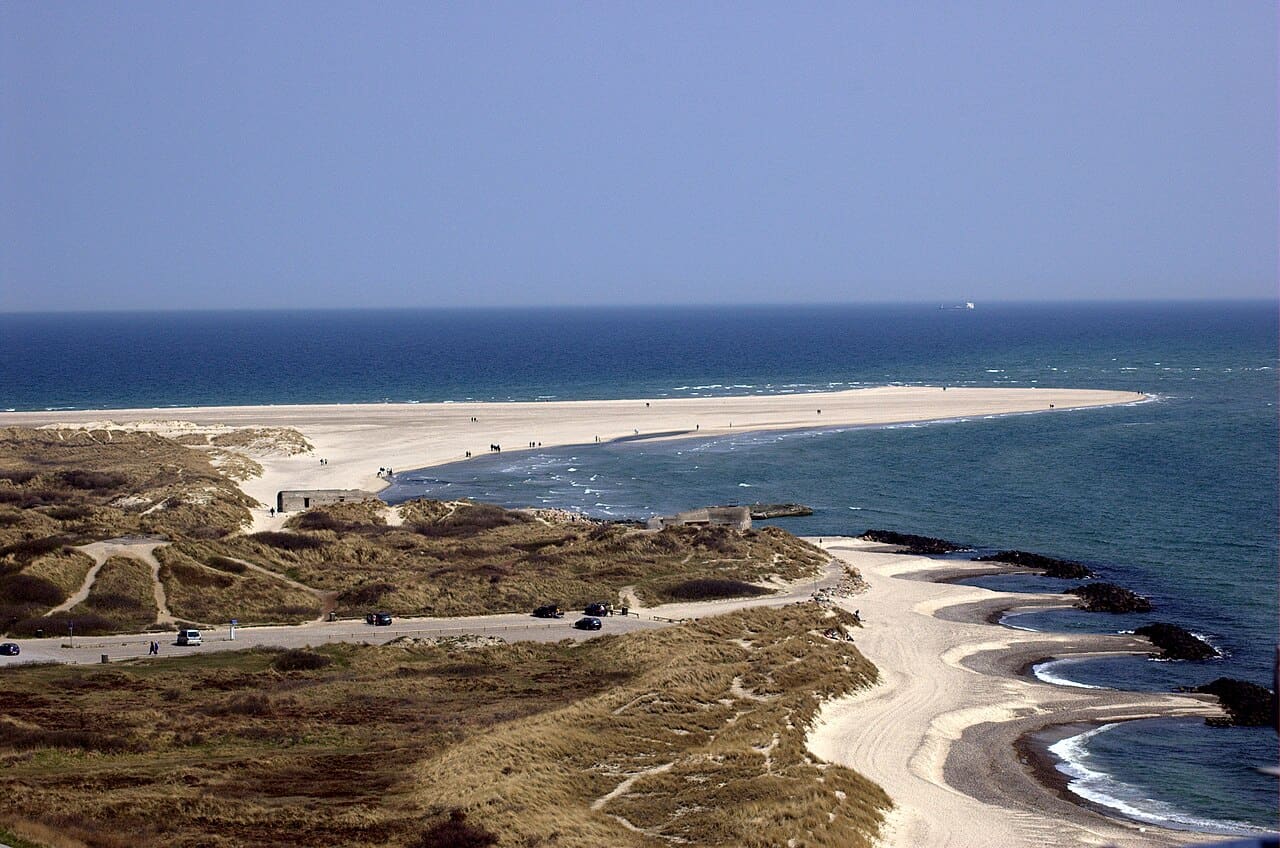
At the tip of the sand spit at Grenen, Skagerrak and Kattegat meet and the line where the two currents collide is visible; you can stand in both seas at once but swimming is forbidden because the current is deadly. The light here drew a painters' colony from the 1870s — works by Krøyer and Ancher became classics of Danish painting. The Buried Church near town was abandoned in 1795 as dunes advanced; today only the bell tower shows above the sand.
Did you know?
Do two seas really meet here?
At the Grenen spit the waters of the Skagerrak and Kattegat differ in density and current, so they do not mix immediately and the clashing waves form a visible line. Swimming there is banned because of the currents.
Why did painters flock here?
In the late 19th century Skagen's distinctive light drew an artists' colony. P.S. Krøyer and Anna Ancher worked here, and the town museum gathers the work of that period.
Where is the church buried in sand?
Den Tilsandede Kirke was swallowed by advancing dunes in the 18th century and abandoned in 1795. Only its tower still rises above the sand today.
Why go?
- To see Grenen where two seas meet
- To experience Skagen's famous golden-hour light
- For the calm seaside town atmosphere of northern Denmark
Travel tip
Walking to Grenen can take a long time — choose shoes suited to sand or a bike tour.