

Rosenborg Castle
Ideal: Ideal for history, palace/castle architecture, and museum lovers.
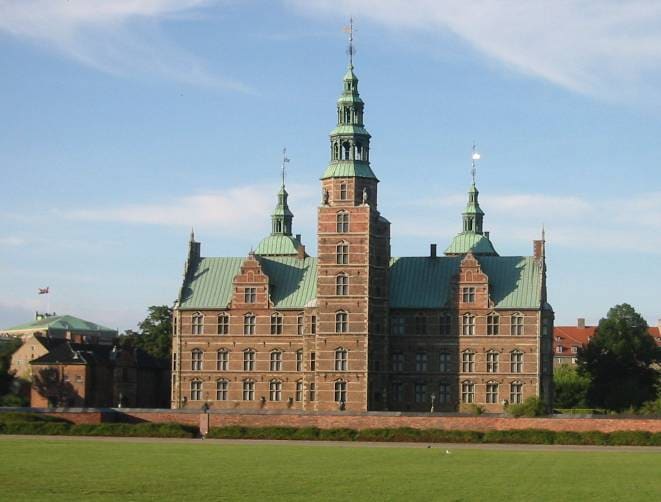
Christian IV began building it as a summer retreat in 1606 and kept adding to it for nearly thirty years. The crown jewels in the treasury basement are not museum pieces: the royal family still wears them at official ceremonies. Three silver lions guard the coronation throne in the Knights' Hall, and the throne itself is made from a narwhal tusk — in that era these tusks were sold across Europe as unicorn horns.
Quick facts
- Built
- 1606
- Architect
- Hans van Steenwinckel the Younger
- Commissioned by
- Christian IV of Denmark
- Architectural style
- Renaissance architecture
- Elevation
- 7 m
- Heritage status
- monument on Kulturstyrelsen register
Facts from Wikidata, photos from Wikimedia Commons.
Did you know?
Where are Denmark's crown jewels?
In the castle's basement treasury — and they are still in use. The queen may wear them at certain state occasions, so the collection is not considered a museum piece.
Who was the castle built for?
Christian IV built it as a summer retreat in 1606 and died there. He is remembered as Denmark's greatest builder-king, and many of Copenhagen's landmarks are his.
Why does the castle garden matter?
Kongens Have is Denmark's oldest royal garden and Copenhagen's most-used park. Entry is free and in summer it becomes a centre of city life.
Why go?
- To see Danish royal history up close
- For crown jewels and historic collections
- Because it pairs well with a walk through the King's Garden
Travel tip
Combine Rosenborg with a King's Garden walk — especially pleasant in fine weather.