



Wenceslas Square
Ideal: Ideal for city center, shopping, modern Prague, and historic squares.
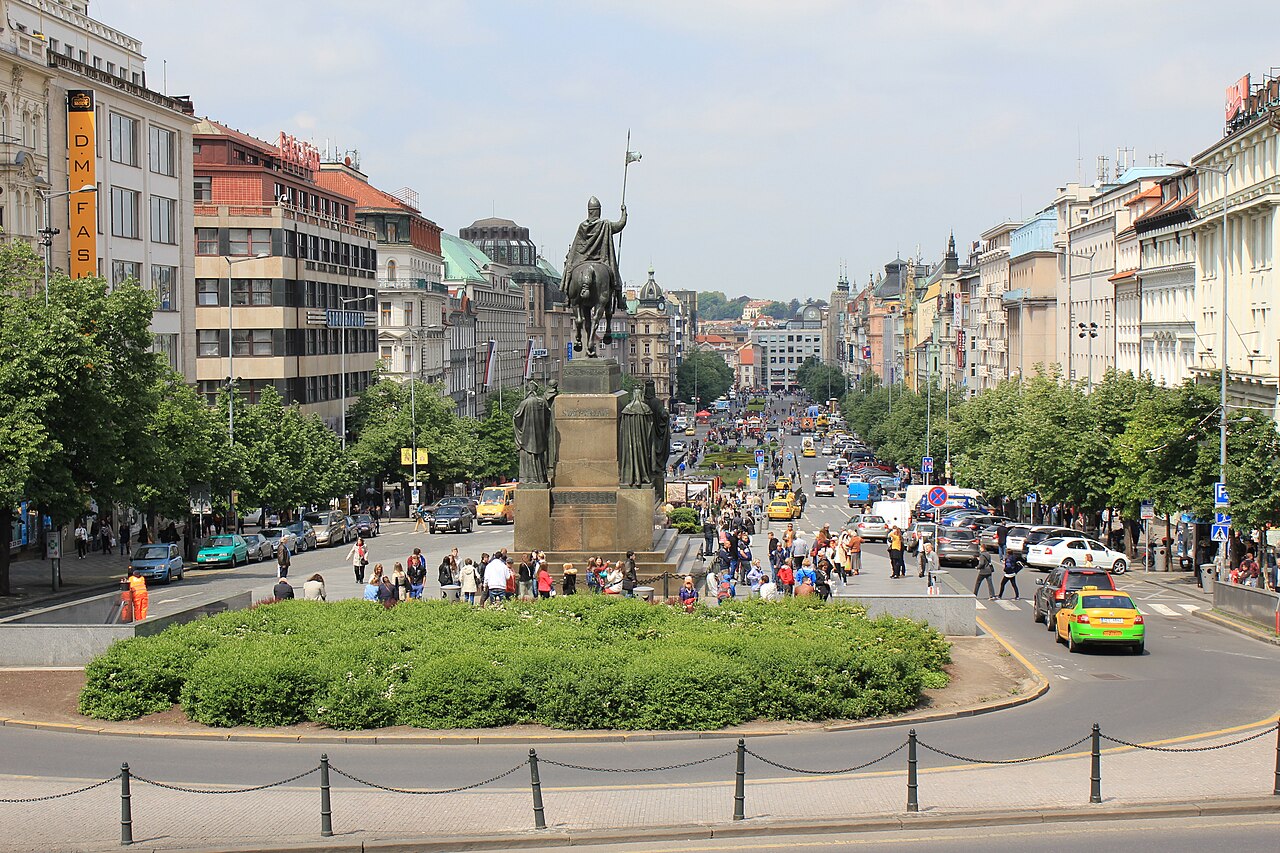
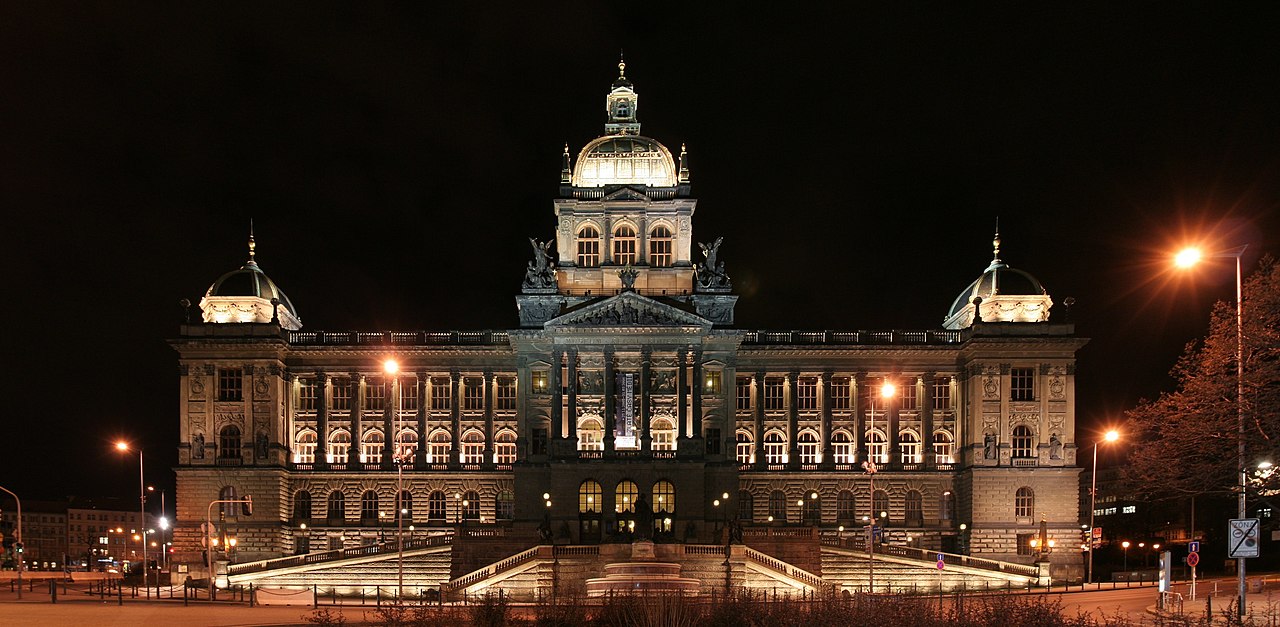
It is not really a square but a 750-metre boulevard; it is long and narrow because it served as a horse market in the Middle Ages. Turning points in recent Czech history happened here: student Jan Palach set himself on fire at the upper end in January 1969 to protest Soviet occupation, and in the 1989 Velvet Revolution more than 250,000 people jingled keys in the same place to celebrate the regime's departure. Marks on the National Museum façade at the upper end come from tank fire in 1968.
Quick facts
- Built
- 1348
- Length
- 750 m
Facts from Wikidata, photos from Wikimedia Commons.
Did you know?
Is it really a square?
Not really — it is a 750 m long boulevard. In the Middle Ages it was the horse market, and it only took its present name in 1848.
Why is the square so central to Czech history?
The protests against the 1968 invasion, Jan Palach's self-immolation in 1969 and the vast rallies of the 1989 Velvet Revolution all took place here. A memorial to Palach and Zajíc stands in front of the museum.
Where is the upside-down horse statue?
David Černý's sculpture, showing St Wenceslas riding the belly of an upside-down dead horse, hangs from the dome of the Lucerna Passage just off the square.
Why go?
- To see modern central Prague and its city energy
- To experience a square linked to major events in Czech history
- Because it connects easily with the National Museum and shopping streets
Travel tip
It can be explored on foot together with Old Town Square; the contrast in atmosphere between the two areas is worth feeling.