

Flåm Railway
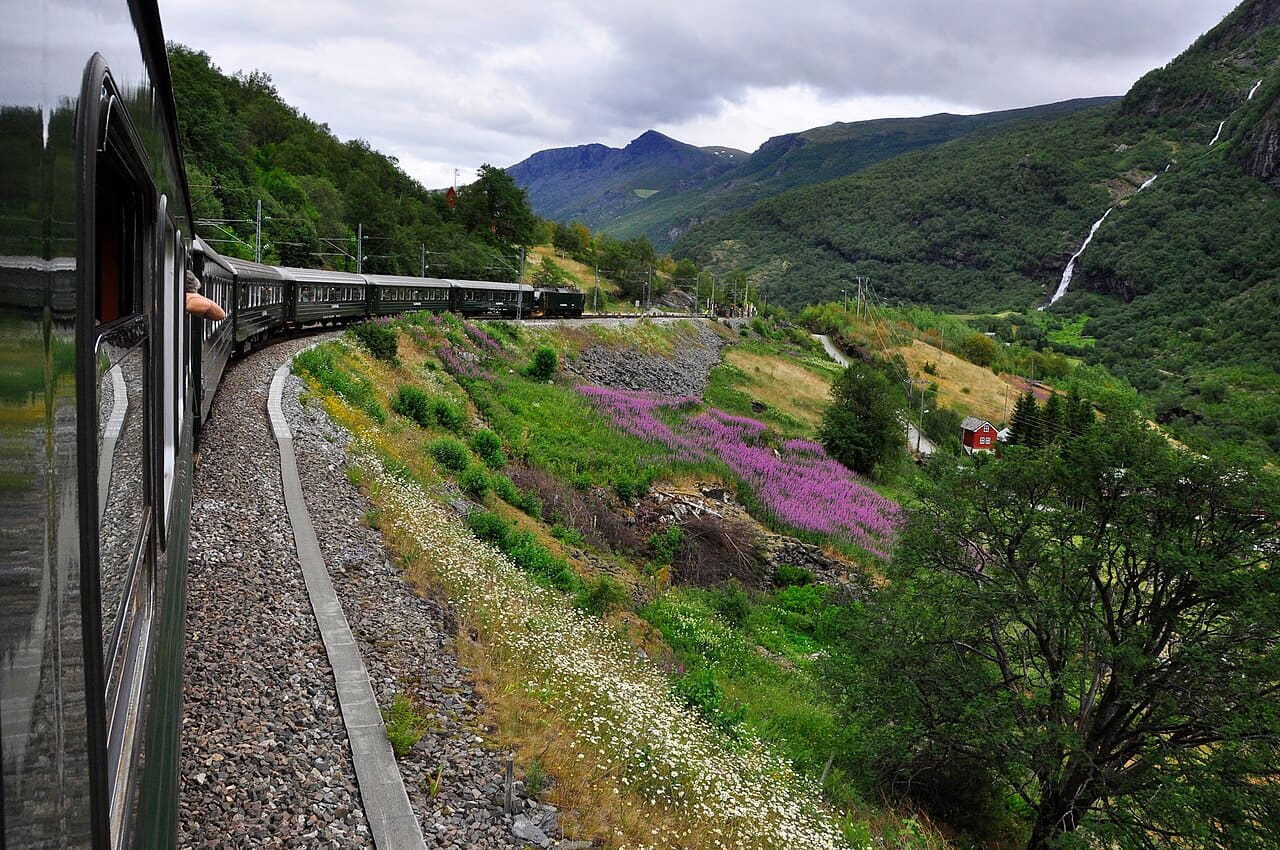
Ideal: Ideal for panoramic train routes, nature views, and slow travel.
It descends 20 kilometres from Myrdal at 867 metres to sea-level Flåm, making it one of the steepest normal-gauge lines without a rack system in the world. Construction took twenty years; it opened in 1940. Eighteen of the 20 tunnels along the route were dug by hand. The train stops for a few minutes at Kjosfossen waterfall, where a figure in red appears among the rocks and dances — a live portrayal of the water spirit huldra from Norwegian folklore.
Quick facts
- Opened
- 1940
- Length
- 20.2 km
Facts from Wikidata, photos from Wikimedia Commons.
Did you know?
Why is the line so steep?
It climbs 863 m in 20 km, with gradients reaching 5.5% — among the steepest standard-gauge adhesion railways in the world, running without a rack rail.
How long did it take to build?
Construction ran from 1924 to 1940. Eighteen of the line's 20 tunnels were dug entirely by hand, taking on average a man-month for each metre.
Why does the train stop at the waterfall?
It pauses a few minutes at Kjosfossen for photographs. In summer a dancer in red appears on the rocks there, performing the huldra of Norwegian folklore.
Why go?
- To take one of Norway's most famous panoramic train journeys
- To see fjord, valley, and waterfall scenery in comfort
- To add an unforgettable transport experience to a Bergen or Sognefjord route
Travel tip
Choose daytime hours for the views; in peak season it helps to buy tickets in advance.