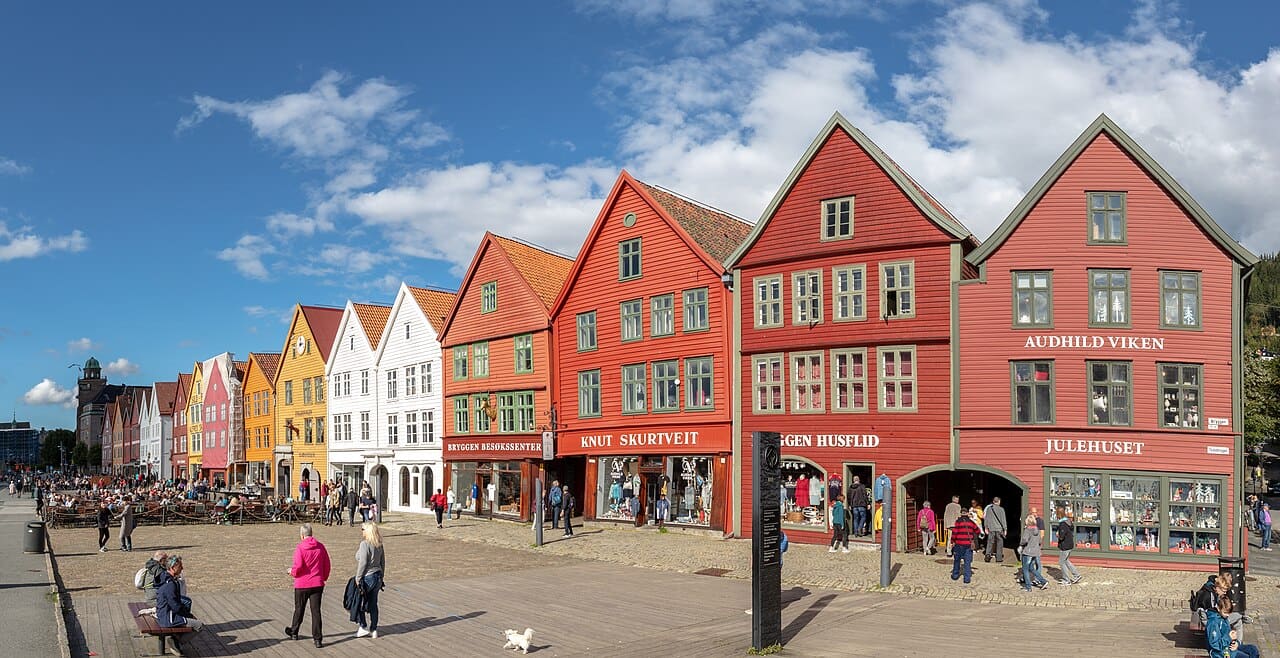


Bryggen
Ideal: Ideal for history, photography, harbour atmosphere, and Bergen itineraries.
From the 14th century for four hundred years this was a Hanseatic League trading post; German merchants lived here as a closed, all-male colony under their own laws, with marriage forbidden. The wooden buildings burned repeatedly — the row you see today was largely rebuilt after the 1702 fire on the same medieval foundations and plan. The facades are visibly tilted, and the ground dips in the narrow wooden passageways behind. The area joined the UNESCO list in 1979.
Did you know?
Why does Bryggen lean so much?
The timber buildings have settled over centuries, leaving corridors and floors noticeably sloped. Most were rebuilt after the 1702 fire on their original medieval foundations.
Who lived here?
German merchants of the Hanseatic League. Only men lived in the quarter, marriage was forbidden and open fire was strictly banned — so they lived without heating even in winter.
Why is Bergen so rainy?
The city is ringed by seven mountains, and moist Atlantic air drops its rain against them. It rains on roughly 200 days a year — and in 2006–07 it rained 85 days in a row.
Why go?
- To see Bergen's UNESCO-listed historic harbour district
- To walk among colourful wooden facades and narrow historic passageways
- To feel Norway's old trading and seafaring atmosphere
Travel tip
Don't just photograph the front facades — go into the narrow wooden passageways behind.