

Kirchberg EU District
Ideal: Good for those interested in modern architecture, EU institutions, and urban planning.
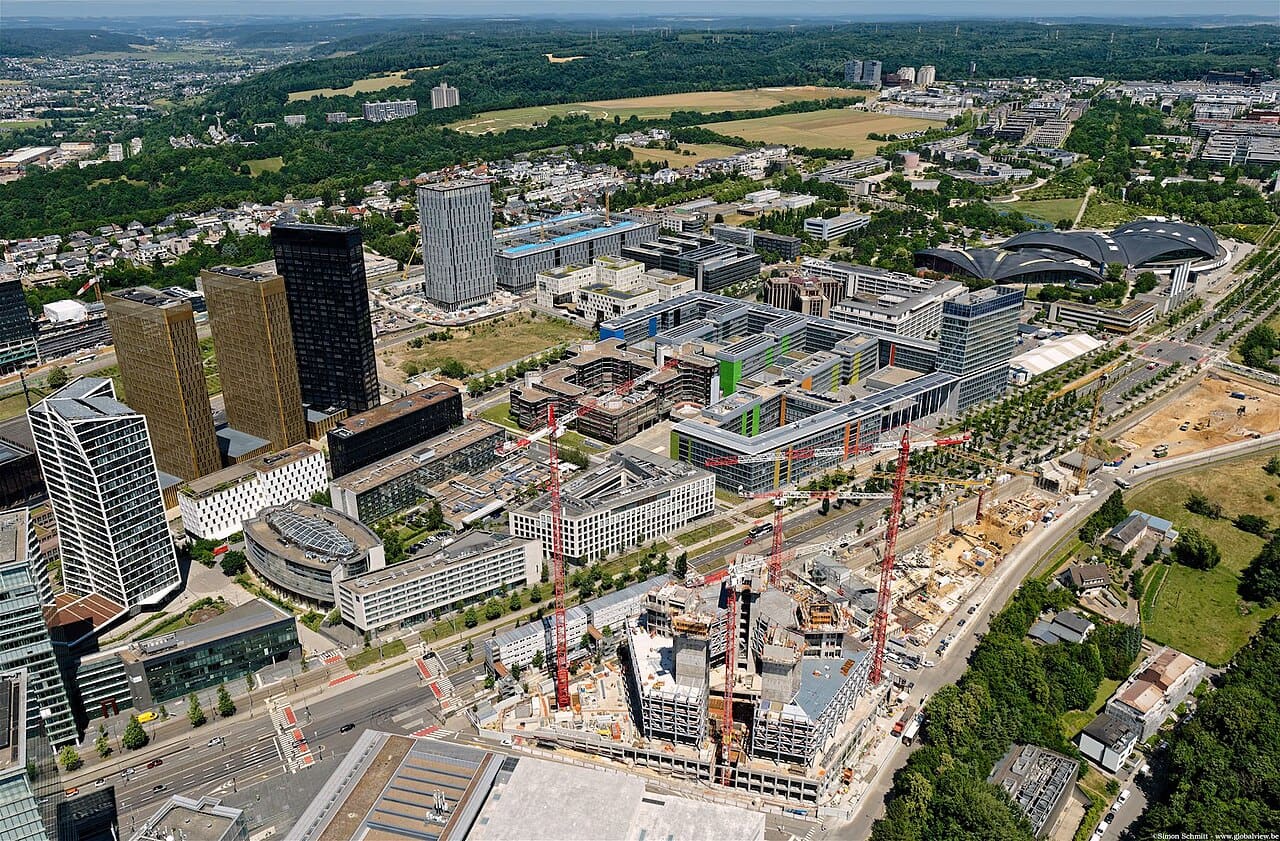
Development of the plateau began in 1961, and today the Court of Justice of the European Union, the European Investment Bank, and the Secretariat of the European Parliament are here; thanks to these institutions Luxembourg is considered one of the EU's three centers alongside Brussels and Strasbourg. The district is the exact opposite of the old town's narrow stone streets: wide boulevards, glass façades, and open space. The 823 slender white steel columns wrapping Christian de Portzamparc's Philharmonie, completed in 2005, are the area's most striking detail.
Quick facts
- Area
- 337 hectares
- Elevation
- 368 m
Facts from Wikidata, photos from Wikimedia Commons.
Did you know?
Why does Luxembourg host EU institutions?
It is one of the EU's three official working seats. The Court of Justice, the European Investment Bank and the Court of Auditors are here, along with the European Parliament's secretariat.
How do you get to the district?
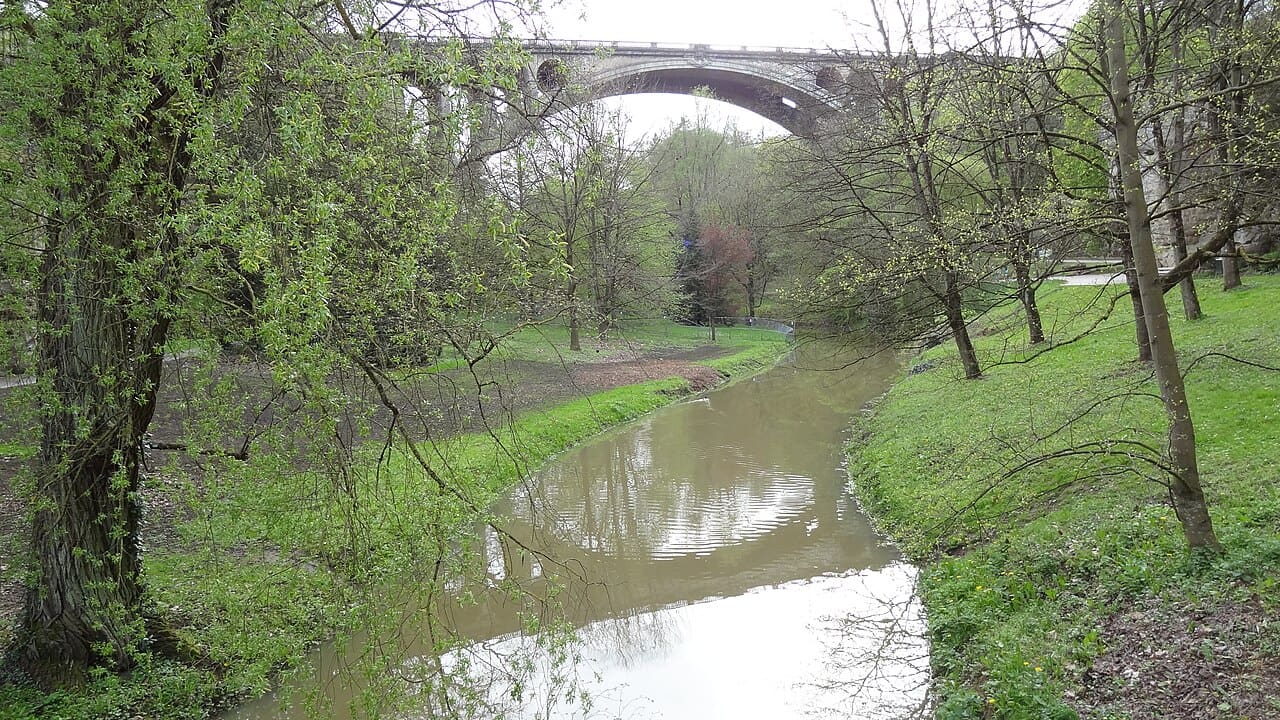
By tram from the centre, across the Red Bridge. Opened in 1966, the bridge links the centre to the Kirchberg plateau over the valley and started the district's development.
Is there culture in the district too?
Yes. The Philharmonie concert hall by Christian de Portzamparc and the Mudam contemporary art museum are both here, keeping Kirchberg from being only an office district.
Why go?
- To see Luxembourg's modern identity linked to EU institutions
- To explore contemporary architecture, wide boulevards, and museum districts
- Because it is close to cultural stops such as Mudam and the Philharmonie
Travel tip
Plan Kirchberg together with Mudam or the Philharmonie rather than visiting alone.