



Hill of Crosses
Ideal: Ideal for culture, history, symbolic places, and distinctive experiences.
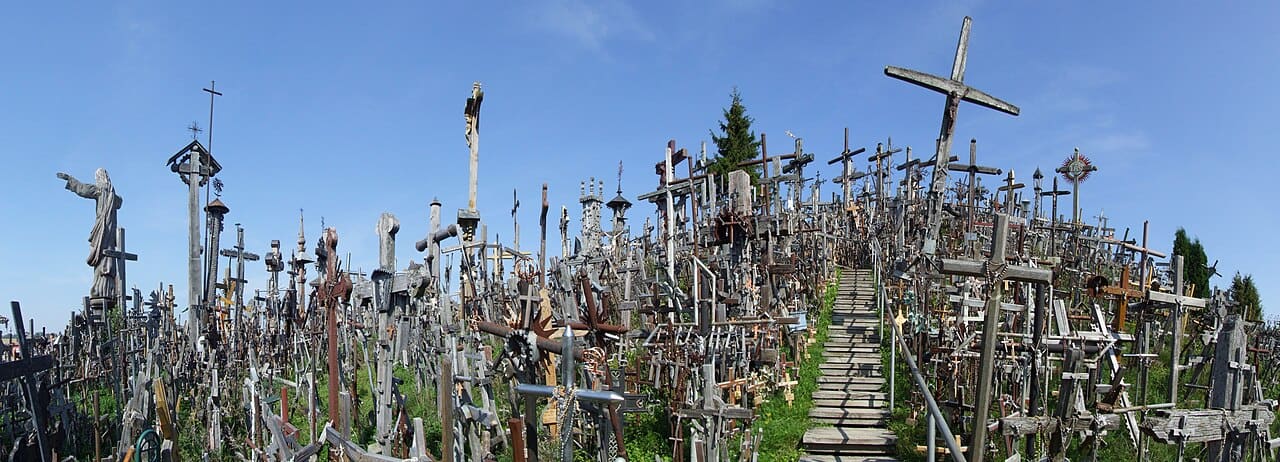
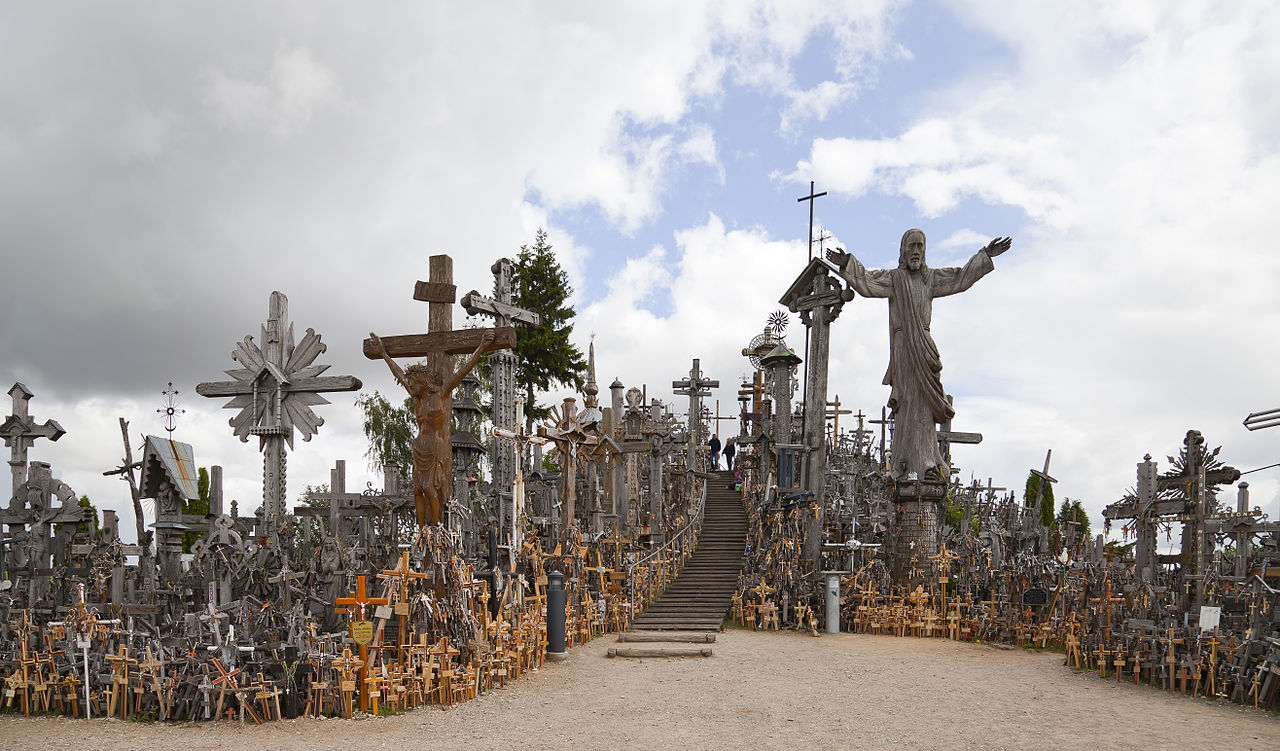
The first crosses were erected after the 1831 anti-Russian uprising, in place of gravestones for rebels whose bodies were not returned. Soviet authorities bulldozed the hill flat at least three times, burned wooden crosses, sent metal ones for scrap, and tried to turn the area into a swamp; each time people came secretly at night and put them back up. Today the number is estimated to exceed one hundred thousand, and thousands of small rosaries and crosses hung on the larger ones clink in the wind. Pope John Paul II came here in 1993.
Did you know?
How many crosses are on the hill?
More than 100,000, and the number keeps growing. Visitors are free to leave their own, and small crosses and rosaries hung on the larger ones multiply the total fast.
Why couldn't the Soviet authorities destroy the hill?
It was bulldozed and burned at least three times. Each time people returned at night with new crosses, and the hill became a symbol of passive resistance.
How did the Pope's visit change the site?
John Paul II celebrated Mass here in 1993 and the cross he left still stands. After the visit the site became an international pilgrimage destination and a monastery was founded nearby.
Why go?
- To see one of Lithuania's most symbolic and emotional places
- To feel the country's religious and historical memory in a different atmosphere
- To add a powerful cultural stop outside classic city routes
Travel tip
Dress for the weather — it is an open, windy site; the visit is short but moving.