


Trakai Island Castle
Ideal: Ideal for history, romantic routes, lake views, and photography.
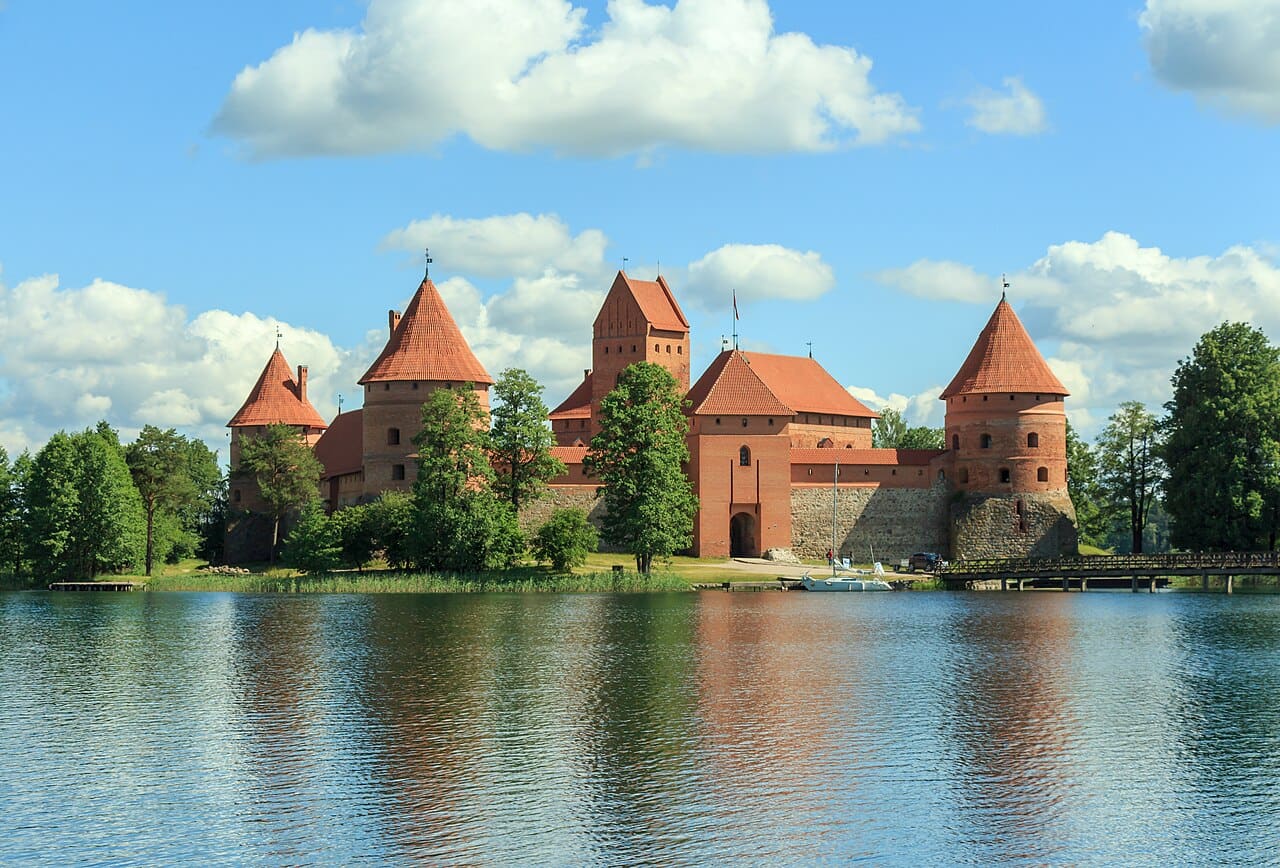
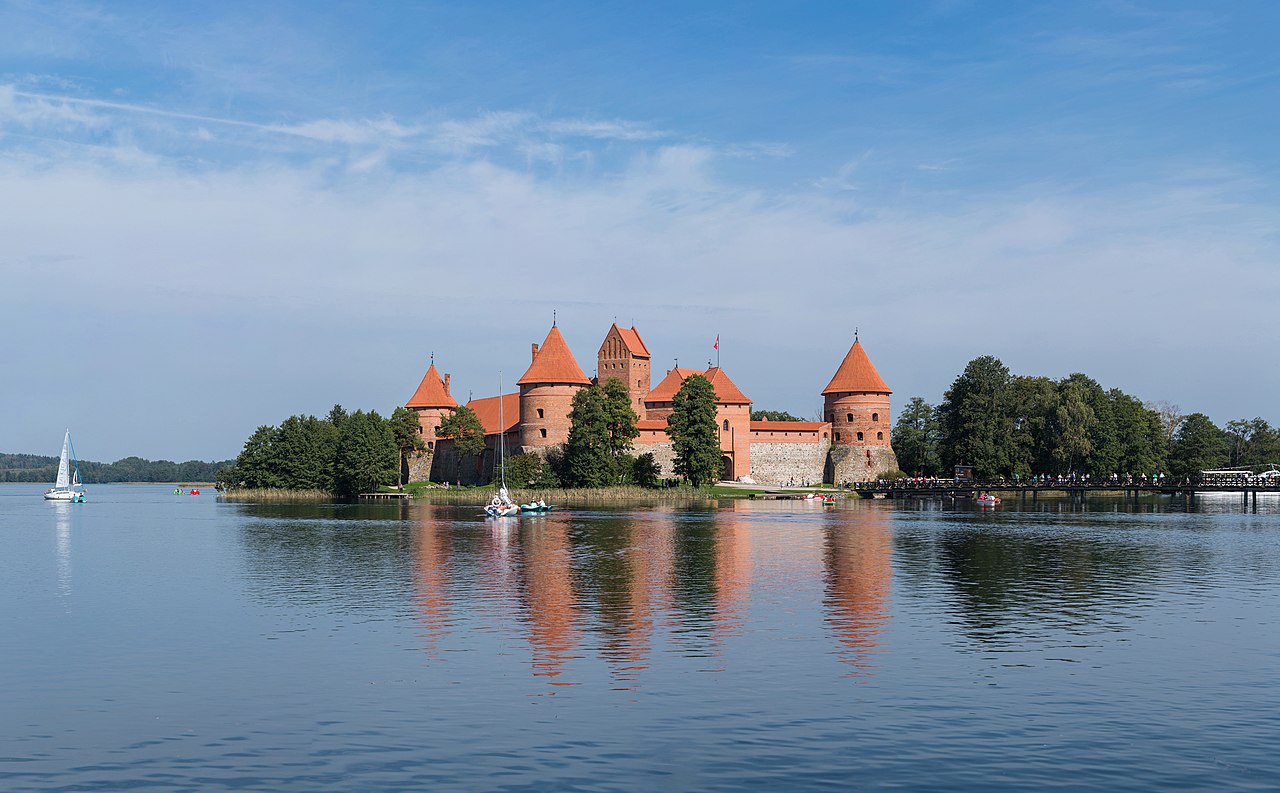
Built on the island in the middle of the lake in the 14th–15th centuries under Kęstutis and Vytautas, it remains Eastern Europe's only island castle. It fell into ruin in the 17th century; restoring it in the Soviet era was not welcomed in Moscow because the building is a strong symbol of Lithuanian national identity. The Karaim community living in the town are descendants of the group Vytautas brought from Crimea around 1397 and have lived here for six centuries; the kibinai pastries sold in the streets come from their cuisine.
Quick facts
- Commissioned by
- Kęstutis
- Architectural style
- Gothic architecture
- Material
- brick
Facts from Wikidata, photos from Wikimedia Commons.
Did you know?
Why was the castle built on an island?
The island in Lake Galvė gave natural defence against the Teutonic Knights in the 14th century. It can still only be reached by boat or across the present wooden footbridge.
Who are the Karaim community of Trakai?
The Karaim are a Turkic community brought from Crimea in the 14th century, with their own language, cuisine and house of prayer (kenesa). Trakai is one of their most important settlements in the world.
Was the castle always in this condition?
No — it lay in ruins for centuries. What stands today was rebuilt in the 1950s and 60s from medieval plans, a project the Soviet authorities criticised at the time as nationalist.
Why go?
- To see the iconic island castle on the lake
- For an easy and impressive day trip outside Vilnius
- To combine history, nature, and photography on one route
Travel tip
If the weather is good, walk around the castle; do not limit yourself to the museum section alone.