


Gediminas Tower
Ideal: Ideal for those seeking views, history, and photo spots.
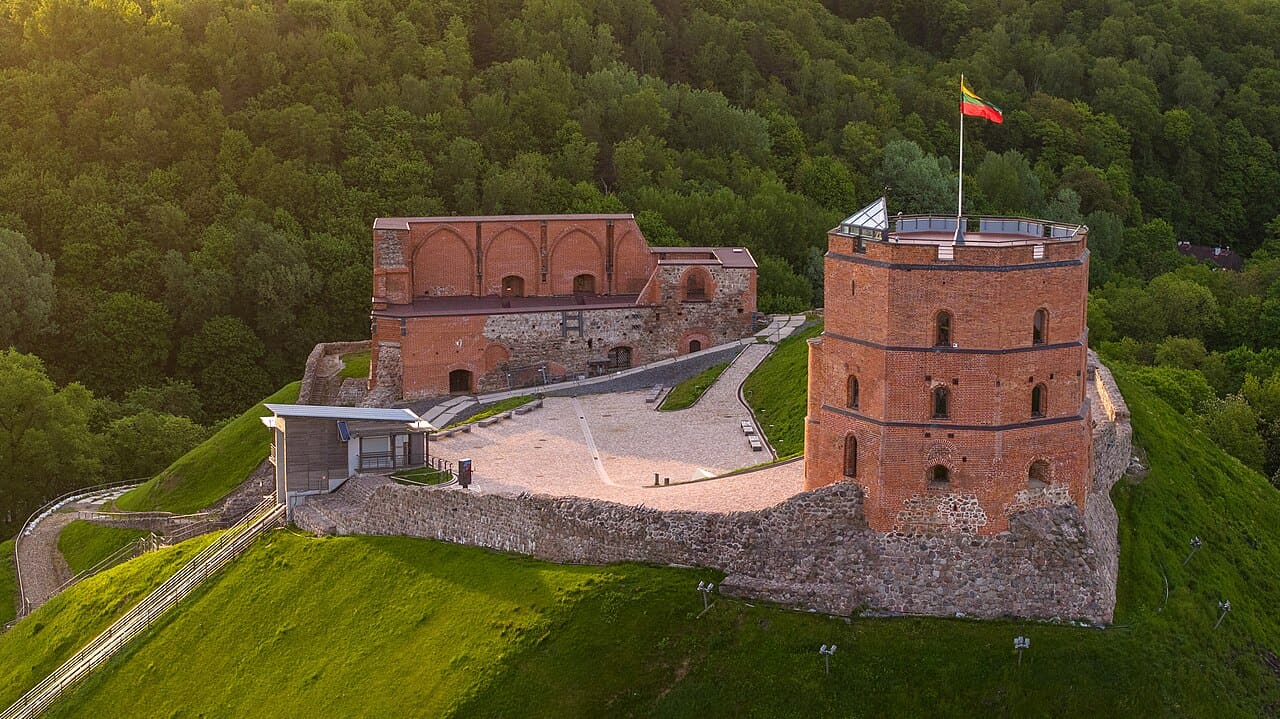
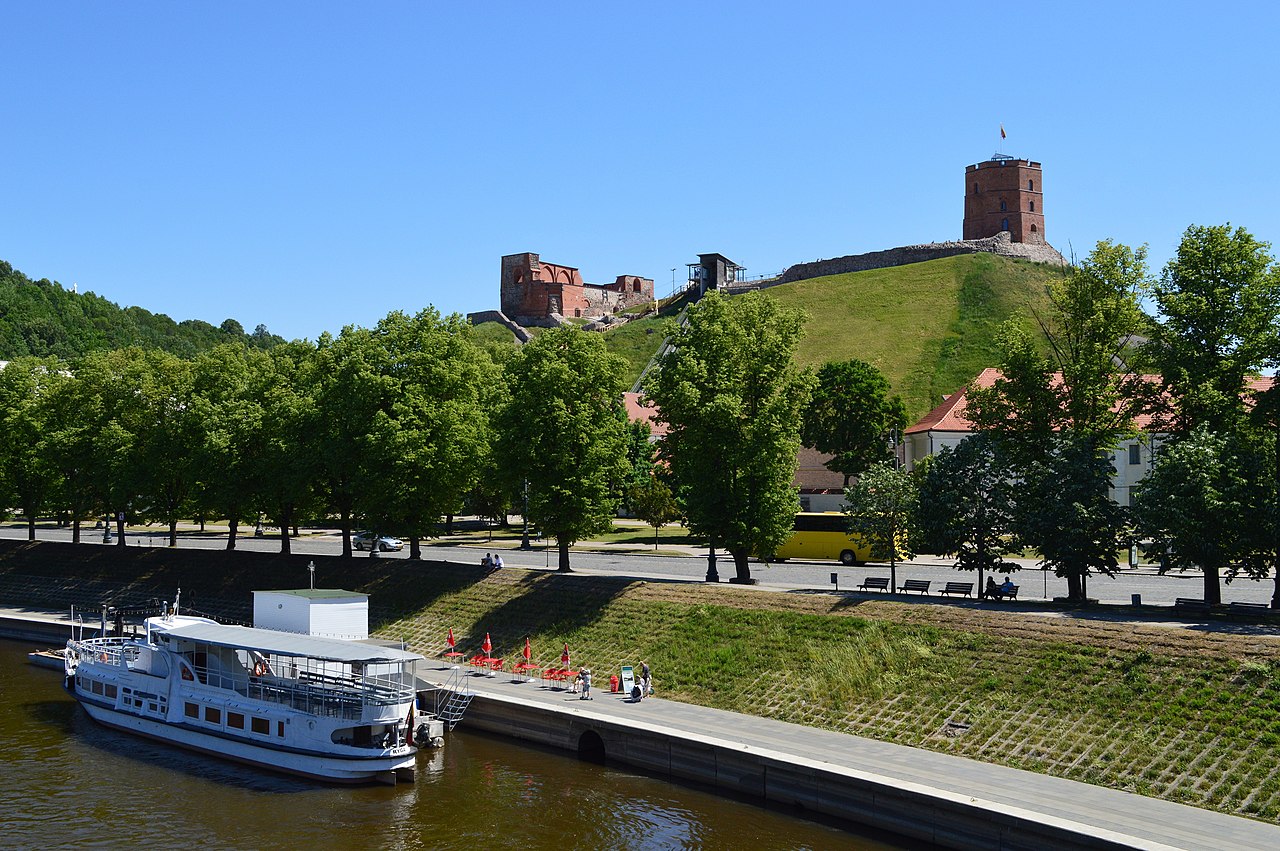
The only structure remaining from the Upper Castle; 14th–15th-century brickwork. According to legend, Grand Duke Gediminas dreamed on this hill of an iron wolf howling, and when a priest interpreted it as 'the fame of the city founded here will spread across the world,' Vilnius was established. The hill has another meaning too: on 23 August 1989 the 675-kilometer Baltic Way human chain linking Vilnius, Riga, and Tallinn hand in hand began here, with about two million people taking part.
Quick facts
- Built
- 14th century
- Architectural style
- Gothic art
- Material
- brick
Facts from Wikidata, photos from Wikimedia Commons.
Did you know?
Where does the tower's name come from?
Legend says Grand Duke Gediminas, hunting on this hill, dreamt of an iron wolf howling — interpreted as a sign to found a city. Vilnius's founding story rests on that dream.
Why does the flag on the tower matter?
In 1988 the Lithuanian tricolour was raised here for the first time in decades, and the moment became a symbol of the independence movement. The tower now stands for national sovereignty.
Is the climb up hard?
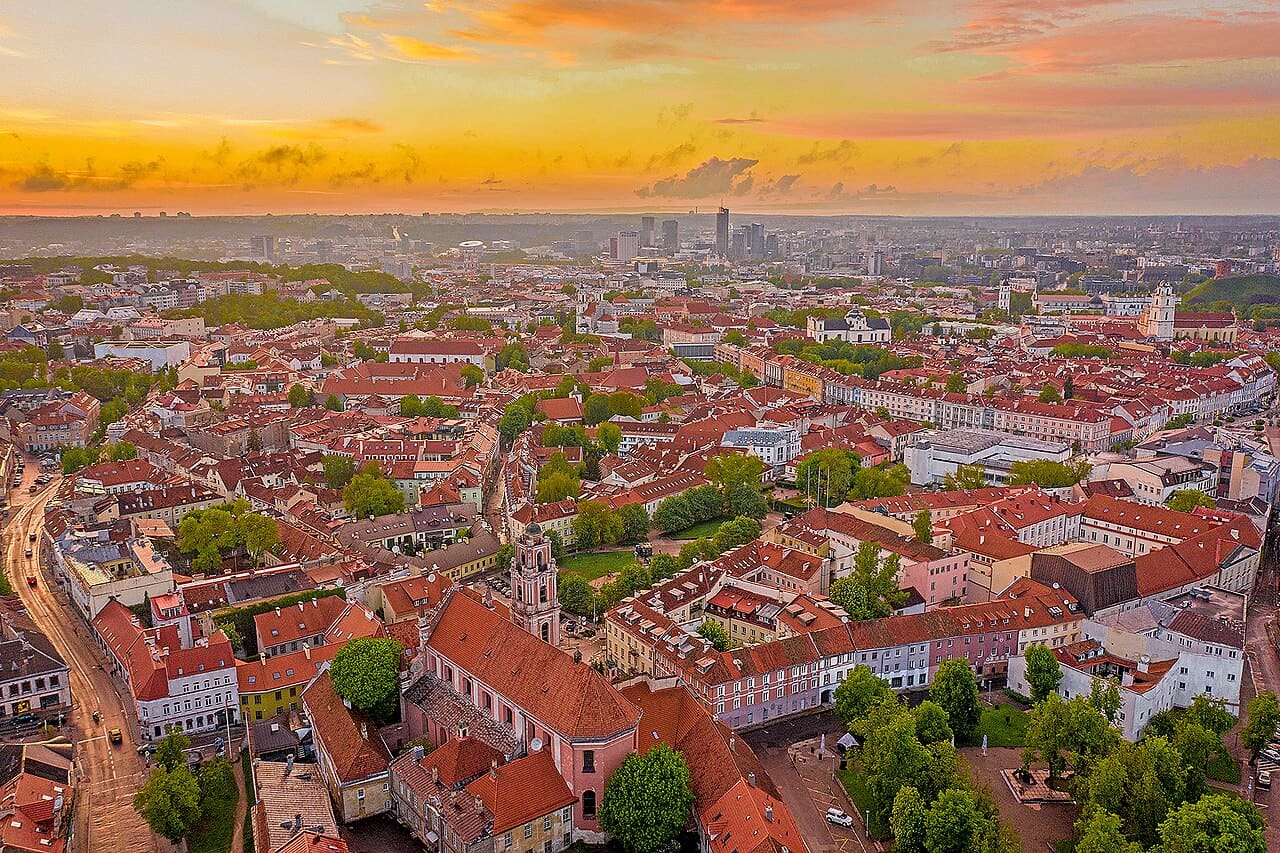
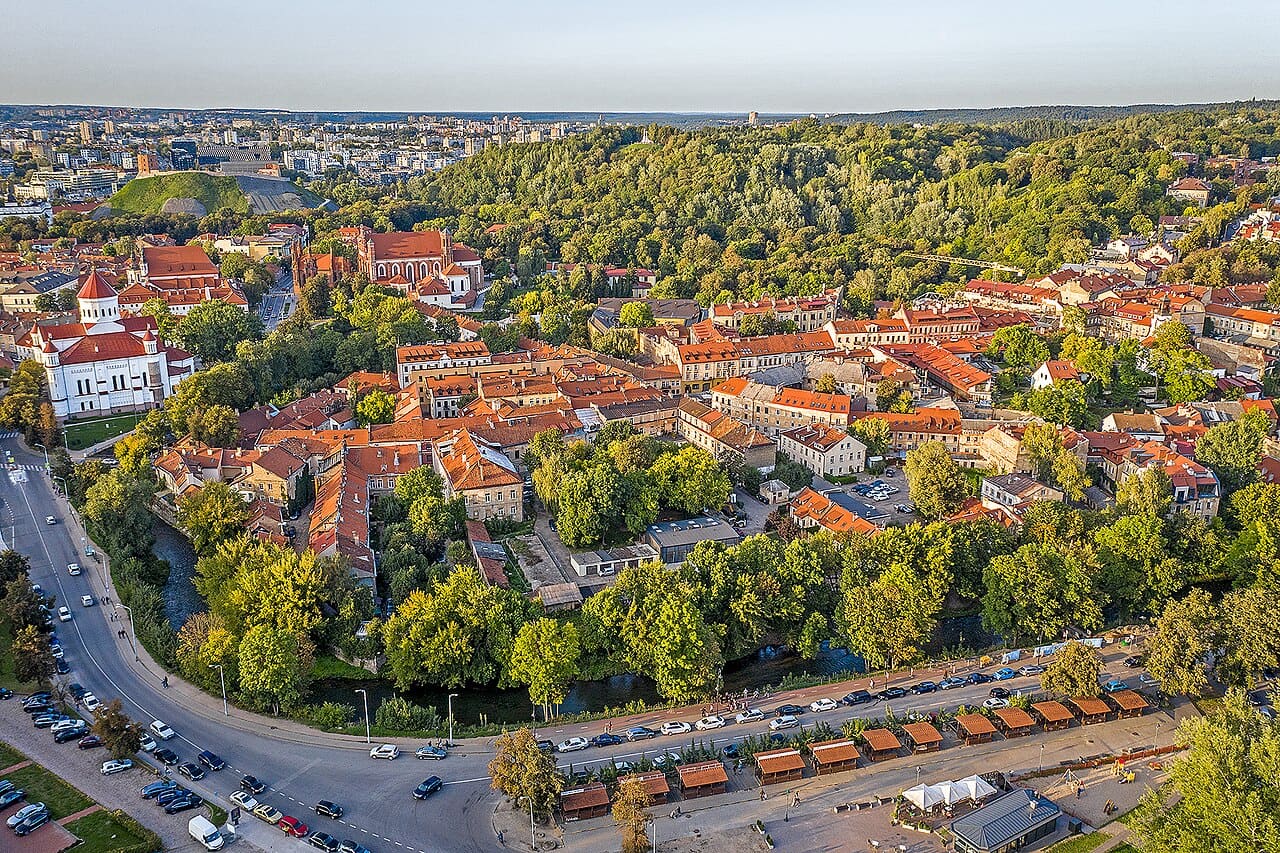
You can walk the steep cobbled path or take the funicular on the side. From the top you see the whole old town and the meeting of the rivers.
Why go?
- To see the Vilnius panorama from above
- To visit one of Lithuania's most important historical symbols
- To add a short but striking viewpoint break to an old-town walk
Travel tip
Views are more impressive near sunset; comfortable shoes help for the walk up.