

Wrigley Field
Ideal: Ideal for sports, baseball, local culture, game-day buzz, and a different Chicago experience.
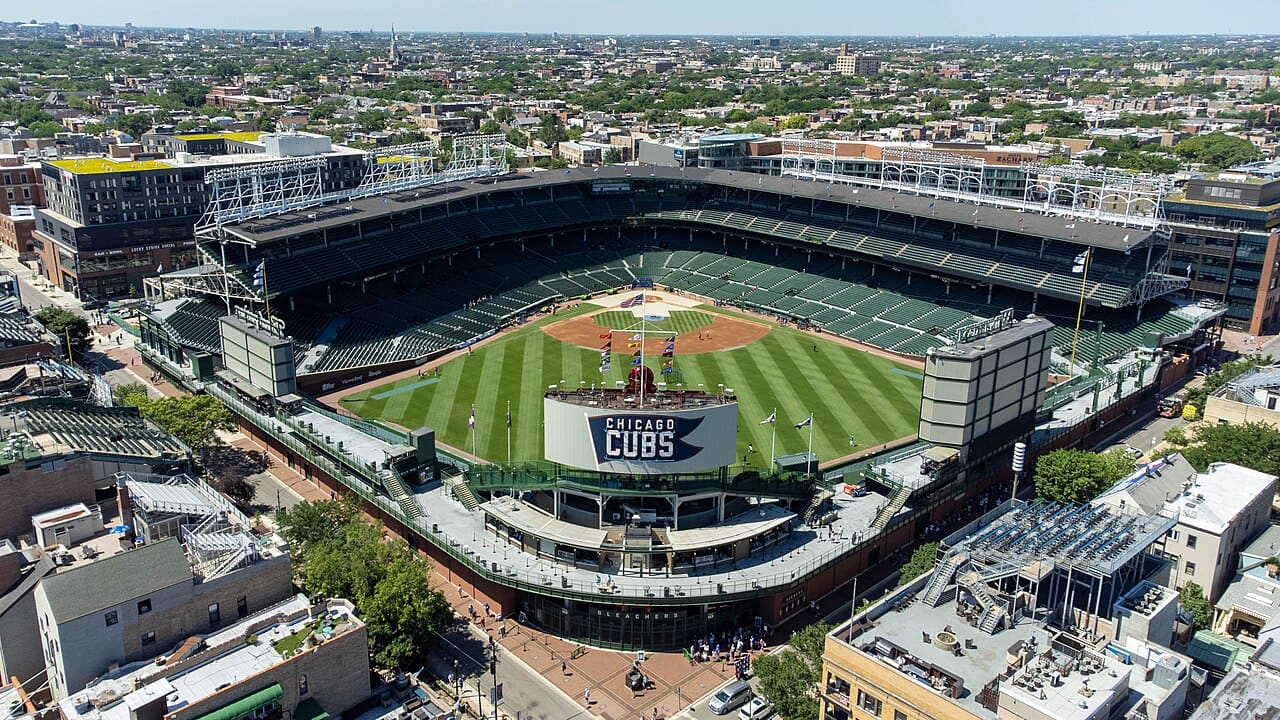
It opened in 1914 and is baseball's second-oldest surviving stadium after Fenway Park. Ivy planted on the outfield wall in 1937 became a rule: if a ball disappears in the vines the fielder raises his hands and the hit is automatically a double. The manual scoreboard from the same year is still turned by hand and no batted ball has ever hit it. Lights were not installed until 1988 — it was the last major league park to host night games. The home Cubs ended a 108-year drought by winning the championship in 2016.
Quick facts
- Opened
- 23 April 1914
- Architect
- Zachary Taylor Davis
- Heritage status
- Chicago Landmark
Facts from Wikidata, photos from Wikimedia Commons.
Why go?
- To see one of America's most historic baseball stadiums
- To experience Chicago sports culture on the ground
- For game-day energy and lively bars and restaurants nearby
Travel tip
The neighborhood comes alive on game days; even without tickets, Wrigleyville atmosphere is worth a visit.