

Kinderdijk Windmills
Ideal: Ideal for photography, outdoors, classic Dutch scenery, and cultural nature routes.
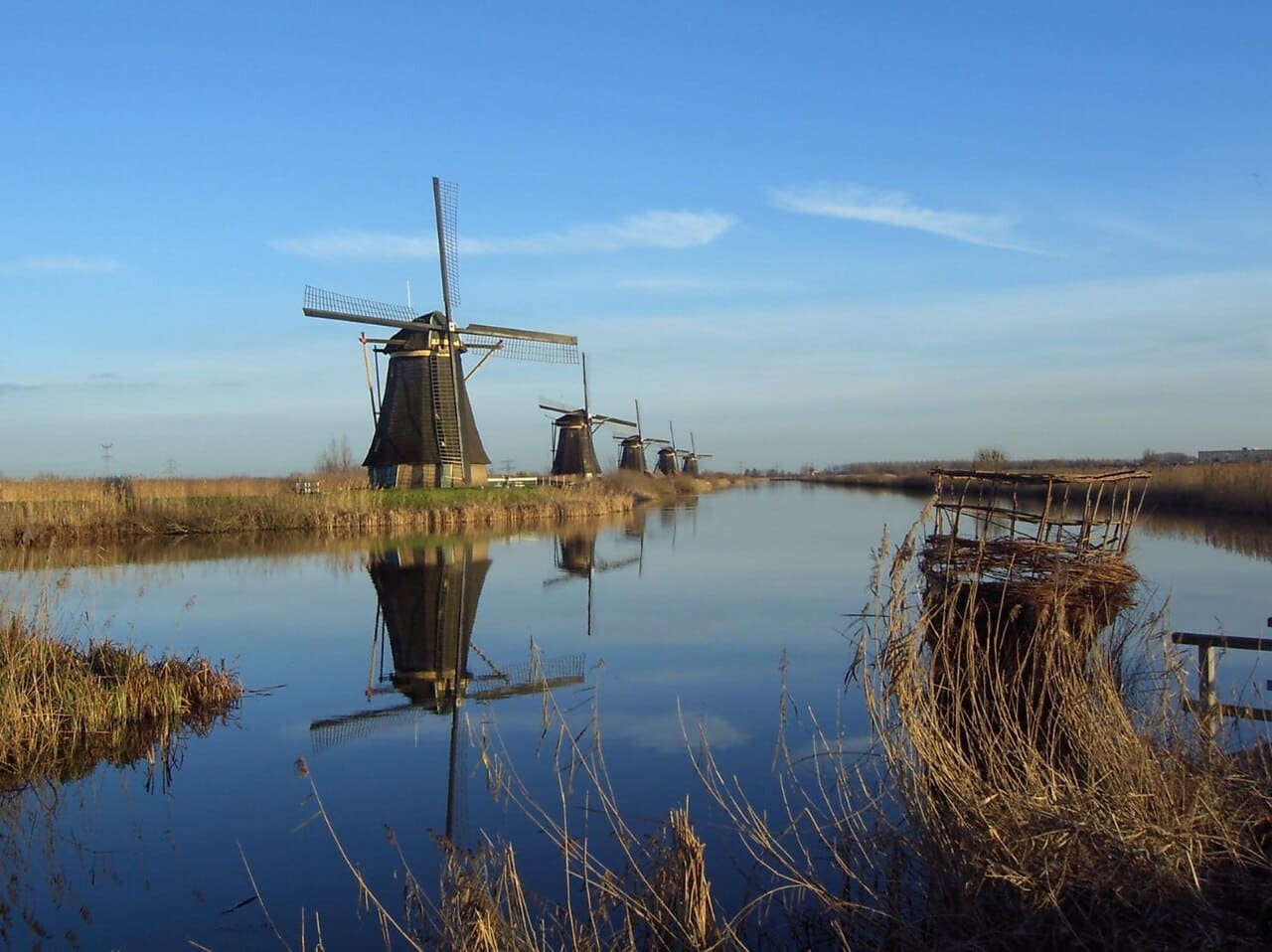
The 19 windmills standing side by side were built between 1738 and 1740 to step water up from the polder below sea level — decoration, not; still an understandable engineering system. The site joined UNESCO's list in 1997. The name means 'children's dike' and comes from the legend that after the great flood of 1421 a cat was found balancing a cradle on the water. Some mills are still home to miller families today.
Did you know?
What did these windmills actually do?
They did not grind grain: their job was to pump water out of a polder lying below sea level. The 19 mills built in the 1740s form a system that lifts water stage by stage into higher canals.
Do people still live in the mills?
Yes — miller families still occupy some of them. Although UNESCO-listed, the mills are kept in working order and can still serve as backup pumps if needed.
Do the sail positions mean anything?
Millers used them as signals: there were distinct positions for a short rest, a long stoppage, a birth or a death. During the Second World War the same signs were used to pass warnings.
Why go?
- To see classic Dutch windmills on the UNESCO list
- For canal, waterway, and windmill landscapes
- To add a strong half-day route around Rotterdam
Travel tip
In clear weather cycling or walking is much nicer; be prepared for windy conditions.