

Anne Frank House
Ideal: Ideal for history, memorial sites, WWII topics, and deep cultural experiences.
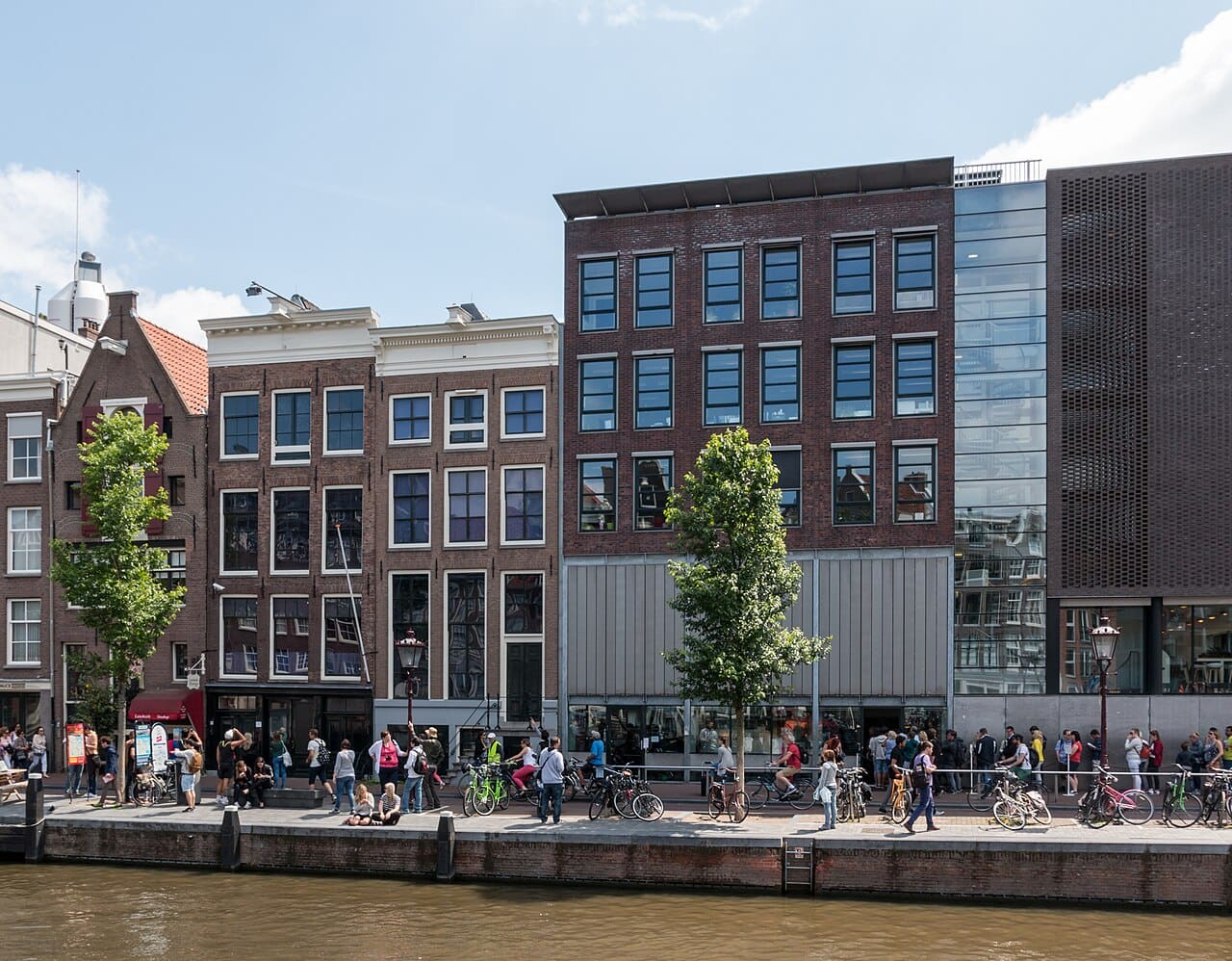
Eight people lived here from 6 July 1942 to 4 August 1944 — 761 days — in the annex behind Otto Frank's business, hidden behind a bookcase door. Because warehouse workers were downstairs during the day, walking, talking, and using water were forbidden. After arrest only Otto survived among the eight; Anne died at Bergen-Belsen in early 1945. The rooms were left empty at Otto's request — belongings were seized when they were sent to camps, and that emptiness is deliberately preserved. Who tipped off the authorities is still unknown.
Quick facts
- Built
- 3 May 1960
- Opened
- 3 May 1960
- Annual visitors
- 1.2 million
- Material
- brick
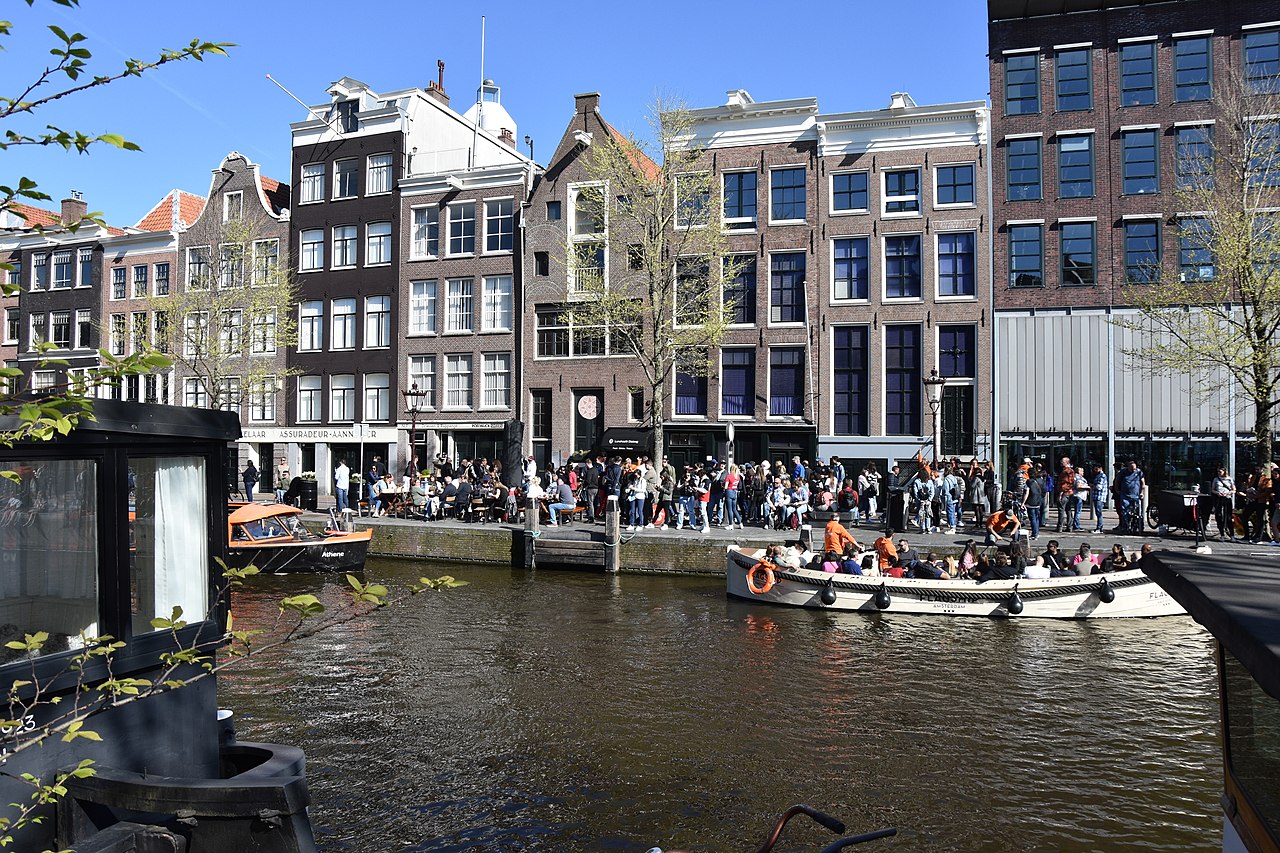
Facts from Wikidata, photos from Wikimedia Commons.
Did you know?
Where was the entrance to the secret annexe?
It was concealed behind a swinging bookcase, which is still in place today. The rear annexe measured about 50 m² and eight people hid there for more than two years.
Why are the rooms empty?
The Nazis removed all the furniture after the raid. When the museum was created Otto Frank insisted the rooms stay empty — the emptiness is a deliberate statement about the loss.
How did the diary survive?
Miep Gies, an employee of the company, gathered the papers scattered on the floor after the raid and kept them without reading them. She handed them to Otto Frank, the only survivor, after the war.
Why go?
- To understand Anne Frank's story on site
- For a more personal perspective on WWII and Holocaust history
- To visit one of Amsterdam's most meaningful memorial sites
Travel tip
Tickets usually sell out fast — planning your visit in advance is almost essential.