

Reynisfjara Beach
Ideal: Ideal for photography, volcanic coastal scenery, and South Iceland routes.
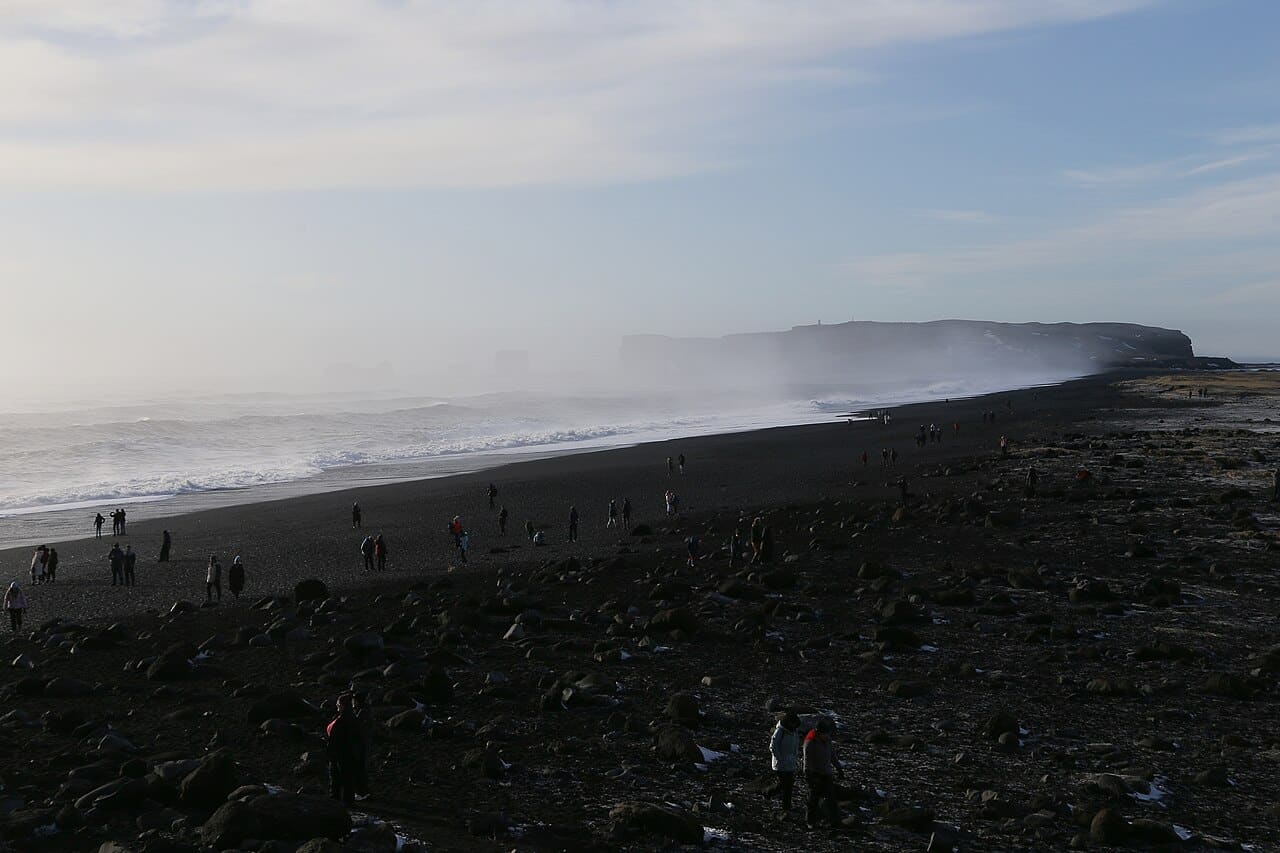
The black sand comes from basalt lava ground by the waves; the hexagonal columns on the shore formed as slowly cooling lava cracked in regular patterns. The Reynisdrangar sea stacks rising offshore are, in legend, trolls turned to stone at sunrise while dragging a ship ashore. The real issue here is not scenery but safety: on the flat beach, sneaker waves that surge without warning have killed several visitors, so a lighted risk warning system was installed. Never turn your back on the water.
Did you know?
Why are the waves at this beach so dangerous?
So-called sneaker waves surge far beyond the others without warning and drag people out as they retreat. There have been fatalities here, and the warnings to keep away from the water are serious.
Why is the sand black?
It is basalt granulated when lava met the sea and shattered as it cooled. Most beaches along Iceland's south coast are black for the same reason.
What is the story of the sea stacks?
Legend says the Reynisdrangar columns are two trolls turned to stone by the sunrise while dragging a ship ashore. Geologically they are basalt remnants isolated by marine erosion.
Why go?
- To see Iceland's most iconic black sand beach
- For striking photos of basalt columns and sea stacks
- To add a dramatic stop to the South Coast route
Travel tip
Do not approach the sea; sudden powerful waves at Reynisfjara can be dangerous.