


Gullfoss
Ideal: Ideal for nature, photography, and the classic Iceland route.
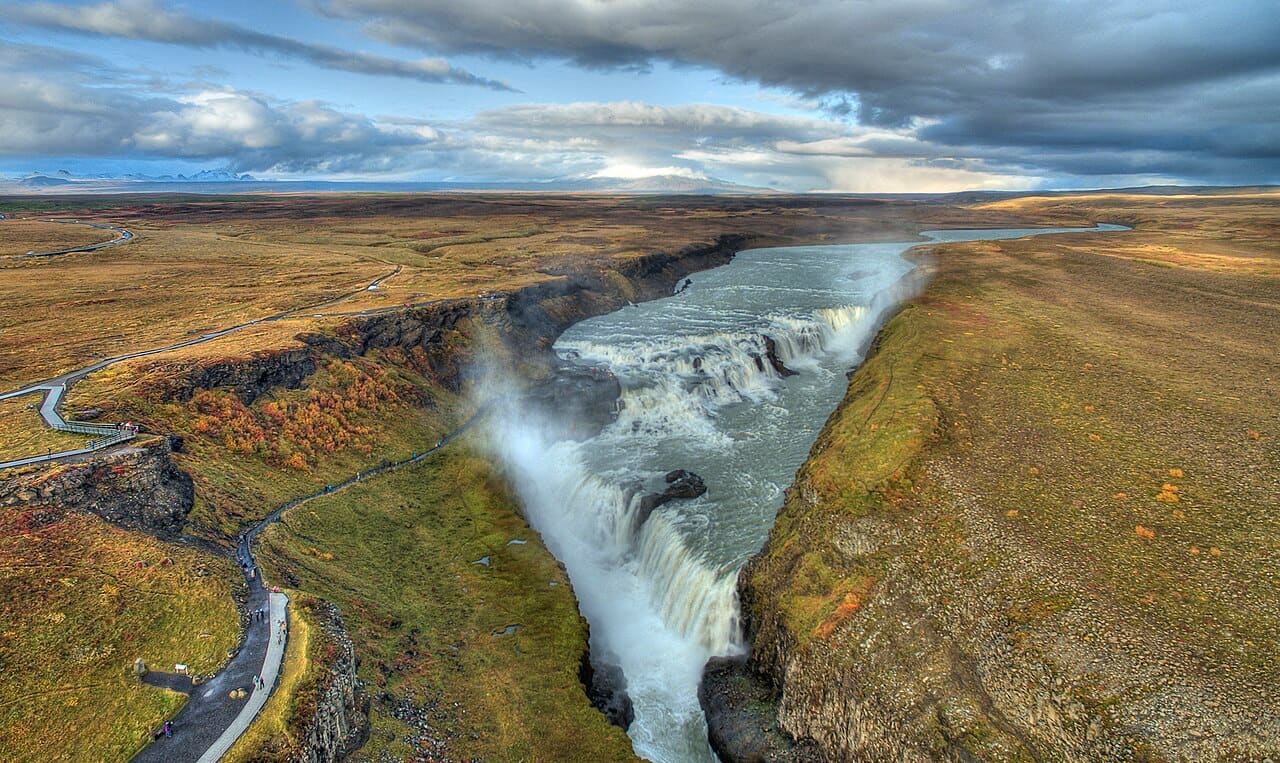
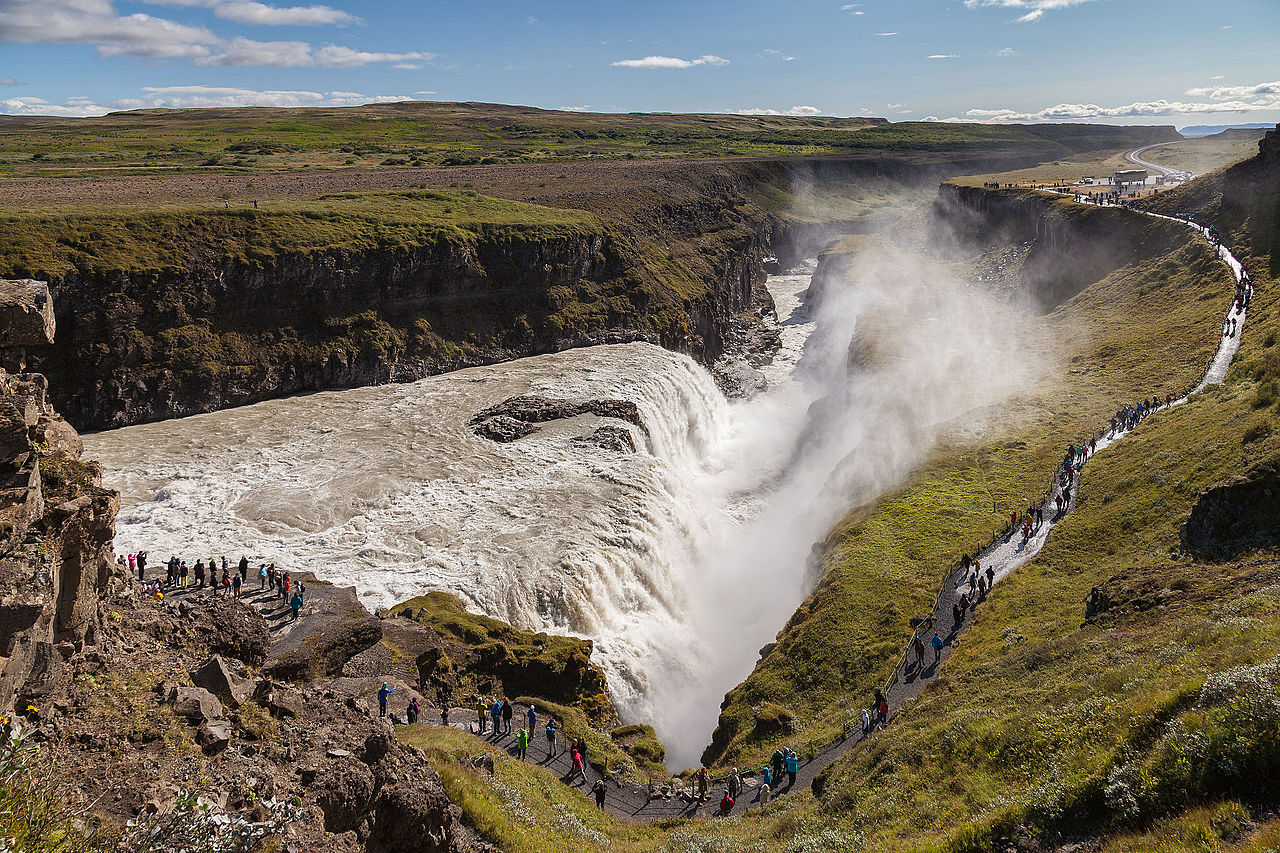
Water drops 32 meters in two stages and vanishes into a 70-meter-deep canyon — from certain angles the river seems to end at the edge of the earth. In the early 20th century a foreign investor wanted to close the waterfall and build a hydroelectric plant; the farmer's daughter who leased the land, Sigríður Tómasdóttir, walked repeatedly to Reykjavík to protest and threatened to throw herself into the falls. The lease was canceled; Sigríður is now counted as Iceland's first environmental activist and her monument stands at the head of the waterfall.
Did you know?
How was the waterfall saved?
In the early 20th century it was to be leased for a hydroelectric scheme. The landowner's daughter, Sigríður Tómasdóttir, campaigned for years and walked to Reykjavík in protest; the project was dropped and the falls were protected in 1979.
What makes the waterfall's structure unusual?
The water drops in two stages, the second at a right angle into a narrow crevice. From certain angles it therefore looks as if the river simply disappears into a bottomless crack.
Can you visit in winter?
Yes, though the paths ice over and the lower platform can be closed. In winter the frozen spray and iced rocks give the falls a completely different appearance.
Why go?
- To see one of Iceland's most famous waterfalls
- To complete a main stop on the Golden Circle route
- For powerful water flow and dramatic natural scenery
Travel tip
The area around the falls can be windy and wet; a waterproof jacket and non-slip shoes help.