

Wachau Valley
Ideal: Ideal for wine, scenery, and a slower pace.
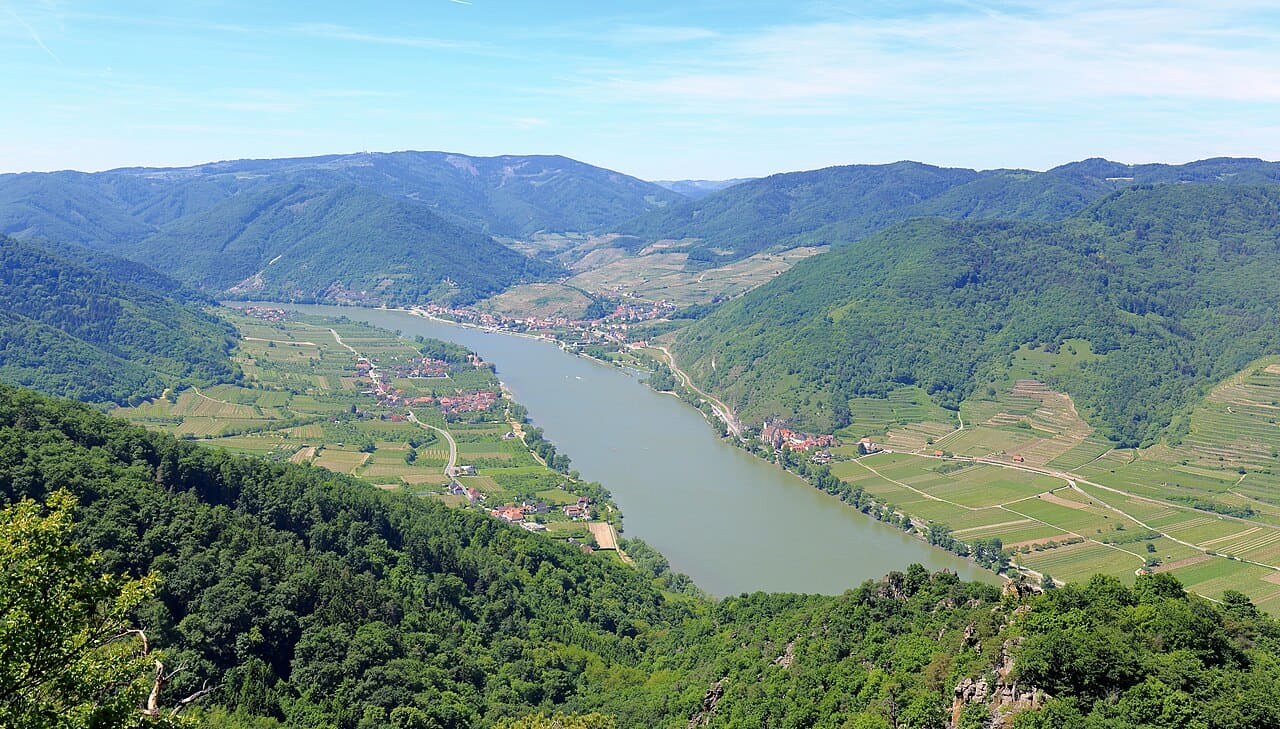
The 36-kilometer Danube stretch between Melk and Krems joined the UNESCO list in 2000. Terraced slopes mainly grow Grüner Veltliner and Riesling; Melk Abbey at the western end was Baroqueized between 1702 and 1736 and holds more than 100,000 volumes in its library. The castle ruins at Dürnstein are where Richard the Lionheart spent the winter of 1192–93 as a captive.
Quick facts
- Area
- 18,387 hectares
- Heritage status
- World Heritage Site
Facts from Wikidata, photos from Wikimedia Commons.
Did you know?
What is the valley's most valuable find?
The Venus of Willendorf was found here: a small 11 cm female figurine roughly 30,000 years old, one of Europe's oldest known artworks, now displayed in Vienna.
Why are the region's apricots famous?
The Wachau apricot (Marille) carries EU protected status. The river-moderated climate and terraced slopes give it a distinctive aroma, and apricot jam, liqueur and schnapps are local staples.
What is the best way to see the valley?
The riverside cycle path is almost completely flat and links Melk with Krems. The same route can be done by river boat, and many visitors cycle one way and return by ship.
Why go?
- For wine villages and castle ruins along the Danube
- For picturesque stops like Dürnstein, Melk, and Krems
- To combine travel with scenery and food
Travel tip
A day trip by train or boat lets you taste the valley without exhausting yourself.