

Hohensalzburg Fortress
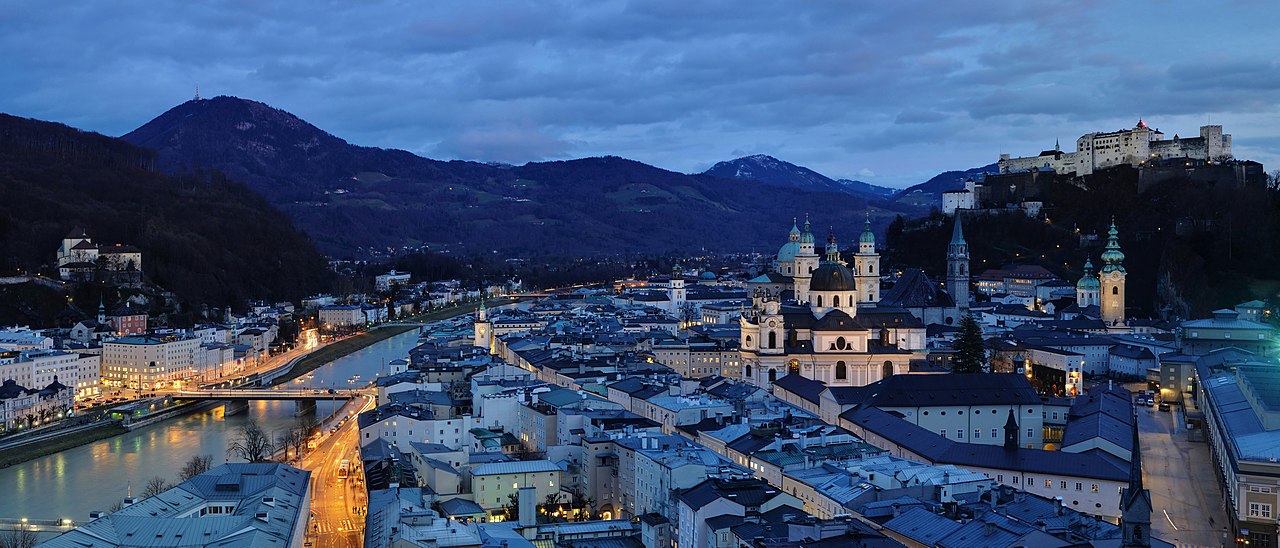
Ideal: Ideal for views, history, and city panoramas.
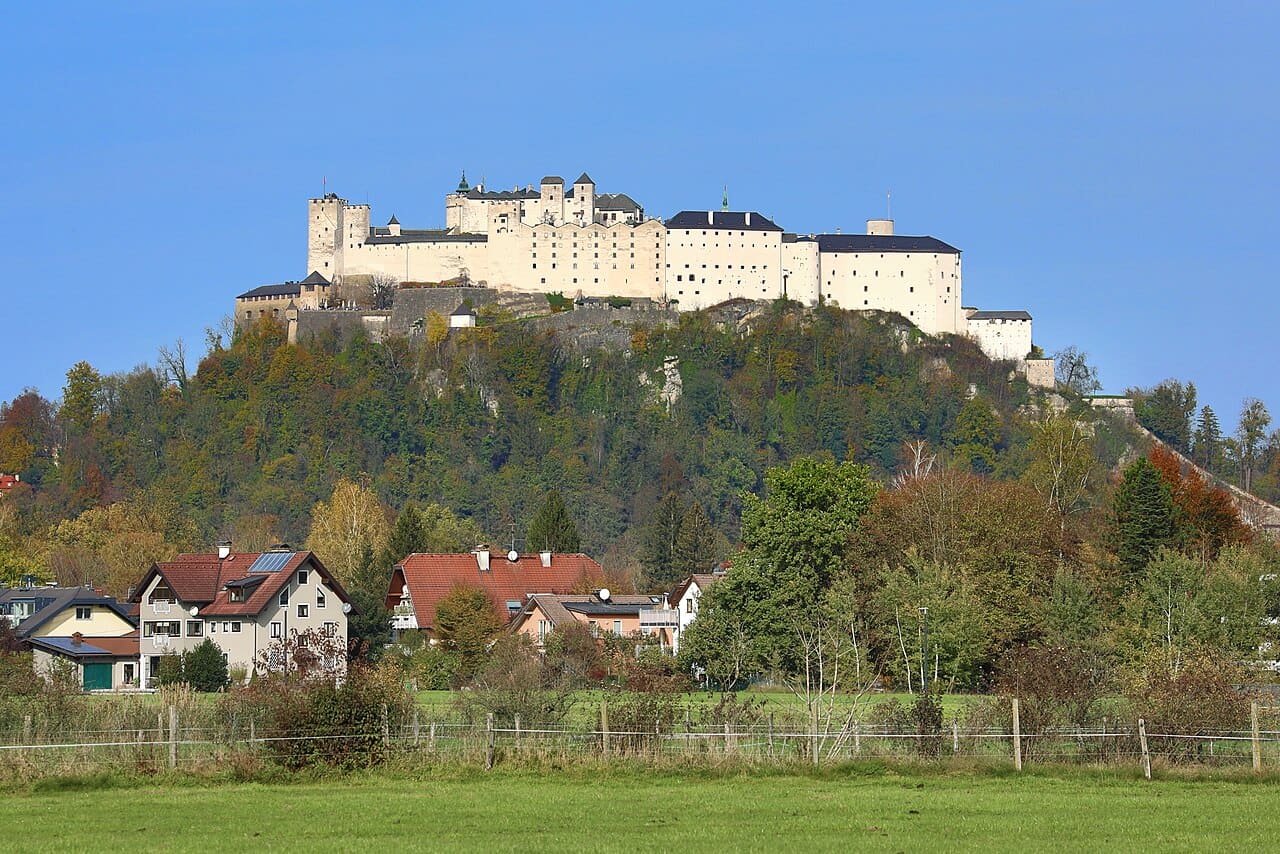
Construction began in 1077 under Archbishop Gebhard and the fortress never fell in nine centuries of sieges — one reason it is among Europe's largest fully preserved castles. It sits on a rock 120 meters above the city; inside are the archbishops' Golden Hall, a ceramic stove from 1502, and period torture instruments. The Festungsbahn funicular, running since 1892, is Austria's oldest still-operating funicular.
Quick facts
- Built
- 1077
- Elevation
- 540 m
- Heritage status
- Listed objects in Austria
Facts from Wikidata, photos from Wikimedia Commons.
Did you know?
Why was the fortress never taken?
In more than 900 years it was never captured in battle. Its position and continually extended defences left it one of the best-preserved large fortresses in Central Europe.
What is the strange instrument in the fortress?
A giant 16th-century organ nicknamed the "Salzburg Bull". It could be heard across the whole city and was once played to announce the hours of the day.
What was Salzburg's wealth based on?
The name itself means "salt fortress". Taxes on the region's salt mines and the salt trade financed both the fortress and the city's Baroque architecture.
Why go?
- To see Salzburg from above
- For a full medieval fortress atmosphere
- As a strong finale to an old-town walk
Travel tip
Take the funicular up to save time, then walk down to enjoy the views.