Travel guide
Swimming and water safety on holiday
Calm-looking water does not prove that currents, depth, contamination or supervision are safe.
Prepared by the FlyVentis editorial team and regularly reviewed for travel and event accuracy.
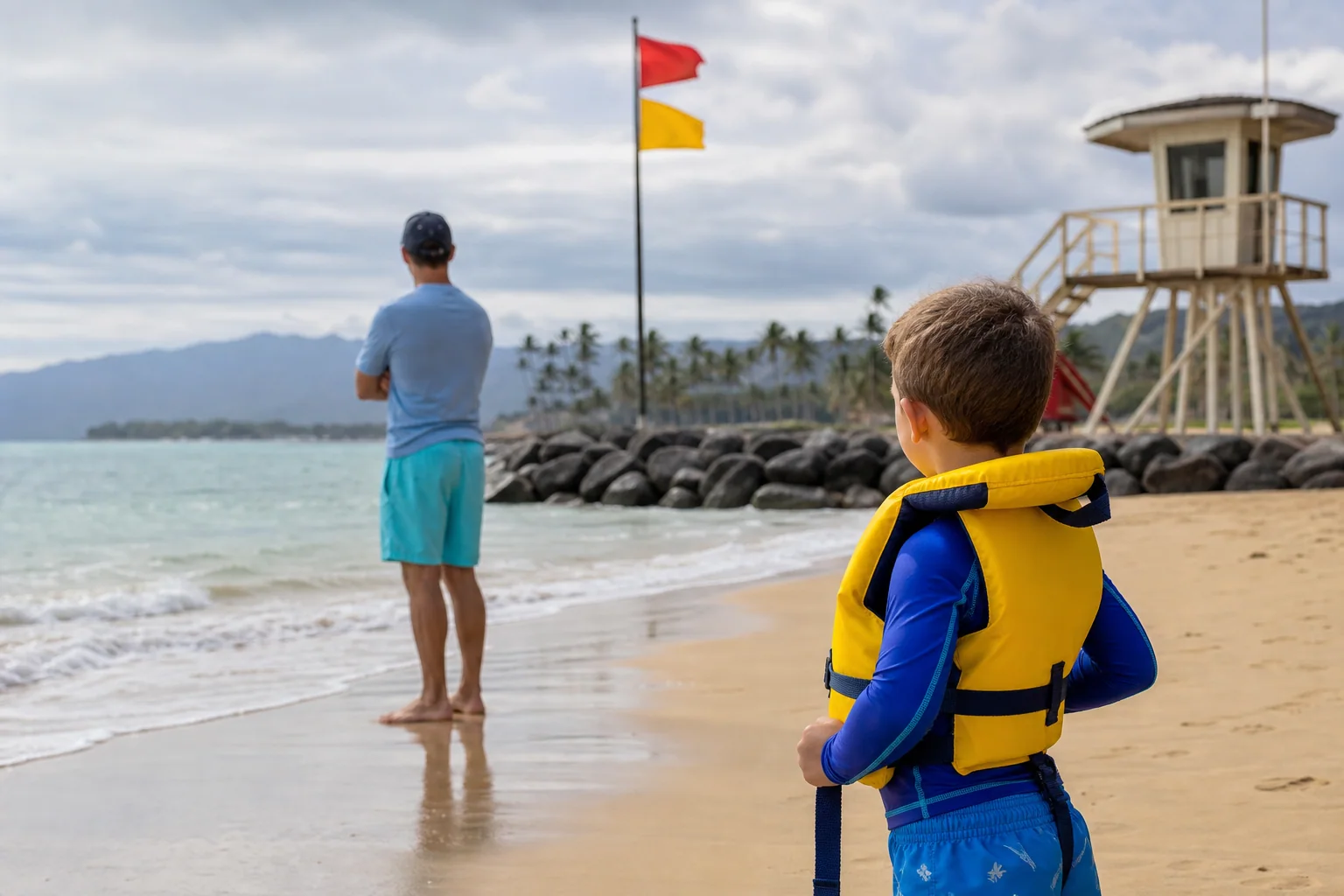
Currents, depth, weather and warning systems at an unfamiliar shore can differ from home. CDC advises travellers not to swim alone and to have correctly sized lifejackets for everyone on a boat.
Use the weather-based itinerary guide for official alerts and the sun and heat guide for outdoor risk.
Read the water before entering
Rip currents move water away from shore. Follow local rescue guidance and stay out when you cannot confidently interpret the conditions.
- Choose an area with a lifeguard and rescue equipment.
- Learn local flags and warnings.
- Stay out during storms, strong currents or poor visibility.
- Never dive where depth is unknown.
Do not outsource child supervision to equipment
A swimming adult should remain within arm's reach of a young child and focus only on supervision. Inflatable toys do not replace a properly fitted lifejacket.
Clear water may still be contaminated
Runoff, sewage or animal waste can be present without obvious colour. Stay out with diarrhoea and protect open wounds from untreated water. Check the safe food and water guide.
| Check | Purpose |
|---|---|
| Sea | Currents, flags and lifeguard |
| Pool | Clarity, drains and rescue equipment |
| Boat | Correct lifejacket for each person |
| Lake or river | Local disease and current alerts |
Official source
Frequently asked questions
Do inflatable armbands replace a lifejacket?
No. A toy or buoyancy aid is not a properly approved and fitted lifejacket.
Can a lifeguard replace close child supervision?
No. A supervising adult should remain attentive and close.
Is swimming safe after heavy rain?
Runoff can raise contamination. Follow local beach and health notices.