


Roman Baths
Ideal: Ideal for Roman history, architecture, thermal culture, and calm city trips.
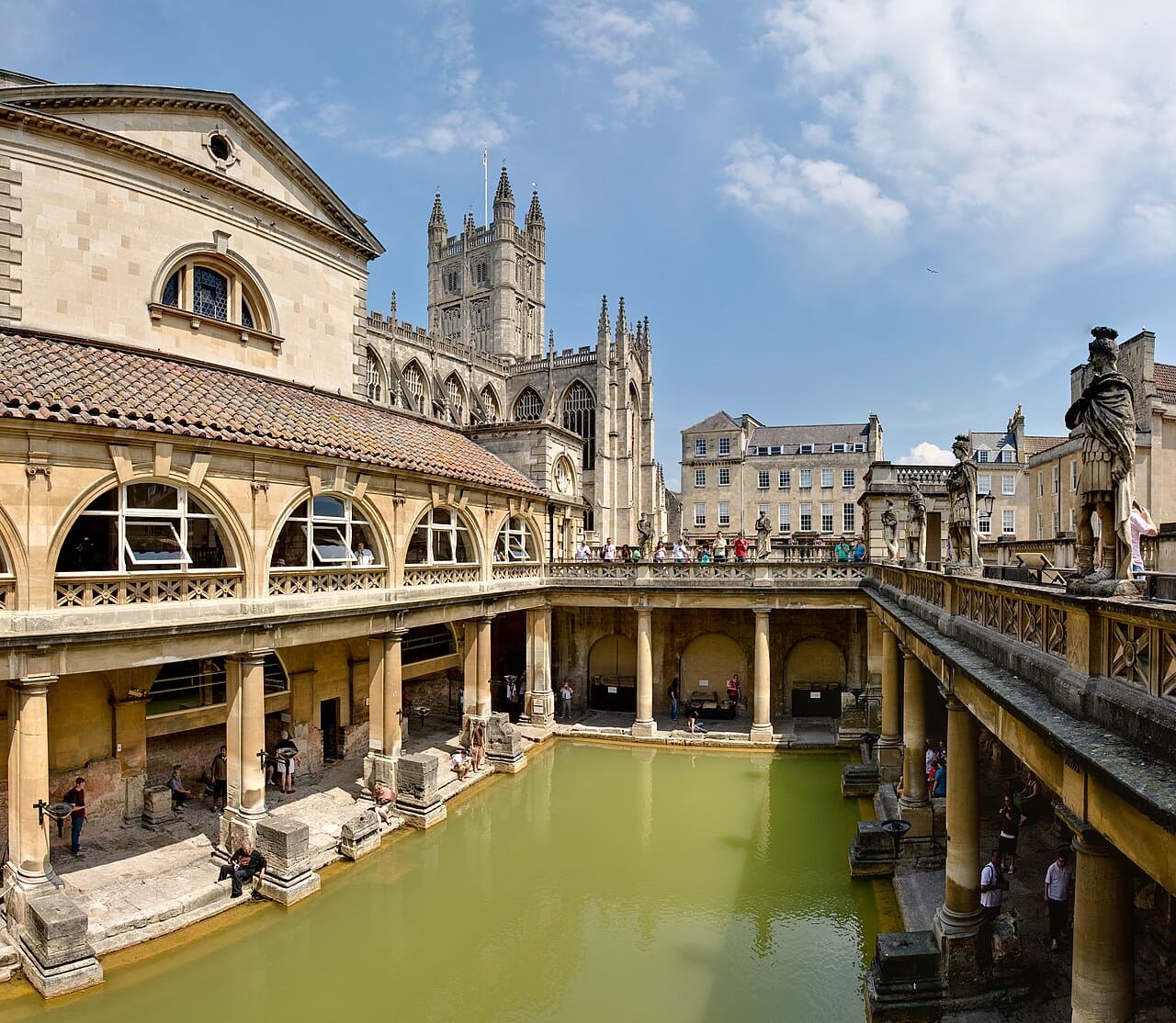
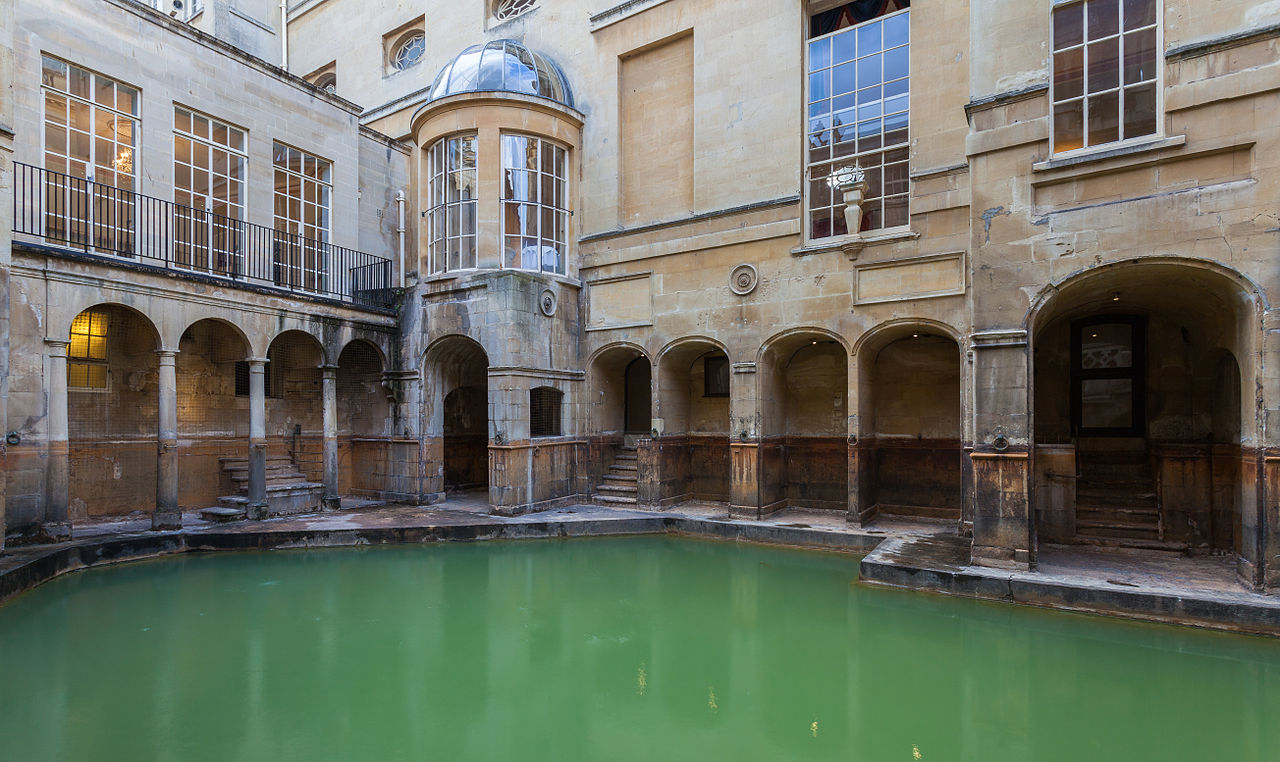
The Roman Baths in the city of Bath show the well-preserved remains of a sacred spa complex built in Roman times. The temple, pools, and engineering system around the natural hot spring bring daily life in the ancient city vividly to mind. Georgian architecture and the Royal Crescent complete the urban side of the visit.
Quick facts
- Built
- 1897
- Opened
- 1897
- Architect
- John Wood
- Architectural style
- ancient Roman architecture
- Heritage status
- Grade I listed building
Facts from Wikidata, photos from Wikimedia Commons.
Did you know?
Where does the water's heat come from?
Rain sinks underground in the Mendip hills, descends around 4 km, is heated there and forced back up under pressure. The spring delivers about a million litres a day at 46 °C.
Can you get into the water?
Swimming in the Roman pool is not allowed: the water now passes through open lead pipes and is untreated. For bathing in the same spring water, the city has the modern Thermae Bath Spa.
What are the curse tablets found in the spring?
Romans threw complaints written on lead sheets to the goddess Sulis Minerva. Most concern stolen property and ask for punishment of the thief; over 130 have been recovered and they are on the UNESCO Memory of the World register.
Why go?
- To see ancient hot-water pools and temple ruins
- To explore Bath's Georgian architecture
- To make a culture day trip from London by train
Travel tip
Even though the Roman Baths are indoors, allow extra time to walk Bath; ticket demand can rise during the day.