

Rhine Falls
Ideal: Ideal for nature, photography, and short trips outside the city.
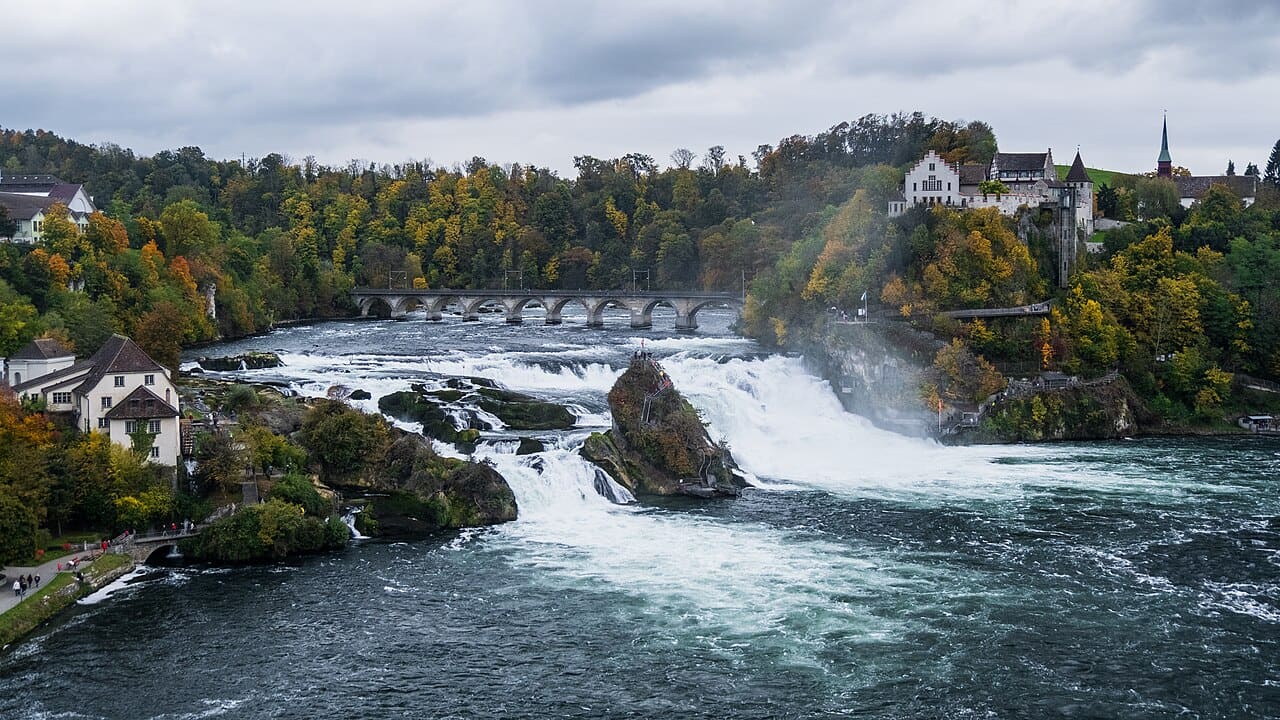
150 metres wide and 23 metres high; it stands out more for flow than height — an average 250 cubic metres per second, nearly 600 in summer when snowmelt peaks, making it Europe's most powerful waterfall. Today's channel formed about 15,000 years ago when glaciers diverted the Rhine from its old valley. You can reach the rock mass in the middle of the falls by boat and climb to the top via stairs inside.
Quick facts
- Height
- 23 m
- Elevation
- 369 m
Facts from Wikidata, photos from Wikimedia Commons.
Did you know?
Why is the Rheinfall called Europe's biggest waterfall?
Not for its height but its flow: 150 m wide and exceeding 600 m³ per second in summer, it is Europe's most powerful lowland waterfall.
Can you climb the rock in the middle of the falls?
Yes. Boats drop visitors at the rock in the centre of the falls, where steps lead to the top for a view from inside the cascade.
When did the waterfall form?
About 15,000 years ago, at the end of the last ice age. Glaciers blocked the Rhine's old bed, forcing the river over a hard limestone ledge — and the falls formed there.
Why go?
- To see one of Europe's most impressive waterfalls
- To feel the power of the water up close from viewing points
- For an easy day-trip nature route from the Zurich area
Travel tip
For the best experience, combine viewing platforms with boat tour options if available.