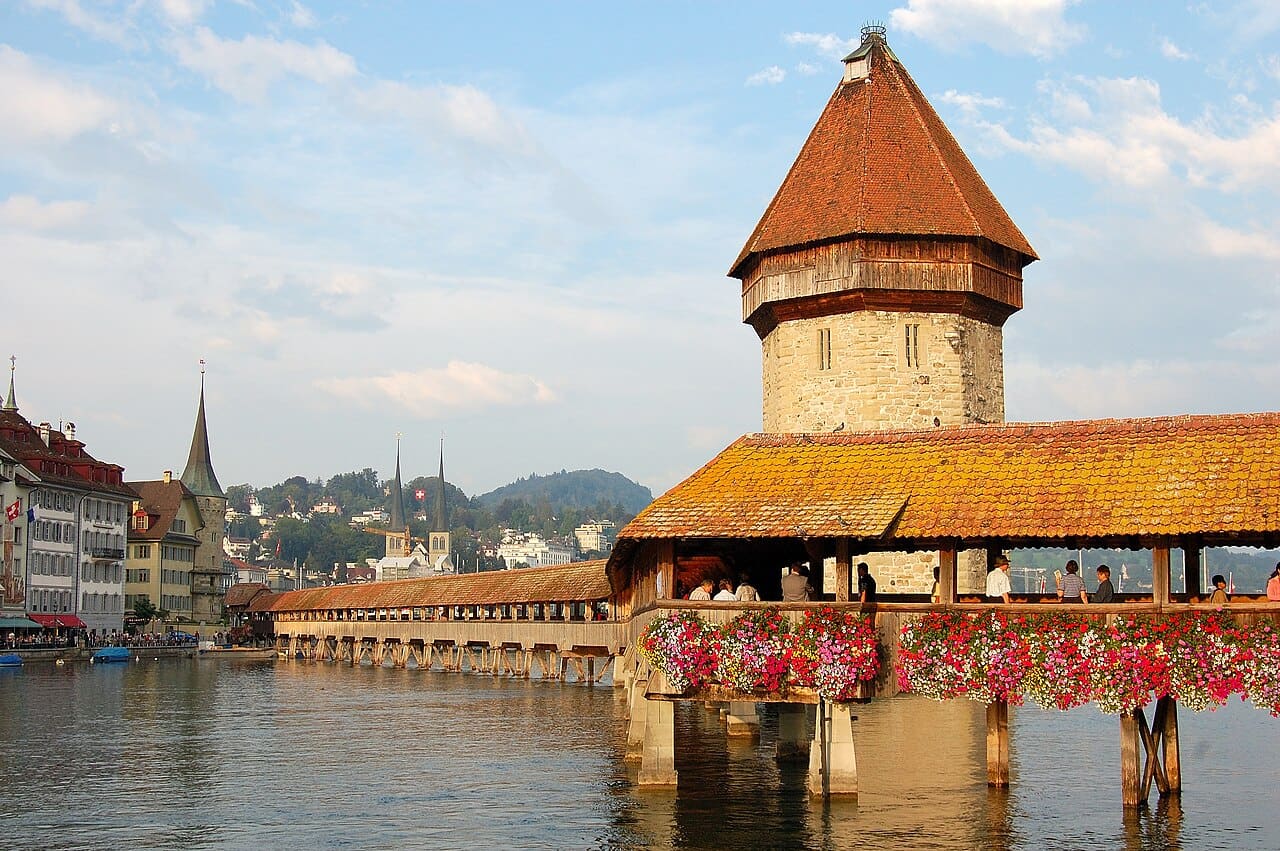


Chapel Bridge (Kapellbrücke)
Ideal: Ideal for city walks, history, and photography.
Built around 1365, it is considered Europe's oldest surviving wooden truss bridge. In the 17th century 111 panels telling the city's history were placed in the roof triangles; the 1993 fire destroyed most of the bridge and 78 of those panels, the structure was rebuilt within a year, and remaining panels were rehung with gaps. The octagonal water tower beside it is even older than the bridge and was later used as a prison, treasury, and archive.
Quick facts
- Opened
- 1360
- Length
- 205 m
- Heritage status
- class A Swiss cultural property of national significance
- Material
- wood
Facts from Wikidata, photos from Wikimedia Commons.
Did you know?
Why does the bridge look so new?
Most of the 1333 bridge burned in a 1993 fire and was rebuilt within a year. The blaze was most likely started by a discarded cigarette.
What do the paintings under the roof show?
Triangular panels fitted to the roof beams in the 17th century depicted the history of Lucerne and Switzerland. Of the original 147 only about 30 survived the fire, and the gaps were deliberately left empty.
What was the tower beside the bridge used for?
The Wasserturm served in turn as treasury, archive, prison and torture chamber. It predates the bridge, built in the 13th century as part of the city walls.
Why go?
- To see Lucerne's historic wooden bridge and river atmosphere
- To start an old-town walk beautifully
- To experience one of Switzerland's most classic city views
Travel tip
The bridge is calmer and better for photos early in the morning or in evening light.