

Château de Chillon
Ideal: Ideal for history, castles, lake views, and romantic routes.
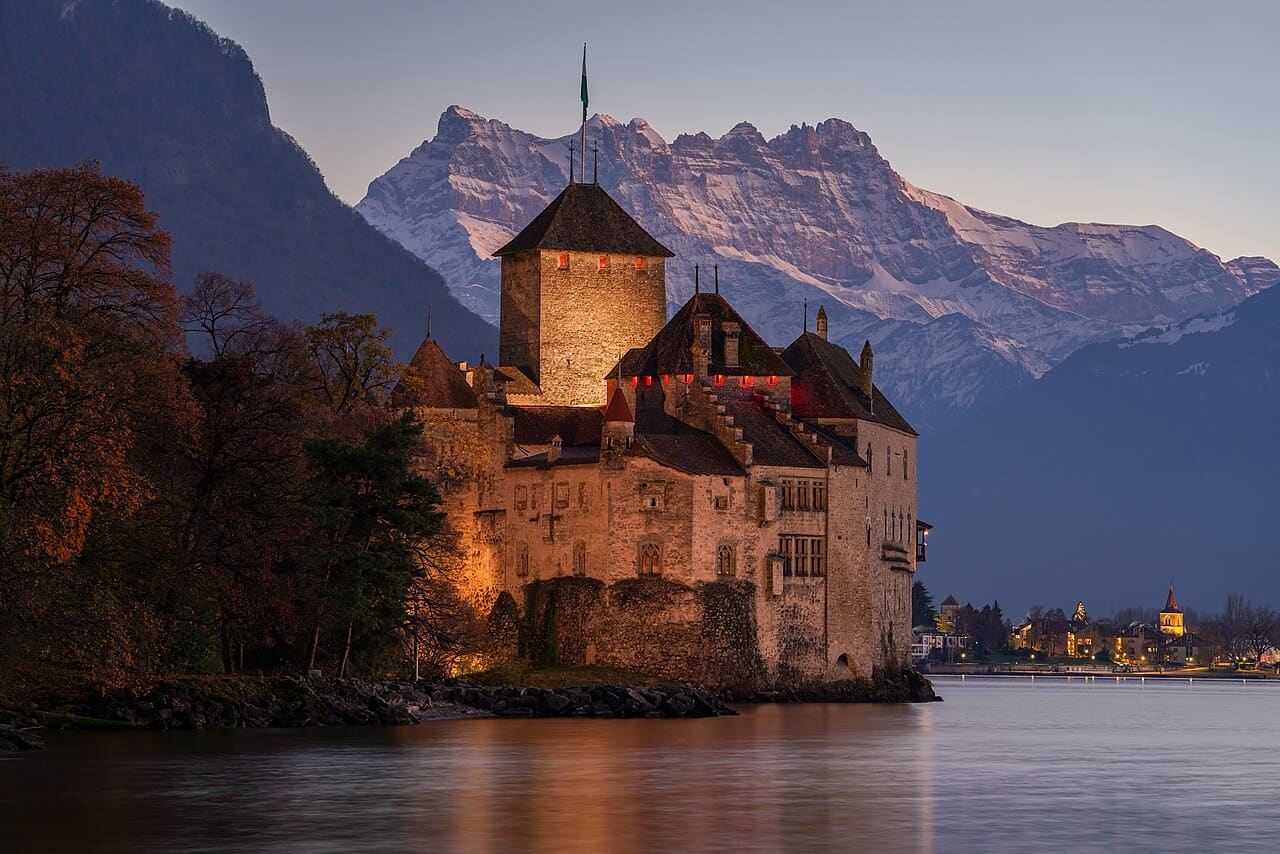
Built on a rocky islet extending into Lake Geneva; settlement goes back to the Bronze Age but today's structure was largely shaped in the 12th–13th centuries under the Counts of Savoy. Clergyman François Bonivard was chained to a pillar in the dungeon and held there for six years between 1530 and 1536; Byron visited in 1816 and made the castle famous across Europe with his poem, carving his name on the same pillar — the signature can still be seen. Switzerland's most visited historic building.
Quick facts
- Built
- 1160
- Architect
- James of Saint George
- Architectural style
- Romanesque architecture
- Height
- 25 m
- Length
- 100 m
- Heritage status
- class A Swiss cultural property of national significance
Facts from Wikidata, photos from Wikimedia Commons.
Did you know?
Which poem made the castle famous?
Lord Byron's 1816 "The Prisoner of Chillon". Byron carved his name into one of the dungeon pillars, and that signature is now displayed under glass.
Why was the castle built on this exact spot?
Its rocky islet controls the narrow strip between the lake and a steep slope — the main trade route into the Alps. For centuries the castle collected tolls from everything passing through.
How does the castle stand in the water?
It follows the shape of a natural rocky islet, so from the lake the walls seem to rise straight out of the water. The lakeside façade was deliberately kept blank and high for defence.
Why go?
- To see historic castle atmosphere on the lakeshore
- To add a cultural stop to a Montreux and Lake Geneva route
- For photogenic facades, courtyards, and lake views
Travel tip
Plan together with a Montreux lakeside walk; the castle surroundings are very strong for views.