Travel guide
Travelling with diabetes: medication, meals and time zones
Diabetes does not prevent travel, but medication, monitoring, meals and time-zone changes need a personal plan.
Prepared by the FlyVentis editorial team and regularly reviewed for travel and event accuracy.
Diabetes does not normally prevent a well-planned trip. Time zones, delayed meals, extra walking and medicine storage can change a familiar routine, so CDC recommends discussing the itinerary and treatment plan with a healthcare professional in advance.
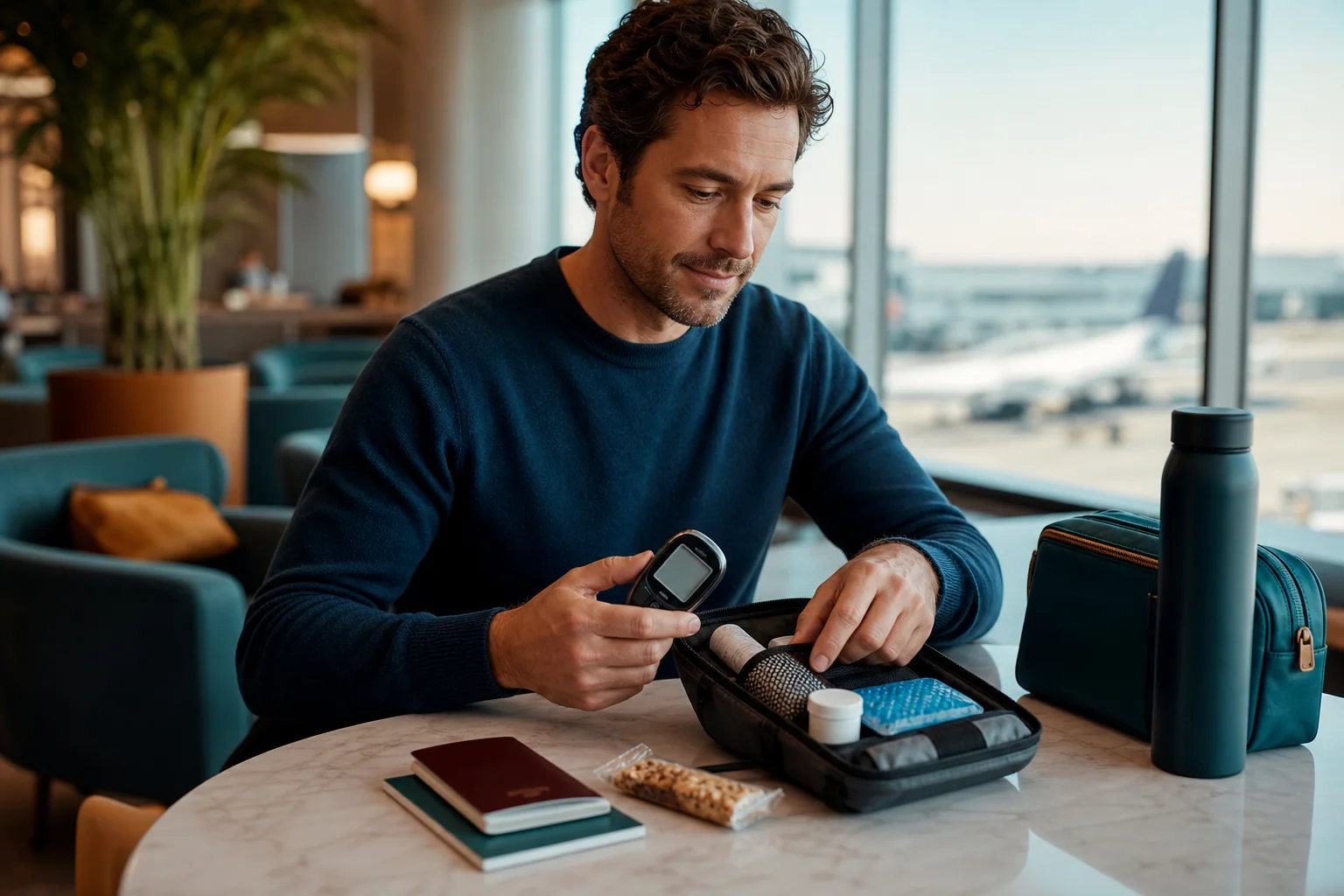
Keep essential medicines and supplies in cabin baggage with supporting documents. Use the travelling with medication guide for country checks and the medical-device guide for airline procedures.
Build a personal plan before departure
Discuss medication timing across time zones, delayed meals, unusual activity and sick-day rules with your clinician. Do not change a dose using a generic online schedule. Identify suitable care and pharmacies at the destination.
- Carry a clinician letter with generic medicine names and doses.
- Pack more medicine and monitoring supplies than the trip requires.
- Save prescriptions, insurance and emergency contacts offline.
- Tell a travel companion how to help in an emergency.
Pack cabin supplies in two layers
Keep medicines, meter, sensors, batteries and a fast-acting carbohydrate source in an accessible pouch. Storage temperatures vary by product; follow manufacturer and clinician instructions and avoid direct contact with ice.
Monitor the travel-day routine
Combine hydration and movement with the long-flight guide. Follow the time-zone plan agreed with your clinician rather than switching abruptly after landing.
- Record meal and medicine times in a backup note.
- Carry suitable food and water for delays.
- Monitor according to your personal plan.
- Seek help when symptoms or readings are unusual.
Keep emergency information visible
Carry a short card listing the condition, allergies, generic medicine names and an emergency contact. Seek local urgent care if symptoms do not improve, consciousness is affected or you cannot follow your own plan.
| Carry | Purpose |
|---|---|
| Clinician letter and prescriptions | Explain treatment and supplies |
| Backup monitoring method | Cover device or sensor failure |
| Fast carbohydrate | Follow the personal low-glucose plan |
| Emergency card | Support quick, accurate care |
Continue planning
Frequently asked questions
Should insulin go in checked baggage?
No. Carry essential medicine and supplies in the cabin and follow the product's storage instructions.
Can I change my dose for a time zone myself?
Medication timing and doses are personal. Agree a plan with your healthcare professional before travel.
Should I pack extra supplies?
Yes. CDC advises carrying enough for delays and unexpected disruption.