Route ideas
7 days in Europe: multi-city itineraries that actually fit
Trying to see five cities in a week usually means you see none of them. Three- and four-city itineraries whose distances actually add up.
FlyVentis editör ekibi tarafından hazırlanmış, seyahat ve etkinlik bilgileri düzenli olarak gözden geçirilen rehber.
The most common mistake on a multi-city Europe trip is looking at the map and assuming the distances are short. Amsterdam to Paris looks like a small gap on paper, but door to door it eats half a day. Plan five cities into a seven-day break and what you'll remember afterwards is train stations and hotel lobbies.
The formula that works is simple: three cities at most in seven days, four at most in ten. Stay at least two full days in each city, and try to keep the hops between them under two and a half hours. The itineraries below are built on that rule.
Route 1: The Central Europe classic — Prague, Vienna, Budapest
The safest choice if this is your first multi-city Europe trip. Three capitals linked by train, short distances, and prices noticeably kinder than Western Europe. All three have walkable centres, so you aren't spending much money or time on getting around.
| Day | City | Plan |
|---|---|---|
| 1-2 | Prague | Old Town Square, Charles Bridge, Prague Castle |
| 3 | Prague - Vienna | Morning train (about 4 hours), evening in the city centre |
| 4-5 | Vienna | Schönbrunn, the museum quarter, an evening at the opera or a concert |
| 6 | Vienna - Budapest | Morning train (about 2.5 hours), evening on the Danube |
| 7 | Budapest | Parliament, Fisherman's Bastion, a thermal bath, evening flight home |
- Flight setup: fly into Prague, home from Budapest
- Total train time: about 6.5 hours
- Best season: April-May and September-October
- Events note: Vienna is one of Europe's richest cities for classical music and opera
Route 2: Western Europe — Amsterdam, Brussels, Paris
A route that rides the spine of the high-speed rail network, with very short hops. Amsterdam to Brussels is about 2 hours, Brussels to Paris about 1.5. All three are major concert and events cities, so if you want to build dates around a gig you have plenty of choice.
| Day | City | Plan |
|---|---|---|
| 1-2 | Amsterdam | Rijksmuseum, Van Gogh Museum, a canal cruise, Jordaan |
| 3 | Amsterdam - Brussels | Morning train, Grand Place and a chocolate trail |
| 4 | Brussels or Bruges | A day trip to Bruges (1 hour by train) |
| 5-7 | Paris | Louvre, the Eiffel Tower, Montmartre, Le Marais |
- Flight setup: fly into Amsterdam, home from Paris
- Total train time: about 4.5 hours
- Budget note: Paris is the expensive leg — book accommodation early
- Train fares can drop by as much as two-thirds if you book ahead
Route 3: Italy's art triangle — Rome, Florence, Venice
The simplest logistics, because you stay in one country. High-speed trains cover Rome to Florence in about 1.5 hours and Florence to Venice in about 2. The three cities have such different characters that it never feels repetitive.
| Day | City | Plan |
|---|---|---|
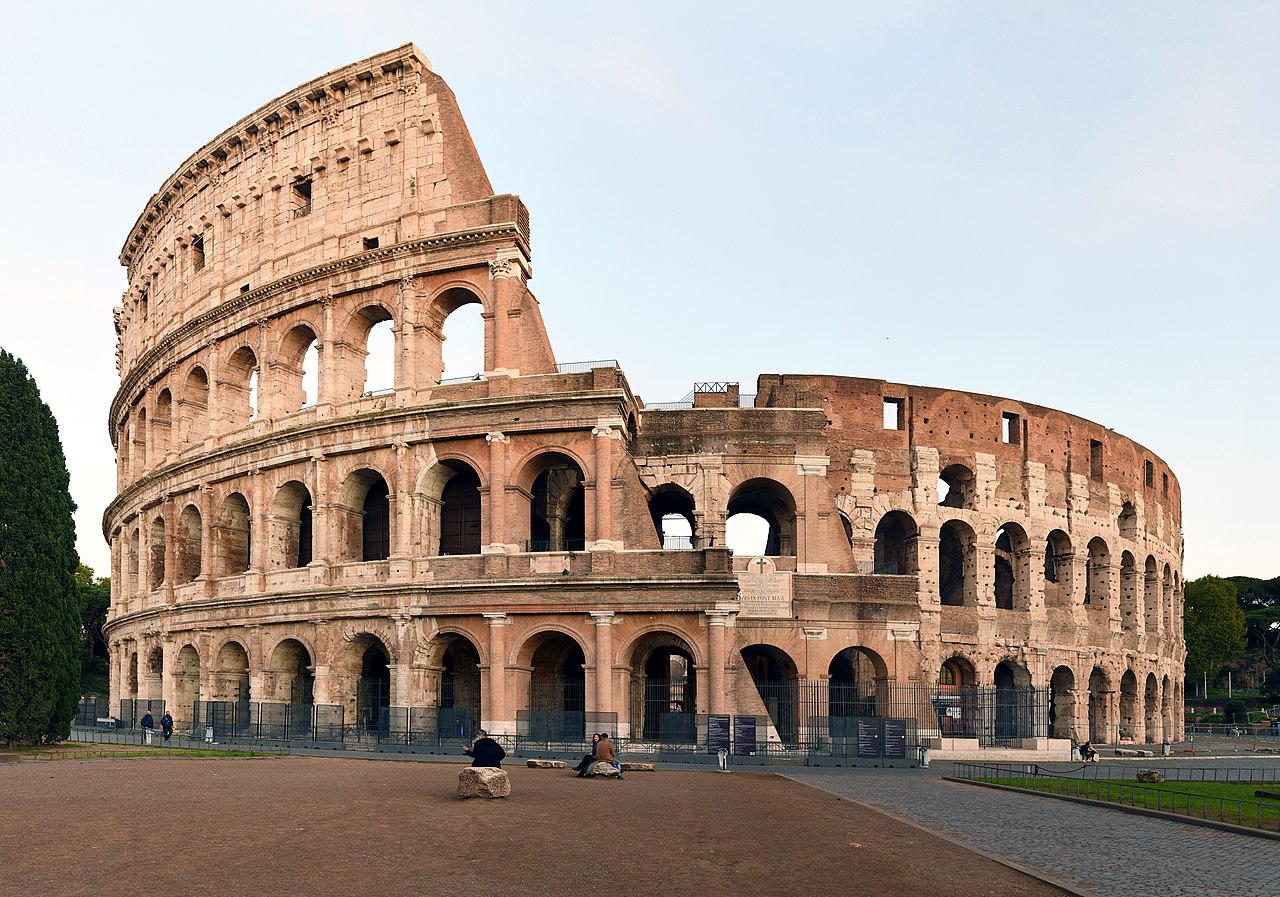
| 1-3 | Rome | Colosseum, Roman Forum, Vatican, Trastevere |
| 4-5 | Florence | Duomo, Uffizi, Ponte Vecchio, optional Pisa |
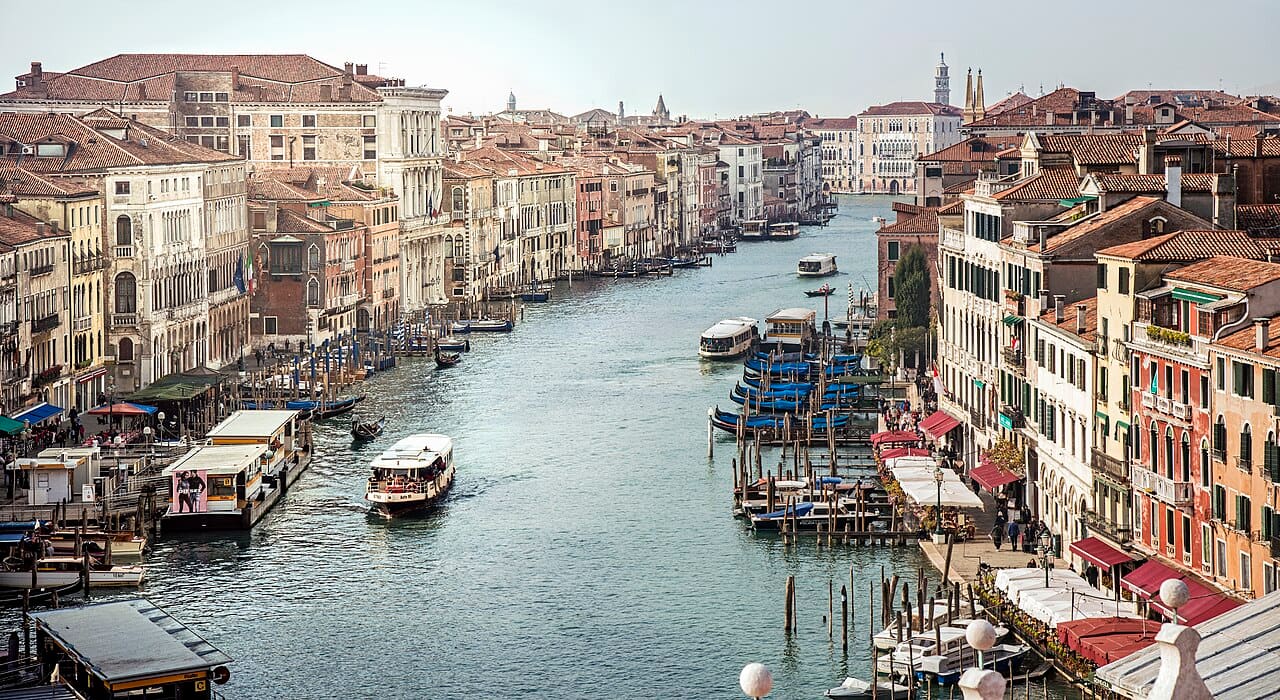
| 6-7 | Venice | St Mark's, Grand Canal, Murano and Burano |
- Flight setup: fly into Rome, home from Venice
- Total train time: about 3.5 hours
- Warning: book Colosseum, Vatican Museums and Uffizi tickets in advance
- Best season: April-May and September-October; July-August is both very hot and very crowded
Route 4: Spain — Barcelona, Valencia, Madrid
Spain's high-speed rail network is one of the best in Europe. Barcelona to Valencia is about 3 hours, Valencia to Madrid about 1.5. The route balances coast and city, and prices are easier than in Western Europe.
| Day | City | Plan |
|---|---|---|
| 1-3 | Barcelona | Sagrada Familia, Park Güell, Gothic Quarter, Barceloneta |
| 4-5 | Valencia | City of Arts and Sciences, old town, the beach, paella |
| 6-7 | Madrid | Prado, Retiro Park, Gran Vía, a tapas trail |
- Flight setup: fly into Barcelona, home from Madrid
- Two-city cut: drop Valencia and give Barcelona and Madrid 3.5 days each
- Events note: both cities have busy calendars for big concerts and football matches
Route 5: The Balkans — Belgrade, Sarajevo, Mostar, Dubrovnik
A budget-friendly alternative away from the tourist crush. The rail network isn't as developed as Western Europe's, so hops are by bus or hire car — but the scenery is as much a reason to go as the stops themselves. With closer to ten days off, four stops fit comfortably.
- Belgrade: 2 nights, Kalemegdan and nightlife
- Sarajevo: 2 nights, Baščaršija and a history trail
- Mostar: 1 night, the bridge and the old town
- Dubrovnik: 2-3 nights, the city walls and the Adriatic
- Flight setup: fly into Belgrade, home from Dubrovnik
Keeping a multi-city budget under control
- Book an open-jaw ticket: the day and money spent returning to the same city is another city you could have seen.
- Buy train tickets at least a month ahead: European rail fares rise with demand, just like flights.
- Plan a morning train on transfer days, not a hotel: overnight trains sound romantic and cost you the next day in tiredness.
- Do the maths on city cards: if you're visiting three or more museums they usually pay for themselves.
- Spend the last night in the city closest to the airport: it wipes out the taxi bill for a morning flight.
Build your route on FlyVentis
Frequently asked questions
How many cities can you see in a week in Europe?
Three at most. Staying at least two full days in each city and keeping hops under two and a half hours is the balance that lets you actually see places without wearing yourself out.
Is train or plane more sensible between cities?
On journeys under three hours the train is almost always faster, because getting to the airport, security and waiting take longer than the flight itself. On journeys over four hours a short flight starts to make sense.
What is an open-jaw ticket?
A ticket where you fly into one city and home from another. On a multi-city trip it removes the day and money you'd spend getting back to your starting point, so it is almost always the more efficient option.
When is the best season for a multi-city trip?
April-May and September-October are the most balanced months for weather, prices and crowds. July and August are both the most expensive and the busiest.